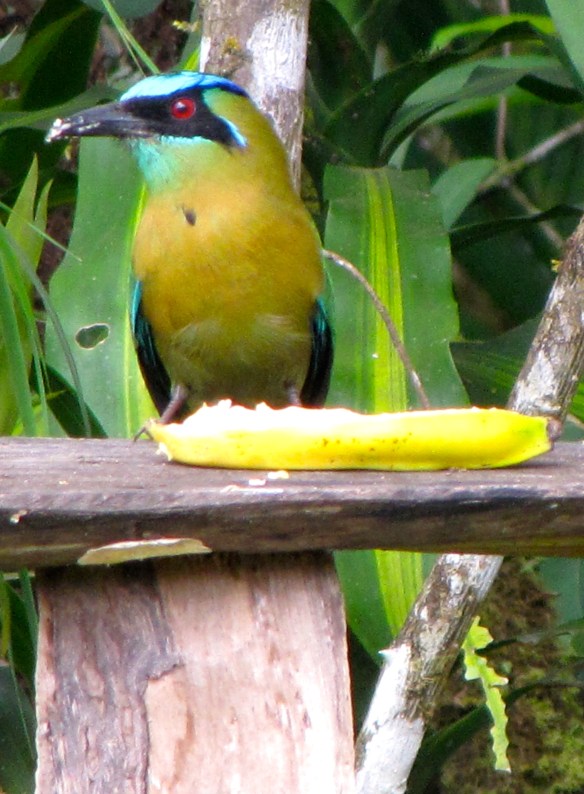
SVBC Bird Feeder Contest: Rules Reminder

Are you competing in this year’s San Vito Bird Club Bird Feeder Contest?  If so, here are the rules and regulations once again:

Rules—1. Your bird feeder(s) must be viewable by you, and if you have more than one, all must be viewable from a single spot.  In other words, you can’t have one here and one way out on the other side of the barn.  2. The birds must consume food from your bird feeder or around the bottom of your bird feeder.  3. Whatever food you put on the feeder(s) is up to you.  4. We use the honor system.  If you say you had a Laughing Kookaburra on your feeder, we’ll accept it.  But PLEASE, PLEASE, PLEASE…be sure you are correctly identifying your birds.  5.  Submit your list to Greg Homer on or before our Annual Meeting on Feb. 25th.  6. First, second and third place submissions receive a prize!

To be eligible for the Bird Feeder Contest:

  1. You must be a member of the San Vito Bird Club with your 2018 dues paid in full. You may pay at the door.
  2. You must bring a paper copy of your list to the Annual Meeting at Cascata del Bosco no later than 8:45am on Sunday, Feb. 25th; hand it to me (Greg Homer).

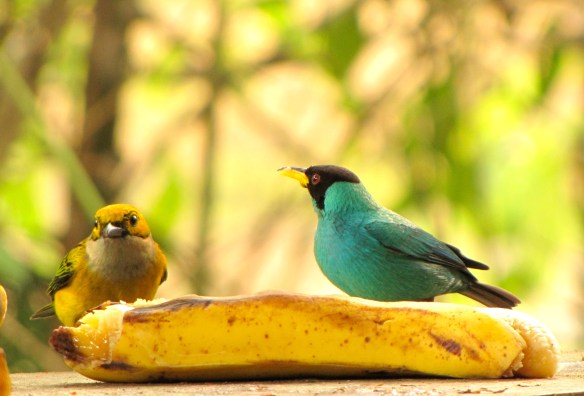
svbc_helenl_chlorospingus_jpg

(Photo courtesy of Helen LeVasseur)

SVBC Members: Annual Meeting on Sunday, Feb. 25th/Miembros de Club de Aves: Reunion anual a 25 de febrero

SVBC members; please join the San Vito Bird Club for our Annual Meeting on Sunday, Feb. 25th at Cascata del Bosco.  Coffee and social time begins at 8:30am.  Meeting begins at 9am.  Following the meeting, another delicious full brunch from Cascata is offered for c6000 (including BLUEBERRY MUFFINS!) and begins at 10:30am.

To attend the Annual Meeting you MUST have your 2018 dues paid in full.  You may do so, if necessary, at the door when you arrive for the meeting.

Aside from regular SVBC business and reports, we will have an excellent and local Keynote speaker, a silent auction of original artwork from SVBC members and an awards ceremony for the Bird Feeder Contest!

Please join us for a fun and informative morning.

Greg Homer–President of the San Vito Bird Club

AMHelenandGreg,photobyJoDavidson

Photo by Jo Davidson

It’s That Time Again! The 87th Annual SVBC Bird Feeder Contest

What is it?—The San Vito Bird Club Bird Feeder Contest.  Whoever has the most species of birds come to their bird feeder wins.

When is it?—Begins February 1st and ends 8am on Sunday, February 25th (the day of our Annual Meeting).

Rules?—1. Your bird feeder(s) must be viewable by you, and if you have more than one, all must be viewable from a single spot.  In other words, you can’t have one here and one way out on the other side of the barn.  2. The birds must consume food from your bird feeder or around the bottom of your bird feeder.  3. Whatever food you put on the feeder(s) is up to you.  4. We use the honor system.  If you say you had a Laughing Kookaburra on your feeder, we’ll accept it.  But PLEASE, PLEASE, PLEASE…be sure you are correctly identifying your birds.  5.  Submit your list to Greg Homer on or before our Annual Meeting on Feb. 25th.  6. First, second and third place submissions receive a prize!

Good luck one and all.  Any questions, contact me (Greg Homer) at eltangaral@gmail.com.

(photo courtesy of Helen LeVasseur)

IMG_3956

Birds on the Move/Las aves en movimiento

ESPANOL SIGUE

Female Flame-rumped Tanager, a new record for Costa Rica. Photo by Pepe Castiblanco

On a sunny morning in early November, Pepe Castiblanco and I went to look for a bird that had never been recorded in Costa Rica until it was discovered in October. Most followers of this website know Pepe but, in case you do not, he is a birder, natural history guide, musician, raconteur, photographer, baker, restaurateur and co-owner – with his wife Kata Ulenaers — of a nearby B&B.

Pepe’s friend, Juan Abel, who is dashing and works at the Organization for Tropical Studies as a forest guard, found this bird – a Flame-rumped Tanager – on his finca, consorting with a group of Cherrie’s Tanagers. He called some friends, extraordinary birders, to come take a look and so it went. Because this is private property, the search becomes a question of permission. We were grateful to have a chance to go look and got lucky with the bird.

Juan and his wife Ruth have a large, enthusiastic dog that lunged through the door as we pulled into the driveway. Before we were able to get out of the car, the dog clipped one of Juan’s sons’ legs, sending coffee dribbling all over its back, and climbed into the car onto my lap. It was an auspicious start.

We walked around the house, through a guava orchard. The trees look odd because each round, fat fruit is sequestered in a bag to stymie insects and birds. The Abels have chicken coops and banana feeders and a ring of old trees around their farm. We saw four Rose-breasted Grosbeaks taking the sun in a pine tree and heard woodpeckers and Slaty Spinetails churring from the woods.

After a bit, Hafjeth Abel, 19, joined our search party while he fed the chickens, steering us away from making hopeful glances at their banana feeder. The group of tanagers we were after apparently does not frequent the feeder but hangs around the other side of the property near the forest edge. Over we went and suddenly they arrived, sputtering and squeaking, with the Flame-rumped female in plain view, perched for Pepe’s camera. Two Yellow-billed Caciques came out of the forest — an uncommon sighting as they are more often heard than seen.

The new tanager comes with some confusing taxonomy. It has three common names: Flame-rumped, Lemon-rumped and Yellow-rumped. And two scientific names: Ramphocelus flammigerus and R. icteronotus plus a subspecies indicator like this: Ramphocelus flammigerus icternotus. You can consult the authority of your choice, but the Asociación Ornitológica de Costa Rica follows the American Ornithologists Union checklist so this one is being presented to the Rare Records Committee as Flame-rumped Tanager, Ramphocelus flammigerus.

Maybe another one will join it or show up elsewhere. We will try to keep ourselves updated and report back from time to time.
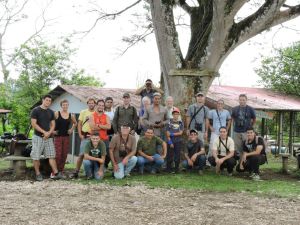
Juan Abel, standing back row center, found a new bird for Costa Rica in October 2017. Also pictured Pepe Castiblanco, standing right. Photographer unknown.

ESPANOL AQUI
Una mañana soleada de noviembre, Pepe Castiblanco y yo salimos a buscar un ave que nunca había sido registrada en Costa Rica, hasta que fue descubierta en octubre. La mayoría de quienes siguen este sitio web conocen a Pepe, pero en caso de que usted no lo conozcan, él es un pajarero, guía de historia natural, músico, anecdotista, fotógrafo, panadero, restaurador y co-propietario – con su esposa, Kata Ulenaers, — de un B&B de la localidad.

El amigo de Pepe, Juan Abel, quien es gallardo y trabaja para la Organización para Estudios Tropicales como guarda, encontró esta ave, Flame-rumped Tanager, en su finca, compartiendo con un grupo local de sargentos. Juan llamó a unos amigos, pajareros extraordinarios, para que vinieran a ver. Dado que esta es una propiedad privada, la búsqueda se convierte en una cuestión de permiso. Tuvimos la suerte de tener la oportunidad de ir a observar y encontrar el ave.

Juan y su esposa, Ruth, tienen un perro grande y entusiasta que se lanzó a través de la puerta mientras nos parquéabamos. Antes de que pudiéramos salir del carro, el perro atrapó una de las piernas de un hijo de Juan, echándose el café sobre el lomo, y se encaramó en el carro hasta llegar a mi regazo. Un prometedor comienzo.

A guava, bagged to exclude insects and birds. Photo by Alison Olivieri

Caminamos por la casa, hasta llegar a una plantación de guava. Los árboles se ven extraños porque secuestran su fruto en una vaina, para protegerlos de aves e insectos. Los Abels tienen gallineros y alimentadores de aves, y un anillo de árboles viejos alrededor de su granja. Vimos varios Picogrueso Pechirrosado (Calandrias) tomando el sol en un pino y escuchamos carpinteros y Arquitectos Plomizos en el bosque.

Después de un rato, Hafjeth Abel, de 19 años, se unió a nuestra búsqueda mientras alimentaba las gallinas, alejándonos de echar miradas esperanzadas al alimentador. Aparentemente, el grupo de tangaras que estábamos buscando no frecuenta el alimentador, sino el otro lado de la propiedad, cerca del lindero del bosque. Fuimos ahí y llegaron, chillando y revoloteando, con la hembra Flame-rumped a plena vista, en una posición privilegiada para la cámara de Pepe. Dos Caciques Picoplata salieron del bosque, una observación entraña, ya que frecuentemente se los escucha más de lo que se los ve.

La nueva tangara viene con una taxonomía confusa. Tiene tres nombres comunes: Flame-rumped, Lemon-rumped y Yellow-rumped; dos nombres científicos: Ramphocelus flammigerus y R. icteronotus; y un indicador de subespecie: Ramphocelus flammigerus icteronotus. Usted puede consultar con la autoridad de su escogencia, pero la Asociación Ornitológica de Costa Rica sigue el listado de la American Ornithologists Union, así que esta especie está presente en el Comité de Registros Raros como Flame-rumped Tanager, Ramphocelus flammigerus.

Quizá otra se le unirá o aparecerá en otro lugar. Trataremos de mantenernos al tanto y reportarle de cuando en cuando.

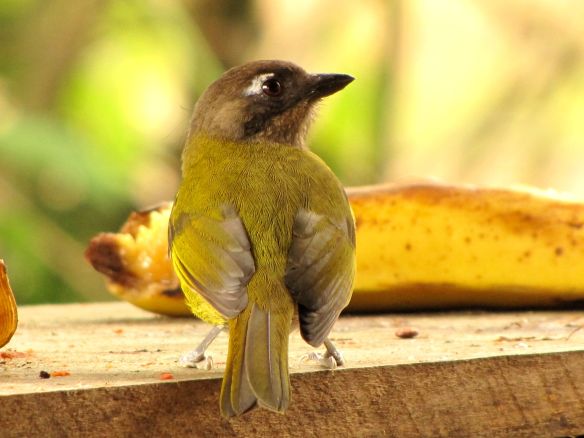
SVBC Bird Feeder Contest: Reminder

I will announce the winners of the 2017 San Vito Bird Club Bird Feeder Contest this coming Saturday morning at our Annual Meeting.  These are birds you have seen feeding ON or immediately BELOW your feeder–from Feb. 1-28, 2017.

To be eligible, you may give me a paper copy of your list at the meeting no later than 8:55 am on Saturday; or you mail email it to me no later than 6am on Saturday.

Email to:

president@sanvitobirdclub.org

Good luck.

(photo courtesy of Helen LeVasseur)

IMG_3036

SVBC Bird Feeder Contest 2017/Concurso de comedor de aves 2017

February 1-28: Make a list of the bird species that come to your bird feeder.  Whoever has the most species of birds…WINS!

Rules:

  1. Bird must actually eat something on or directly under your bird feeder.
  2. Your bird feeders must be viewable from ONE SPOT.  You can’t have one by your kitchen and one WAAAAY out in a potrero.

Good luck.  Winner to be announced at the SVBC annual meeting in early March.

*************

Febrero 1-28: Hacer una list de las aves que vienen a su comedor de aves.  Quien tiene mas es el GANADOR!

Reglas:

  1. Las aves nesesitan comer algo directament en el comedor or abajo del comedor.
  2. Usted nesecita ver sus comedores desde un lugar.  No puede tener un comedor en frente de su cocina and una otra en su potrero.

Buena suerte!  Ganador sera anunciado en la primera semana de marzo a nuestra reunion anual.

(photo courtesy of Helen LeVasseur)

IMG_3034

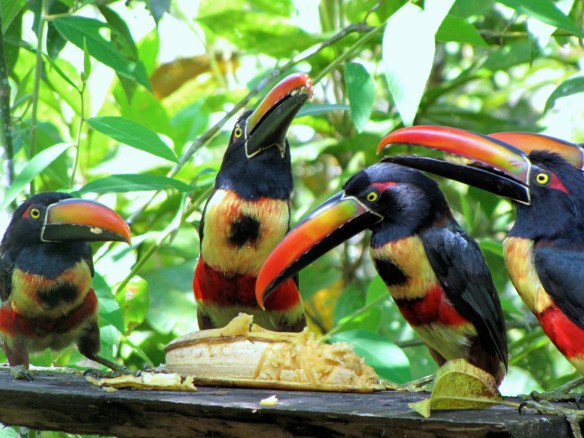
Cusingos (Fiery-billed Aracaris)

Student Art Show / Exposición de Arte Estudiantil

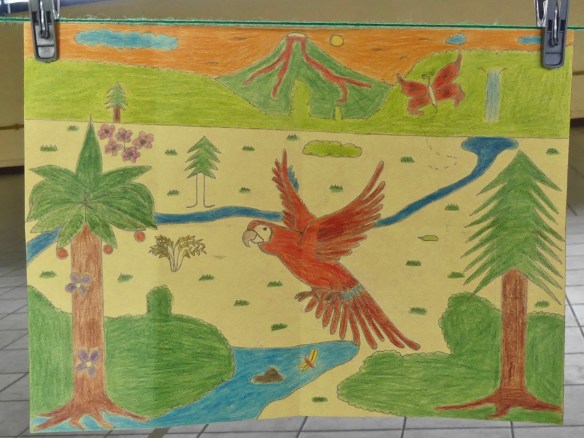
This weekend we had our first student Art Show for our Birdsleuth International students. The winners are below, along with a link to all the entries. Enjoy!

Este fin de semana teníamos la primera Exposición de Arte por los estudiantes cursando nuestro programa lectivo Detectives de Aves. Aquí debajo están los ganadores, y también un enlace a todos las obras presentadas. ¡Disfrutenlos!

First Place/Primer Lugar – Josué Santos Acosta / Escuela Rio Salto
First Place / Primera Lugar

Second Place / Segundo Lugar – Mariangel Zuñiga Sanchez / Escuela Rio Salto
Second Place / Segundo Lugar

Third Place / Tercero Lugar – Alejandra Soto Araya / Escuela Adele Clarini
Third Place / Tercero Lugar


Student Art Show 2016 / Exposición de Art Estudiantil 2016

Global Big Day of Birding: SVBC Participates!

This Saturday, May 14th, is the 2nd annual Global Big Day of birding. For complete information see the link attached below:

http://ebird.org/globalbigday/

Please join the San Vito Bird Club for a short walk in the upper garden of El Tangaral; 7:00am-9:00am. Our bird species list will be added via eBird to lists from around the world!

If you cannot attend the walk at El Tangaral, please feel free to observe and document the bird species where you live on that day. Send your list of bird species, no later than 6pm on May 14th, to:

svbirdclub@gmail.com

HH3-150620-5497F-R

Harry Hull

SVBC Big Bird Feeder Contest: Reminder!Recordatorio: Gran Competencia de Alimentadores de Aves del SVBC

Sharpen up your pencil and load up your bird feeder.

The San Vito Bird Club’s annual Big Bird Feeder Contest begins this coming Sunday at 6am. Again, the rules are VERY simple:

  1. You may count only birds that:
    1. Actually take some food from your birdfeeder.
    2. Actually take some food that has fallen on the ground off of your birdfeeder. (Last year a Roadside Hawk landed on a member’s birdfeeder but did not eat anything. This year, that hawk WOULD NOT be counted.)
  2. You may use more than one birdfeeder. But all feeders must be visible from a single location. In other words, when sitting in a chair you may only use those feeders you can see from that one chair location.
  3. As always, all participants are subject to the honor system. Please be at least 98.6% certain of the species to put it on your final list.
  4. Birdfeeders may be loaded with any and all food items.
  5. Submit your list to:
    1. Greg Homer at eltangaral@gmail.com
    2. And Julie Girard at girardwoolley@gmail.com
    3. On or before 6:00pm on February 12th, 2016.

The 2016 contest begins at 6:00am on January 10th; winners announced at the SVBC Annual meeting at Cascata del Bosco on February 13th.

Good luck SVBC Members!

****************

Recordatorio: Gran Competencia de Alimentadores de Aves del SVBC

¡Saque punta a su lápiz y cargue su alimentador de aves!

La Gran Competencia Anual de Alimentadores de Aves del Club de Pájaros de San Vito comienza este domingo a las 6am. De nuevo, las reglas son MUY simples:

  1. Usted podrá contar solamente aves que:
    1. Toman algo de comida de su alimentador.
    2. Toman algo de la comida que haya caído de su alimentador. (El año pasado un Gavilán Chapulinero se posó sobre el alimentador de un miembro pero no comió nada. Este año, ese gavilán NO contaría).
  2. Usted puede usar más de un alimentador. Pero todos deben ser visibles desde una única posición. En otras palabras, cuando usted esté sentado en una silla, usted podrá usar solamente aquellos alimentadores que sean visibles desde la posición de esa silla.
  3. Como siempre, todos los participantes están sujetos al sistema de honor. Por favor esté al menos 98.6% seguro de las especies que coloca en su lista final.
  4. Los alimentadores pueden estar cargados con cualquier tipo de alimentos.
  5. Envíe su lista a:
    1. Greg Homer a eltangaral@gmail.com
    2. Y Julie Girard a girardwoolley@gmail.com
    3. El 12 de febrero de 2016 antes de o a las 6:00 pm.

El concurso de 2016 comienza a las 6:00 am del 10 de enero; los ganadores serán anunciados en la Reunión Anual del SVBC, en Cascata del Bosco, el 13 de febrero.

¡Buena suerte Miembros del SVBC!

IMG_3150