Rice is nice. Rice fields are also an AB-SO-LUTE-LY fantastic habitat in which to observe and study birds.
When I’m not here in San Vito I also live near California’s Sacramento Valley, which is also a wonderful rice field/bird observing destination; home to hundreds of thousands of migrating wildfowl as they move from Canada and the Arctic down the Pacific Flyway.
Sandhill Cranes: photo courtesy of Chico Enterprise-Record
We are fortunate to have the rice fields of Las Pangas very near to us in San Vito (see directions below). A tour of Las Pangas has become a vital destination for birders who live in or visit the southern zone. As with the northern rice field habitat, Las Pangas hosts thousands upon thousands of migrating ducks and other shorebirds that are seldom otherwise seen. Just this year (2021) several birders were able to view and to photograph the White-cheeked Pintail duck; normally exclusive to South America. Our profound wet season this year inundated Las Pangas with much higher than normal water levels, providing greater resting and feeding space for these often weary migrants. Several birders have told me that Las Pangas rivals the wetlands of Palo Verde up in Guanacaste.
Las Pangas is also home to several bird species seen almost no where else in Costa Rica; Scrub Greenlet, Rusty-margined Flycatcher and Brown-throated Parakeet to name but a few.
But I know why you’re here and it’s not to read…it’s to see bird photos from our wonderful local naturalists. I get it…I get it…and I’m fine with it.
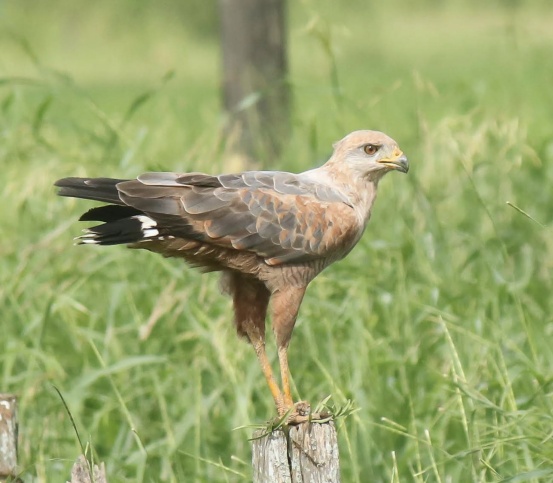
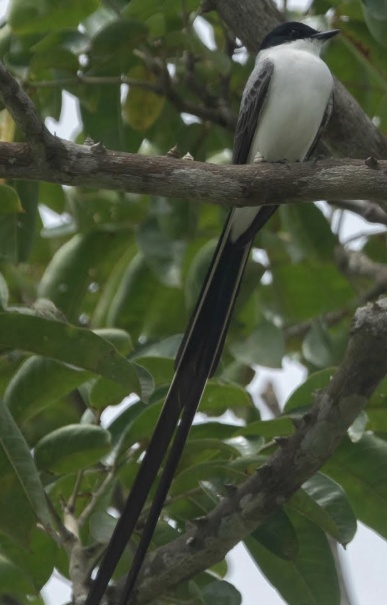
Roseate Spoonbill, Wood stork and Snowy Egrets: photo courtesy of Helen LeVasseurSavannah Hawk: photo courtesy of Randall Jimenez (how about those long legs!)Paint-billed Crake: photo courtesy of David Rodriguez Arias (one of the most secretive birds in the world)Lesser Yellow-headed Vulture: photo courtesy of Yeimiri BadillaRed-breasted Meadowlark: photo courtesy of Helen LeVasseurFork-tailed Flycatcher: photo courtesy of Randall Jimenez
How to get to Las Pangas? When you get to Ciudad Neily crossroad, don’t turn right, don’t turn left…go straight. Follow the signs to Coto 47. Take the rural road on the right, just before you cross the first big bridge. This road is an ‘up-and-back’ road, not a loop. Four-wheel drive recommended but not necessary in the dry season.
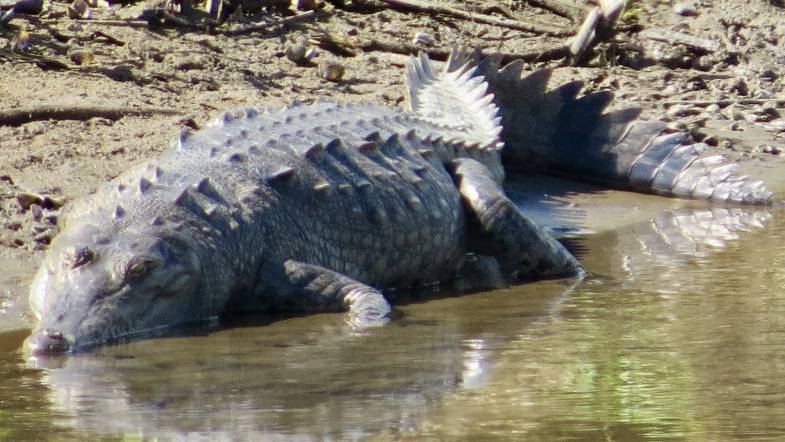
Oh…and probably a good idea to wear shoes.
Photo courtesy of Helen LeVasseur (she wanted me to go stand by it to give it scale but I wouldn’t do it.)
Do bird song playback devices do any harm? Let’s ask our experts.
From SVBC member Elizabeth Van Pelt from Devon PA:
Hello San Vito Bird Club Experts!
As a long-time birder and believer in ‘going with guides’, I find myself more and more uncomfortable with too much guide-generated playback to attract birds’ attention and get them closer to the group. It seems to me this practice forces birds to use energy to check the source of the calls/songs, fight off ‘intruders’ and otherwise engage in extra, unnecessary behaviors. How do you, as professional guides, suggest I handle this?
Pepe Castiblanco: Co-owner and proprietor of Casa Botania B&B and professional birding and nature guide. https://www.casabotania.com/en-gb
Playback has always been a topic of division between both bird guides and birders. On one hand we have the birder that travels thousands of kilometers to see as much as possible in two weeks and on the other hand you have the guide that wants you to be happy and satisfied with his/her sightings. However, there is an ethical paradox because most of your success as a guide for that particular customer or in general as a guide that wants to give a good tour, will depend on playback in order to produce and materialize as many and as exciting bird species as possible.What I do in that regard is to evaluate the situation and know my birds. If someone asks me to find a Bran-coloured Flycatcher in January, is very likely that I will wait to hear the call and walk in that direction instead of playing it back since I know that they are nesting and I won’t under any circumstances, do it myself or allow anybody in my group to do it cause I have the moral authority and the ethical obligation to do so. When a bird is not in a nesting season and I’m playing it back and it doesn’t react after hearing the first couple of calls, it’s also a very clear sign that it’s not interested and I won’t play it any longer. So there are some times when we don’t use it:Nesting, feeding and mating season,and when we don’t have a reaction from the bird. For the rest, I could play it a couple of times for the bird to come out from behind a tree and move a couple of feet to the side so we can see it. If it stays long enough for the picture, that’s a bonus but seeing it should be enough.
Omar Sidebe: Turacao Tours owner and guide, Loango National Park, Gabon (Africa)
Oh my goodness, as to the use of bird song playback devices it is a question of degree. Just as with ice cream bars…to much is not good but once in a while is most pleasant.
Birds are quite robust and generally not the frail creatures some think. Birds are perfectly capable of handling a bit of added stress now and again; it may even strengthen and embolden them. Playback devices do, indeed, cause them added stress. But we must also remember, stress that comes when these same birds see a group of massive upright bipedal primates walking through their neighborhoods…’pishing and pishing and pishing’.
Playback devices? Limit the frequency and duration of the playback; the birds will be fine. And limit your ice cream bar intake too!
As guides, this is one of the most interesting and important aspects that we have to deal with. Using playback to attract birds works most of the time. Nevertheless, those aspects you are concerned about, in terms of what we are really doing to the birds, is still unknown. Based on my experience, using playback to attract one specific species is sometimes the best tool I can use. There are customers who really like birds and like to get at least a glimpse of one target, but in some situations these people cannot go right into the place where the bird is found. I think at times it is better to attract the bird to us, instead of going deep into the bushes with the risk of being bitten by a venomous snake. I know people who say: “You don’t need to do that, go and look for some other species.” But we all (as birders) know the joy we have when we can find that nemesis we have been chasing forever.
I have to be very clear about this, because I know there are always people who just want to find a bird, no matter the way. Those guides/customers are the ones who sometimes show less respect for Nature. Nowadays there are different ways to use a song or a call of a bird, so my recommendation is if you want to use them, remember we don’t know exactly how the playback is affecting the species we want to attract, so be careful to use playback for short periods of time and not close to the nesting areas. And always keep in mind that no matter how careful you are, you are still affecting the routine of the species you would like to find.
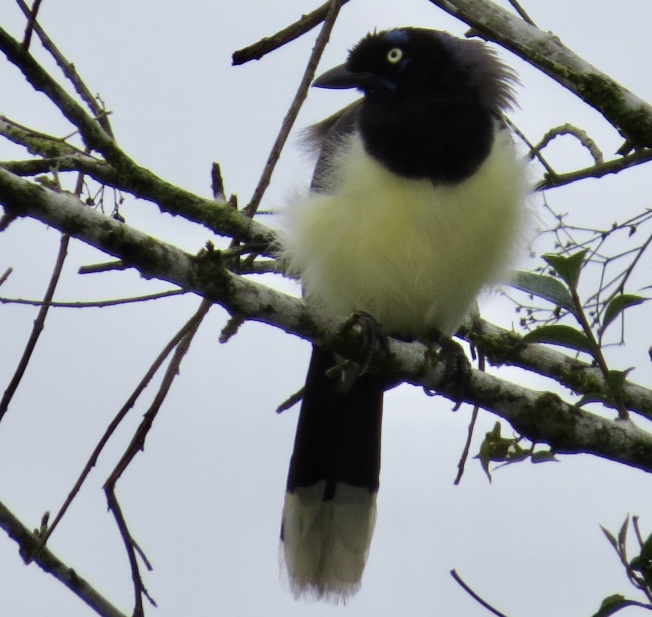
(Black-chested Jay responding to a playback recording; courtesy of Helen LeVasseur)
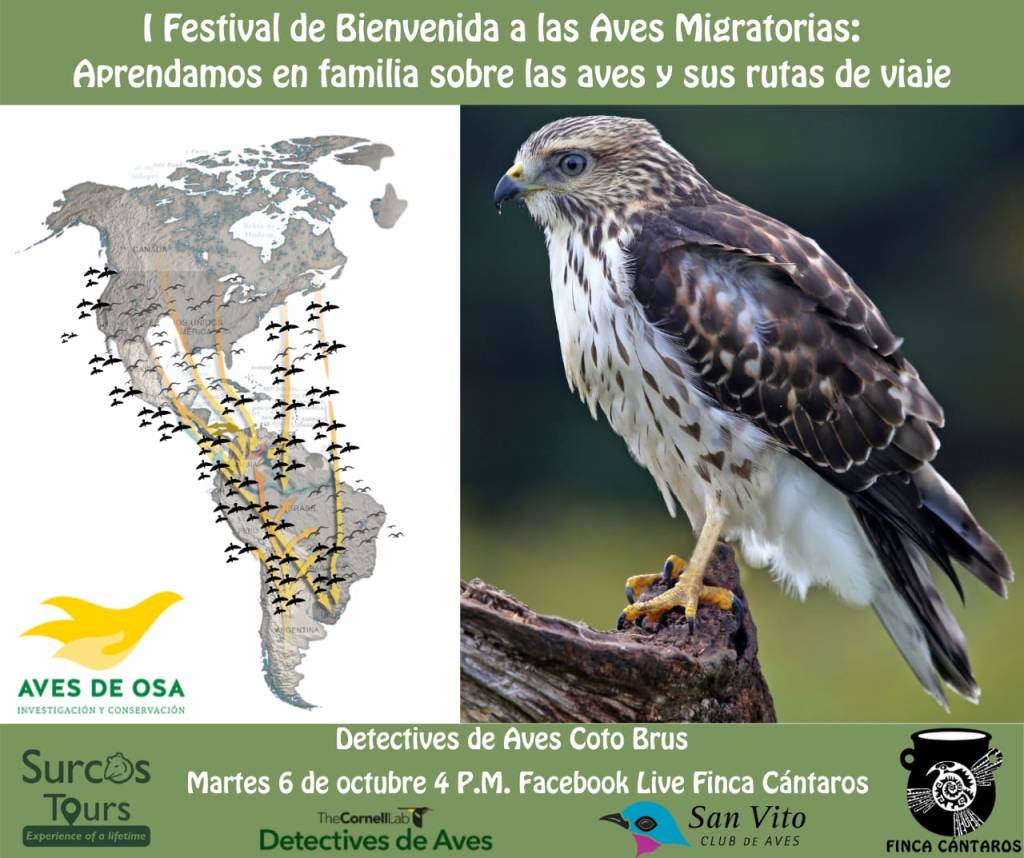
The Detectives de Aves team is hosting a special online class tomorrow afternoon at 4PM as a part of the Finca Cántaros Festival de Bienvenida a las Aves Migratorias. If you would like to get a look at some of our teachers and get an idea about what happens in a Detectives class, please tune in to the Finca Cántaros Facebook page tomorrow at 4PM!
I hope everyone is healthy, sane (as much as is normal anyhow), and keeping busy during these strange times.
We would really like your input on the best way to start having Bird Club events and walks again. We know that there are variety of opinions on the best ways to deal with Covid and to stay healthy, so we really need you to share your thoughts and feeling on the subject!
Below you will find a link to brief survey on Google forms where you can share with us your willingness, or lack thereof, to participate in Club activities under the current conditions. Please be assured, however, that we will always be committed to complying with the directives of the Ministerio de Salud regarding all required protocols for public gatherings and outdoor activities!
QUESTION #1: What family of Costa Rican birds are your favorites? And why?
Pepe Castiblanco: Wrens are by far my choice. They not only have a unique physical characteristics that differentiate each one of them but they also have a remarkable sense of rhythm, making them the most musical family of all, battling each other in complicated musical lines when one of them often starts the phrase and the other one completes it making a perfect composition worth of a Grammy or a Figaro selection!
Jim Zook: Too many to pick just one. My favorite family to listen to is the Troglodytidae (Wrens). Think Song Wren. My favorite family for common names is the Trochilidae (Hummingbirds). Snowcap, Coquette, Woodstar, Mountain-gem. My favorite migrant family, the ones I most miss when they aren’t here? Parulidae (Wood Warblers). My favorite family name is the Rhinocryptidae. Camouflaged Rhinoceroses? Sorry, it’s just the Tapaculos. My favorite new family is the Rhodinocichlidae (Rosy Thrush-Tanager). If ever there was a species deserving of its own family this is it. Favorite pelagic bird family and the one most likely to produce some stunning surprise? Procellariidae (Tubenoses). But the family that has probably been my favorite, ever since I started birding, is the Accipitridae (Hawks). Lot’s of old familiar faces and challenges that still make my heart soar, plus the possibility of something new – that Harpy Eagle that’s out there waiting for me.
David Rodriquez Arias: It is hard to tell which are my favorites family, but well, here I give you three that I like the most. My favorite family of birds of Costa Rica is Trogonidae, because my first project when I started getting in touch with birds at my university was about Trogons. Also, thanks to my father (who is a farmer) I have been in touch with Quetzals since I was 5 years old, due to I went with him to his farm, and Quetzals were nearby us. So, that also made me focus in this family when I was at the university.
I also like the Charadriidae (plovers and sandpiper-like birds) family, because of the incredible journeys they do every season. I always think about all the things they can see during their migration movements. I also like to watch them when they go to rest. All together in a small place, sometimes hundreds of individuals of different species sharing that place they have chosen.
And the last one is Trochilidae (hummingbirds), because of the amazing adaptations they evolved to survive in different habitats. I also like the way how the evolved to fly and their stunning plumages. Moreover, they play an important role in the forest, another incredible adaptation of natural selection between a bird with a plant.
Thank you gentlemen for your responses; insightful and wise.
Next week we pose Question #2, which was submitted by SVBC member David Fielding:
‘The Sunbittern’s wings, when spread, each have a big beautiful eye-like spot. What do you suppose is the evolutionary reason for that spot? Is it to scare away predators? Is it to attract a mate? Are the wings spread to display the spot during courtship? . . . Or is it for both reasons?’
Para colaborar en los esfuerzos para limitar los casos de COVID-19 y par no poner en riesgo a las poblaciones vulnerables, hemos decidido suspender las caminatas para ver aves hasta que el estado de emergencia termine. ¡Ojalá que sea pronto!
Pero uno todavía podría disfrutar de las aves y la naturaleza durante estos tiempos difíciles. Por dicha, siempre hay oportunidades para ver aves en el cantón de Coto Brus, incluyendo desde su propia casa. Si quisiera salir y caminar por la calle pública para bajar el estrés, hacer ejercicio y ver aves, sugerimos que explore los siguientes lugares de acceso fácil:
La antigua Ruta de la mulas or Ruta de los Conquistadores que anda desde el lado norte de la finca El Tangaral hasta el rio Java. La entrada es unos cientos metros norte del restaurante Cascata del Bosco y entre El Tangaral y la casa azul. ¡Ojo, es un camino pequeño! Puede ver y escuchar muchas especies de aves por allá.
La ruta de los Pinos que va desde el rótulo de la Chiminea a la par de la Finca Cántaros hasta el aeropuerto. Allá, además de aves, se puede ver muchos árboles actualmente en flor.
El camino que va desde en frente del hospital y anda al lado del río Java hasta Santa Clara. Es un camino largo y inclinando, pero vale la pena. Si tiene mucha suerte podría ver los zopilotes blancos (sí, blancos) y unos nidos de los Oropéndolas.
¡Que todos y todas quedan sano y salvo y que salgamos de esta emergencia más fuerte y unificada que nunca! Nos vemos pronto.
I just wanted to share this really impressive video about the Children’s Forest project at Finca Cántaros. It is a wonderful project that all of the members of the Club can feel proud for having supported. The San Vito Bird Club, through the Detectives de Aves program was, is and will continue to be a key collaborator in this project, and a supporter of environmental education in the cantón. Please enjoy! https://vimeo.com/396319999
Yo quisiera compartir con todos ustedes este vídeo muy impresionante sobre el proyecto del Bosque de los Niños de Coto Brus en la Finca Cántaros. Es un esfuerzo maravilloso, y todos los miembros del Club pueden tener mucho orgullo por lo haber apoyado. El Club de Aves de San Vito, por medio del programa Detectives de Aves fue, es y será un colaborador muy importante en el Bosque de los Niños, y un patroncinador de la educación ambiental en el cantón. ¡Por favor disfrútelo! https://vimeo.com/387577297
Congratulations to the following San Vito Bird Club members; winners of our Bird Feeder Contest-2020.
Category #1: Most bird species at a single location feeder—Charles and Sara Beeson-Jones (see below)! The Beeson-Joneses lured 30 different species of birds to their feeder (located at Michael and Alison Olivieri’s rental house).
(photos courtesy of Helen LeVasseur)
Category #2: Best Bird Feeder Photo
The great Julie Gerard-Woolley won with this wonderful multi-Tanager feeder photo.
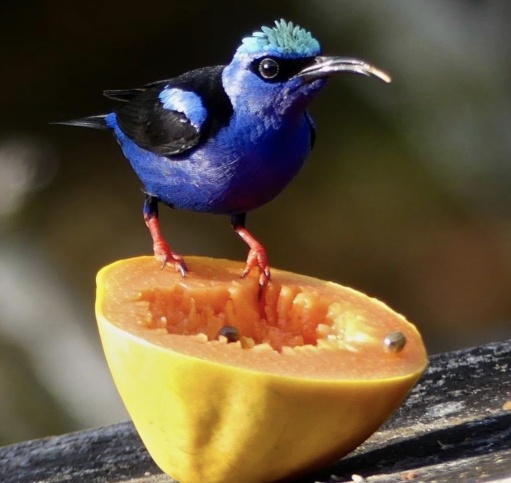
Category #3: Best Feeder Photo of an Unusual Bird Species—Jo Davidson with this spectacular photo of a Red-legged Honeycreeper on a papaya.
I realized that I forgot to mention several people who contributed to the binocular campaign. I am really sorry. Every single contribution is important and deserves recognition. I have updated the Year in Review post, but I also want to mention these people here so that everyone will know who they are:
Steve and Liz Allen
Gail and Harry Hull
JP Thelliez
Again, I am really sorry. Thank you for your support.
Desgraciadamente olvidé mencionar unos patrocinadores que nos ayudaron conseguir binoculares. Les pido mis disculpas más sinceras.Cada contribución es importantísimo y debe ser mencionado. Ya actualicé la noticia del Año en Retrospectiva, pero quiero también mencionar estas personas aquí para que todos puedan saber quienes son:
Steve and Liz Allen
Gail and Harry Hull
JP Thelliez
Muchas gracias por su apoyo, y por favor acepten mis disculpas.
¡2019 era un año tan productivo y emocionante que casi no sé por dónde empezar!
Primero quiero expresar mis agradecimientos a todos que nos ayudaron conseguir más binoculares. Ahora tenemos casi 50 ejemplares de calidad para nuestros esfuerzos educativos. De verdad su generosidad sobrepasó mis expectativas y estoy bastante honrado por sus respuestas a mi pedido. ¡Muchas Gracias! Los binoculares serán muy importantes este año, y en el futuro cuando tendremos más instructores y más estudiantes involucrados, ojalá. Yo quisiera listar aquí las personas que ayudaron por medio de transporte, dinero, o los dos:
Roni Chernin
Tom Wilkinson
Nancy Warshawer
Greg and Helen Homer
Lydia Vogt
Greg Mellon
Fred and Jean Schroeder
Fred Sibley
Judy Richardson
Julie Girard and Dave Woolley
Terry Farling
Michael and Alison Olivieri
Douglas Wilson and Karen Villalobos
Roger and Tara Madison
Gail and Harry Hull
Liz and Steve Allen
JP Thelliez
Lilly Briggs and the Cornell Laboratory of Ornithology
Les agradezco a todos por su apoyo, y los chicos y chicas de Coto Brus también les agradezcan.
Detectives de Aves
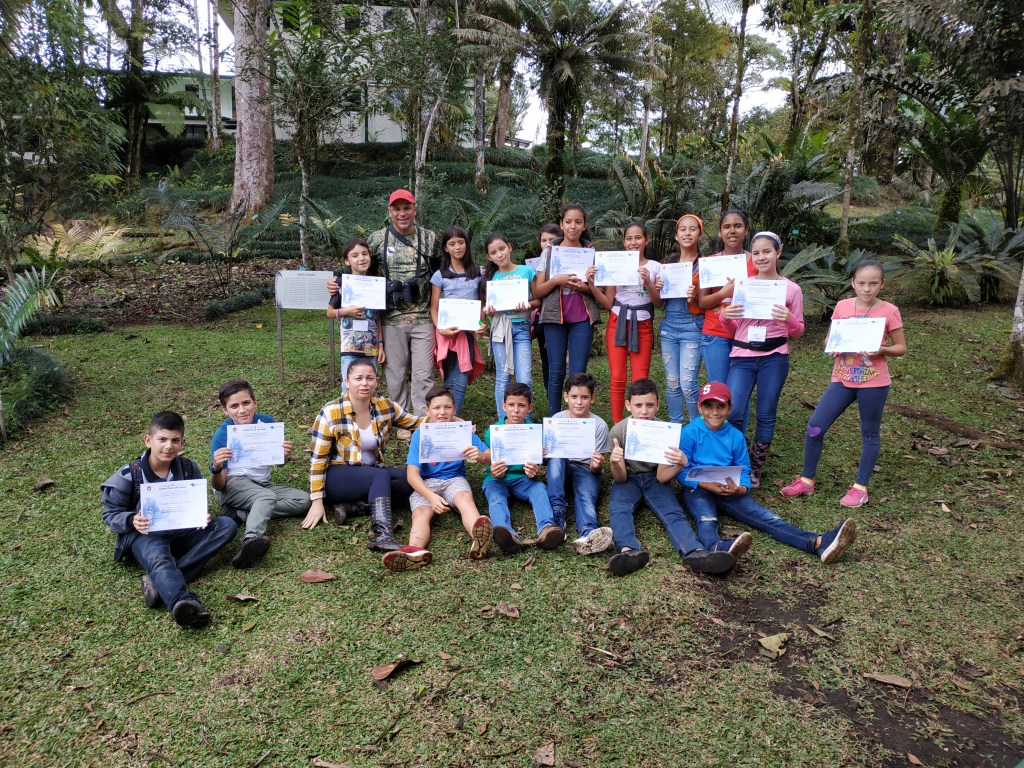
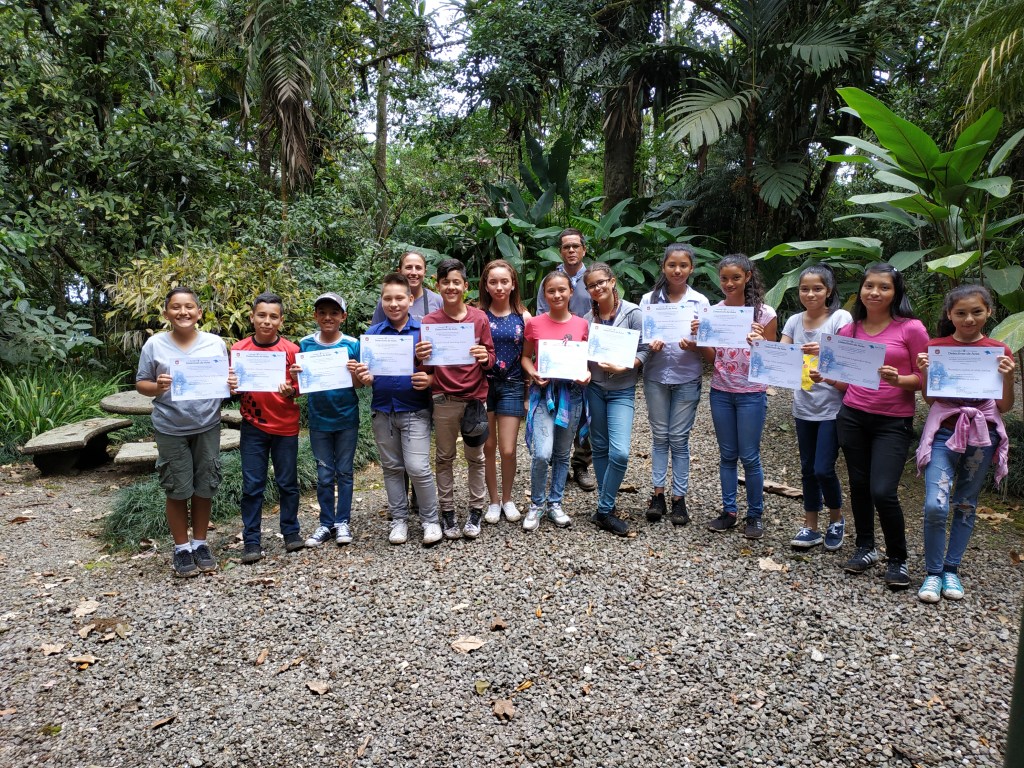
Durante 2019 ofrecimos el curso Detectives de Aves a 161 estudiantes en 9 escuelas y también en Finca Cántaros en diciembre. Ahora tenemos 6 instructores con experiencia y mucha dedicación: Paula Mesén, Carla Azofeifa, Marco Mora, Jeissom Figueroa, Randall Jiménez y Yadira Barrantes. Todos han contribuido su energía, pasión y tiempo dentro y fuera del aula. Por compartir sus experiencias e ideas entre si mismos han mejorado el curso y lo han adaptado a las necesidades actuales de los estudiantes de Coto Brus. Con toda honestidad puedo decir sentirme muy privilegiado por haber trabajado con ellos y ellas durante el año. La prospectiva del año 2020 me emociona bastante.
El Bosque de los Niños de Coto Brus
Como me imagino la mayoría de ustedes ya sepan, la Finca Cántaros se vendió el año pasado a Lilly Briggs, quien por suerte trabaja en el Laboratorio de Ornitología de la Universidad de Cornell, Estados Unidos (¡Pero, quiero que les queda claro que ella es una canadiense muy orgullosa!). Ella es la jefa de todos los esfuerzos educativos del Laboratorio en América Latina. Cuando ella compró la finca, también compró unas hectáreas de potrero a la par con los fines de reforestarlas. Cuando la exdueña de Finca Cántaros, Gail Hull, la compró hace 25 años era potrero puro también, casi sin un arbolito. Lilly tuvo la idea inspiradora de involucrar todos nuestros estudiantes en el proyecto de reforestación para crear El Bosque de los Niños de Coto Brus. ¡Y de verdad el bosque es de ellos! Lilly, en colaboración con el Club y otras organizaciones ambientales, intenta desarrollar muchas actividades dentro del bosque durante los años, y ojalá las décadas, por venir. Por invitar a los estudiantes y sus familias a la finca múltiples veces para cuidarlo y mantenerlo, todos podrían experimentar muy de cerca los cambios profundos que habrán posibilitado sus propios trabajos. Me emociona e inspira imaginar que un día, cuando yo ya no estaré, estos chicos y chicas quienes sembraron los árboles el año pasado volverán con sus hijos y nietos para disfrutar del bosque y reflexionar sobre los cambios positivos que realizaron por sus propios esfuerzos y cuida. Espero sinceramente que todos los miembros del Club vayan al bosque muy pronto, y que les regresen en el futuro para compartir este proyecto bonito y ver los cambios que producirá. Las personas que ya no han encontrado a Lilly tendrán la oportunidad durante la asamblea anual el 1 de marzo.
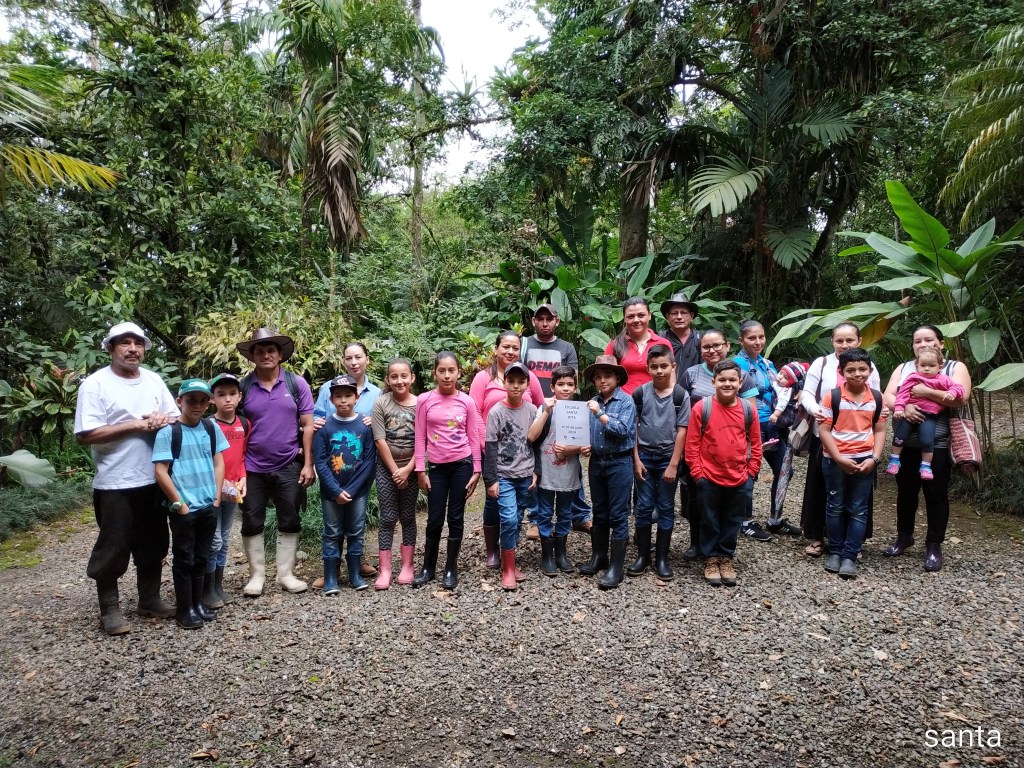
Entonces, ¡era un año muy emocionante! Pero, por supuesto, lo más que hace uno, lo más que tiene que hacer. ¡Así es la vida! Nuestros instructores y instructoras excelentes siempre encuentran más y mejores ideas y maneras para integrar las aves y la educación ambiental en la vida de la comunidad, creando más trabajo para todos 😊. Creo que todos nosotros queremos que Coto Brus se desarrolle en harmonía con su belleza abundante y la amabilidad sobresaliente de su pueblo. Hay muchas personas y organizaciones acá que han trabajado para lograr este fin desde varias perspectivas y con necesidades diferentes. Actualmente se encuentran nuevos modos para trabajar juntos. Todos nosotros que elegimos Coto Brus para pasar las vacaciones cada año o para quedarse de por vida tenemos una obligación particular, creo yo, para hacer lo que podamos para mejorar la comunidad y para servir las necesidades de nuestros vecinos. ¡Hay cosas bastante interesantes por venir este año! Se podrá escuchar más en la asamblea anual. Les saludo y les dejo con unas fotos bonitas de los estudiantes.












 San Vito Bird Club
You must be logged in to post a comment.