Bird Walk Sunday, February 18

Please join us on Sunday, February 18 at the OTS Las Cruces reception building at 7 am for a Bird Walk lasting about an hour. We will have binoculars to share and guides to help with bird IDs. After the walk, we’ll have a social coffee in the Las Cruces dining room.

Reminder: to qualify for the Bird List Competition at our forthcoming Annual Meeting (on Sunday, February 25 at Cascatas del Bosco, starting at 8:00 am), you must send your list of all birds seen or heard from Feb. 14-16 to Julie Girard Woolley @ julgirar@gmail.com. Hopefully tonight, you will hear an owl or a potoo!

See you Sunday! Please bring friends and family; the Walk is free and open to the public.

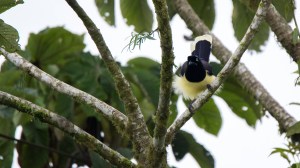
Fiery-billed Aracari: we will see one or hear one (with any luck at all).

Sunday Bird Walk — January 28, 2024

Please join us for a Bird Walk at the beautiful Wilson Botanical Garden this Sunday! We will meet at the Reception Building at 7:00 am and have binoculars to share and guides to lead us.

Why come? To spend a tranquil free hour, walking leisurely through the plant collections, all the while looking for colorful and fascinating local birds. If you are a Spanish speaker, you can practise your English at the coffee hour that follows the Walk. If you are an English speaker, you can learn some new words in Spanish!

Please bring a small donation for the ladies who make the coffe and wash the cups.

All our Bird Walks are free and open to the public; hope to see you there!

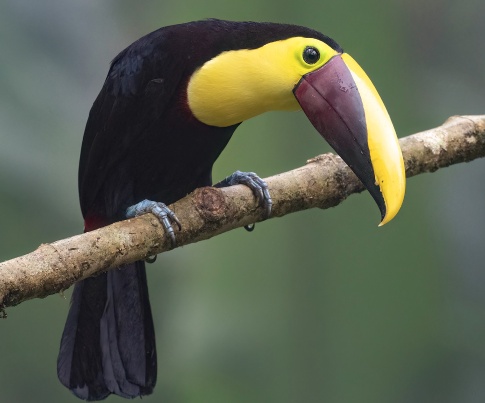
This is a Yellow-throated Toucan, the largest species of the Costa Rican toucan group. They are often seen on our walks and can be heard calling for a very long distance.

Bird Walk this Sunday January 23 / Caminata para ver aves el próximo domingo 23 de enero

Please join us for the first walk of the New Year at the Wilson Botanical Gardens. Summer is now in full force and the mornings have been beautiful for spending time outdoors. We will meet at the Reception at 7 AM. Entrance to the Gardens and coffee are free for this event. We will have coffee in dining room after the walk, and breakfast will be available for purchase. Please fill out THIS form to let us know if your interested in coming and/or having breakfast. We look forward to seeing you!

Por favor venga al jardín botánico Wilson el próximo domingo 23 de enero para una caminata para ver aves. Ya estamos en verano puro y todas las mañanas están idóneas para quedarse afuera. Nos encontraremos al la recepción a las 7. Tomaremos un cafecito después de la caminata, y el desayuno será disponible para comparar. Por favor llene ESTE formulario para indicar si intenta asistir y/o desayunar. Las entradas al jardín y el café son gratis. ¡Espero verlos entonces!

Bird Walk this Sunday December 19 / Caminata para ver aves domingo 19 de diciembre

Please join us for an almost Christmas bird walk at the Wilson Botanical Gardens this Sunday December 19 at 7 AM. The mornings in Las Cruces have been incredibly beautiful over the last week, so come out and enjoy the beginnings of summer! There will be coffee and breakfast available after the walk. Admission, coffee and tea are free. Like last time, there will be two breakfast options as follows:

Option #1.       Complete tico Breakfast: Gallo pinto, egg (scrambled or omelet), fried plantain and local fresh cheese with hot drink (Coffee, tea or aguadulce) and season fruit for USD $8.00/C5,000.

Option #2.       Small breakfast: Egg sandwich (local cheese, bacon or ham, and egg) on  whole wheat bread with hot drink (Coffee, tea or aguadulce) and season fruit for USD $5.00/C3,000.

Please fill out THIS form to let us know if your are planning to attend and if you want breakfast. This is just to let the Garden know how much food to prepare. Or you can contact Alison or me directly.

Por favor lleve la familia al jardín botánico Wilson este domingo 19 de diciembre a las 7 AM para una caminata para ver aves. Las mañanas en Las Cruces han sido increíblemente bonitas durante los últimos días. Entonces, ¡disfrutamos juntos los primeros días de verano mirando aves! Habrá café y desayuno disponibles después de la caminata. Las entradas, café y té son gratis. Como la última vez habrá dos tipos de desayuno:

Opción 1: Desayuno grande y completo con pinto, huevos, queso, etcétera par $8 o C5.000.

Opción 2 Desayuno pequeño con un sandwich de huevos, jamón y queso y fruta aparte para $5 o C3.000

Las dos opciones incluyen café, té o aguadulce.

Por favor llene ESTE formulario para indicar su intención de asistir y desayunar. O puede contactar a Alison o a mí.
Father’s Day Bird Walk 2021

Please join us for a Bird Walk this Sunday, June 20, at the OTS/Las Cruces Research Station aka Wilson Botanical Garden. We will meet at the Reception Building at 7:30 am and have binoculars to share.

As guests of the SVBC, you will enter for free; however, if you want to make a voluntary donation, that would be most welcome. (The Entrance Fee is $10 for tourists and $3 for residents.)

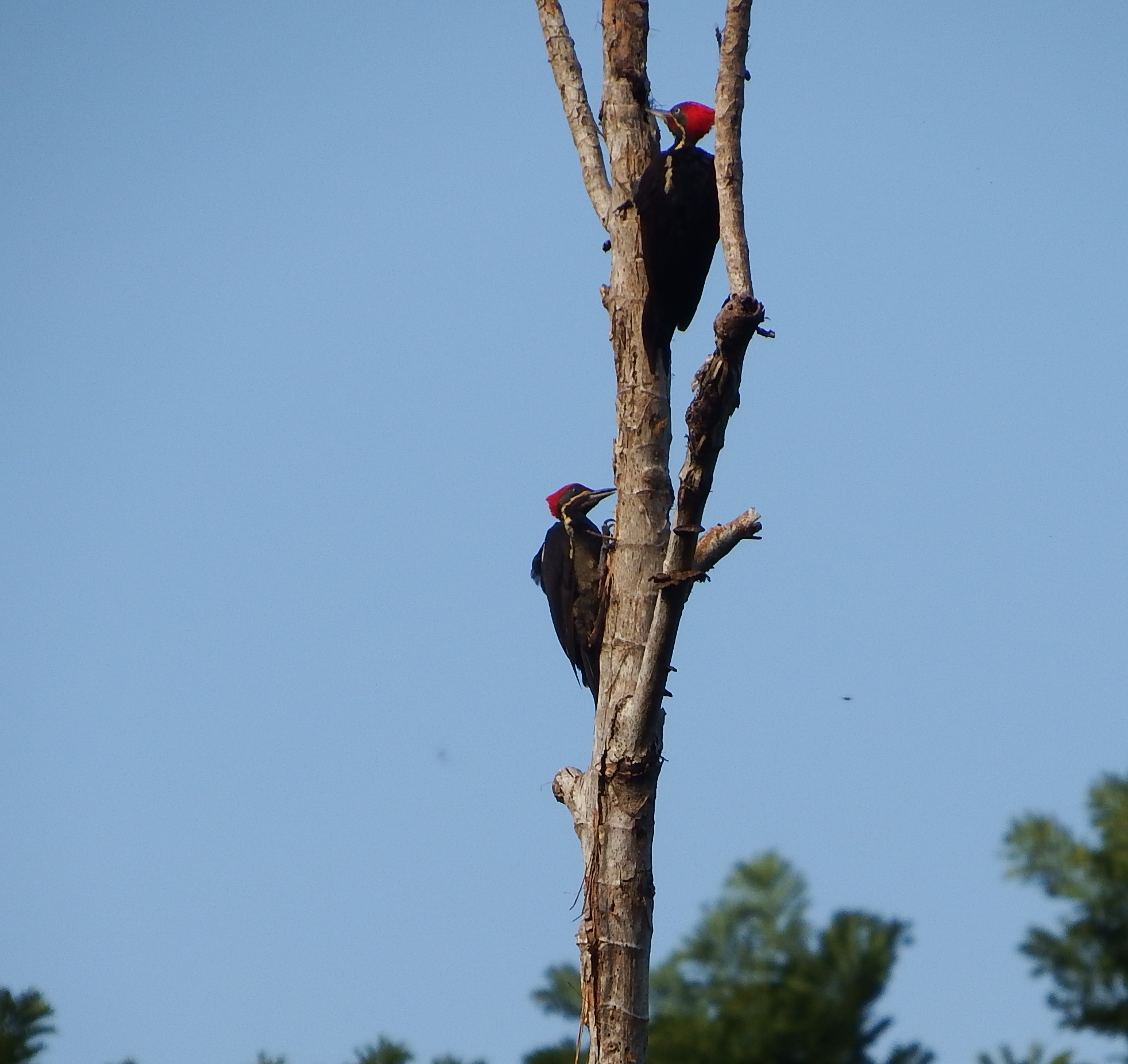
Let’s look for these beautiful woodpeckers:

Lineated Woodpeckers, photo by Alison Olivieri

Bird Walk on Sunday, June 6

Please join us for a Bird Walk at the incomparable Finca Cántaros on Sunday, June 6 (tomorrow!). We will meet at the entrance gate at 7:30 am and have binoculars to share.

The walk will last for about an hour.

If we have more than 6 walkers, we will go in two groups and run a little competition to see which group sees the most species.

A Voluntary Donation to the new Finca Cántaros Environmental Association would be most welcome. Hope to see you there!

Migration Is On: Sweepstakes Early Spotting Prize to Judy Richardson!

Judy Richardson, photo by Juan Carlos Calvachi

Herewith we announce the Early Migrant Sweepstakes winner: Judy Richardson!

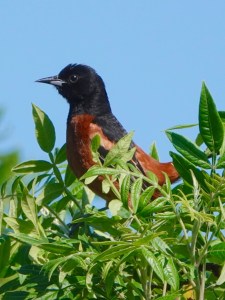
Wait, what? You didn’t realize we had a Migrant Sweepstakes going on? Neither did we until a minute ago. Never mind, we have it now and the first bird reported was a beautiful Orchard Oriole.

Orchard Oriole, photo by Mark Garland

Judy found him in early August at Hacienda Pino Collina, next door to the Wilson Botanical Garden; her home in San Vito where she’s been passing Covid-19 pandemic time birding, gardening, reading and cooking.

Let’s get into the swing of this people! How about we run a Migrant Spotting Contest from now until September 30? Just go outside with your phone and the two apps from Cornell, Merlin and eBird, and get started. Send your list to our Birder-in-Chief Greg Homer at: eltangeral@gmail.com by September 30, 2020 and we will see who finds the most waterthrushes, warblers, flycatchers and more.

Or, if you’re still operating like it is 1970, take a pencil, notepad and the Garrigues and Dean field guide outside and get going with those.

We will give you a prize, promise!

Judy is going to have one of her favorite desserts: Sticky Toffee Pudding with vanilla ice cream — delivered to her door. Just think what you might win?! Yum yum!

Two of the Country’s Five Jays Have Hit Our Patch!

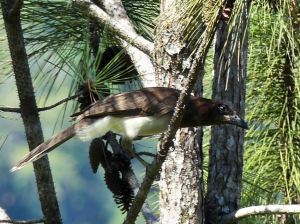
Brown Jay, photo by Jo Davidson.

Suddenly we have two species of jays to be pursued in San Vito: the garrulous Brown Jay and the far more flamboyant Black-chested Jay.

Brown Jays have been with us for some time now – not in great numbers as in the rest of the country but every so often one or two pop up, giving their “piyah, piyah” call. This usually brings us up short and, as we struggle to place it, this unmistakeable fellow glides into view.  Traveling in “Boisterous parties” is how they are described in the second edition of The Birds of Costa Rica by Garrigues and Dean.

Black-chested Jay. Photo by Pepe Castiblanco.

Meanwhile, Black-chested Jays are far less common with a range formerly restricted to southern Caribbean lowlands. They have been seen sporadically over time in and around Coto Brus; for example near the Panama border at Canas Gordas.  In contrast to their brown cousins, they are described as “. . . a bit more furtive.” But now we have a small flock up in Concepcion, above the Wilson Botanical Garden/Las Cruces, that can often be seen in early morning near the open-on-weekends restaurant Los Jilgueros. In fact, Sr. Gamboa, the owner, is quite attuned to these handsome birds and can often point a hopeful birder in the right direction.

Jays fascinate us for many reasons. They are loud and have a big presence — when you are near a jay you know it. They have personalities with definite likes and dislikes, complex social systems, tight family bonds and some species are good mimics. They’re smart and can solve problems posed by researchers like their fellow corvids, crows and ravens. Often Costa Rican birders who visit the United States come back with the North American Blue Jay at the top of their Favorite Bird list.

Bird Walk Tomorrow: Sunday, October 27!

Northern Waterthrush: a migrant to watch for! Photo by Gail Hull

Please join us for a free Bird Walk at the Wilson Botanical Garden tomorrow morning, October 27, at 7:30 a.m.

As usual, we will meet at the Reception Building and have binoculars and bird guides to share.

Many migrants have arrived in the past several weeks so we will look for them as well as whatever other beauties we can find.

Look forward to seeing you there!


Welcome White-winged Doves!

We have been waiting for quite some time for these angelic-looking birds to show up in our beloved southern zone and it appears our vigil might be over.

White-winged Doves. Photo by Jim Zook

First, a pair was spotted in September near La Union de Sabalito by Jim Zook who was on the job doing bird counts for Stanford University. Shortly thereafter, one was found by Randall Jiménez Borbón, a Pajarero Del Sur member and Detectives de Aves teacher, in his garden in Linda Vista just south of San Vito on the road to Ciudad Neily.

In the Stiles and Skutch Guide to the Birds of Costa Rica (published in 1989), they were considered a ‘. . . locally abundant permanent resident in dry Pacific NW, south to Jaco.’ In more recent times, they are described as ‘. . . common resident in northern Pacific and across the Central Valley . . . ‘ by Garrigues and Dean in the second edition of The Birds of Costa Rica. You can see the trajectory; it was just a matter of time.

They are pretty easy to see if you are expecting them: Garrigues describes them as “. . . commensal with humans. . . ” and goes on to say they favor open areas and are often seen feeding along roadsides. They look a lot like Mourning Doves except for the white band down the length of the wing – this is easily seen at rest and a lovely display in flight. Further, Mourning Doves have long, tapered tails and black spots on their wings, both of which are lacking in the Whities.

From November to May, our resident populations are joined by migrants from the southwestern US. The entire range goes from Arizona, New Mexico and Texas in the US; throughout Mexico and down through Central America to western Panama, as well as throughout the Caribbean islands.

Breeding season is January to March, so we will try to keep an eye on the Sabalito pair. And, meanwhile, keep a sharp eye out as they may turn up at your house any day now!