Just a reminder, as promised, to join us tomorrow, Sunday, June 16 at 7:00 am at the Reception Building at OTS/Las Cruces/Wilson Botanical Garden.
If it is raining, we will wait a bit and if it looks promising, we’ll venture out. Birds pop out too, after the rain, to look for food — enhancing our chances of seeing them.
All San Vito Bird Club Bird Walks are free and open to the public. As usual, we will have binoculars to lend. The Walk is followed by a coffee social hour in the dining room.
Following in Co-President Greg Homer’s footsteps, we had three opportunities for members to show off their bird expertise at the recent Annual Meeting and I think we were all pleasantly surprised. All members were invited to participate in the Cornell eBird annual Great Backyard Bird Count (GBBC). The GBBC was one of the first online projects to collect information on wild birds and was also instrumental in the creation of eBird back in 2002. Our local winner was Anna Bilberry with 68 species!
Anna and her adorable dog, photo by Lydia Vogt
At the meeting, attendees participated in two challenging bird games: the Bird Call Contest required sharp hearing and quick recall as the vocalizations of 14 local birds were played, and answes had to be written down.
The second game of Bird Trivia required mostly general bird knowledge (members were warned before the meeting to bone-up on eBird facts), and ten questions separated the casual contestants from the eager.
In both of these games our members did very well, and Anna was again at the top, with Nancy Warshawer only a point behind! But one fairly new member exceeded the score of everyone — Rodney Briggs, of the Finca Cantaros Environmental Association (and Lilly’s dad). He has obviously spent the last two years doing more than planting trees.
Missing only one bird call (the tough Rufous-breasted Wren), he had a total on both games of 21 points.
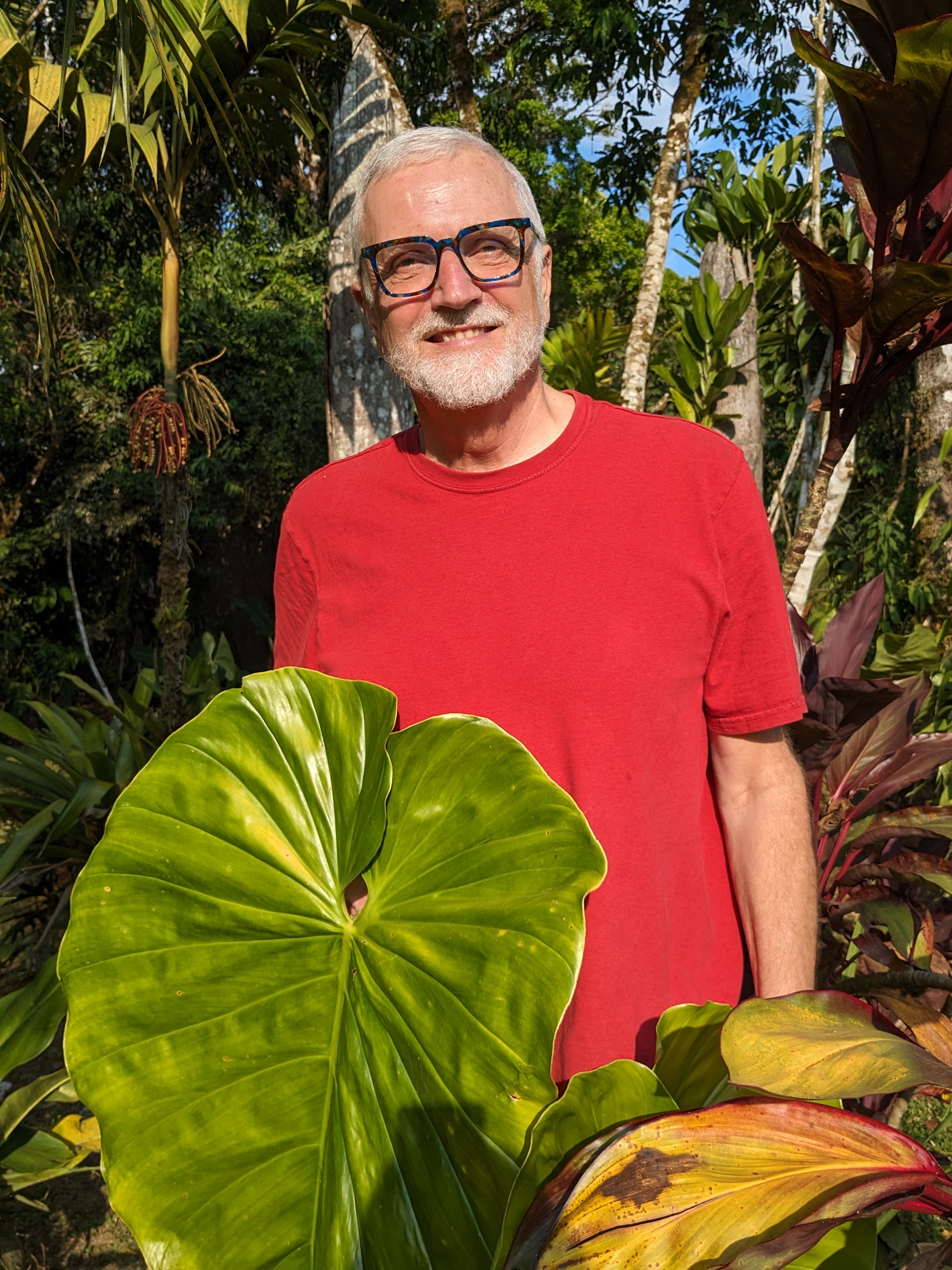
Rodney Briggs, photo by Alison Olivieri
Congratulations to all the members who gave it a try — and especially to Anna and Rodney!
Over the years the San Vito Bird Club has held its Annual Meeting in several different locations, including the beautiful Las Cruces Research Station.
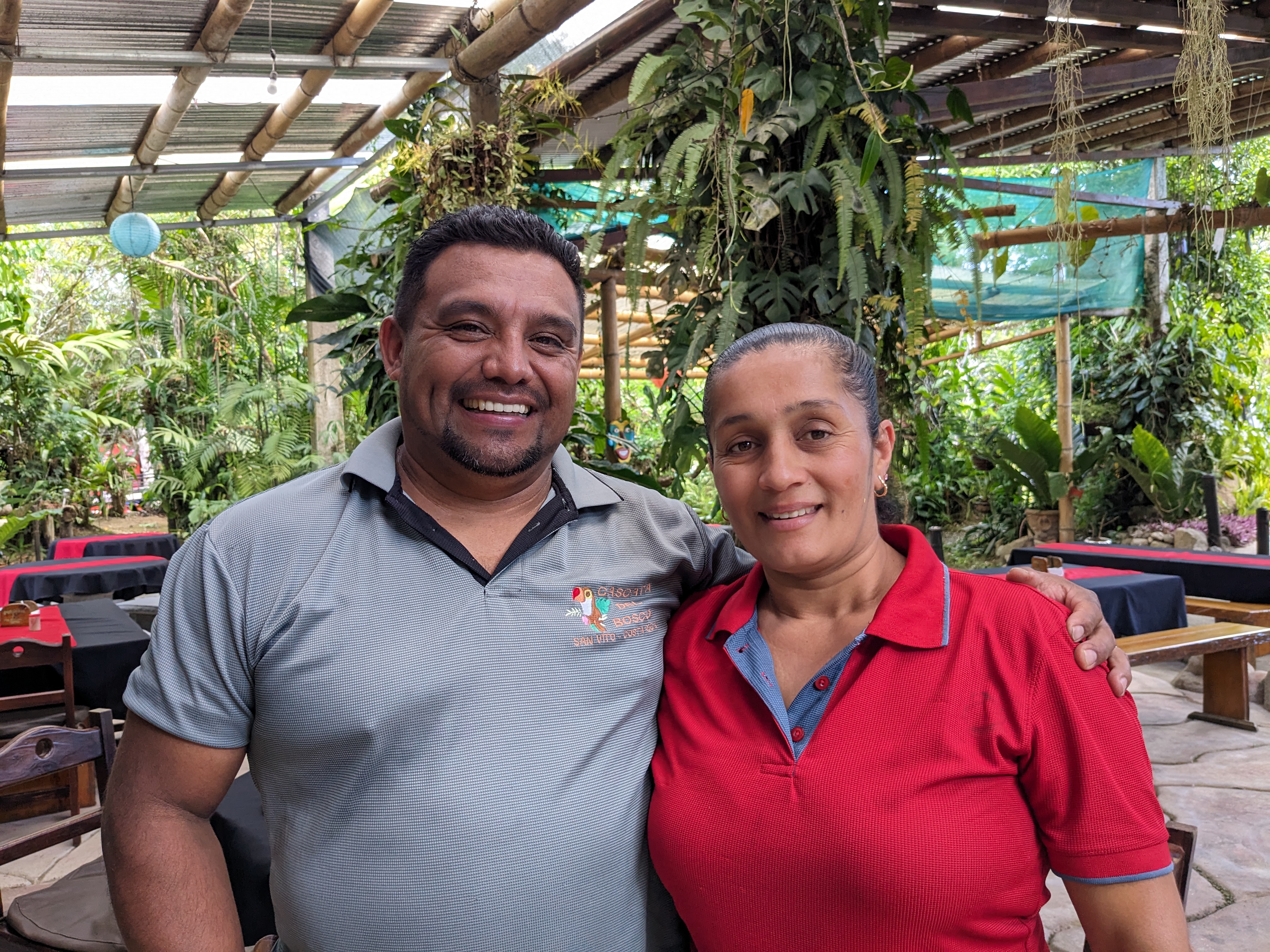
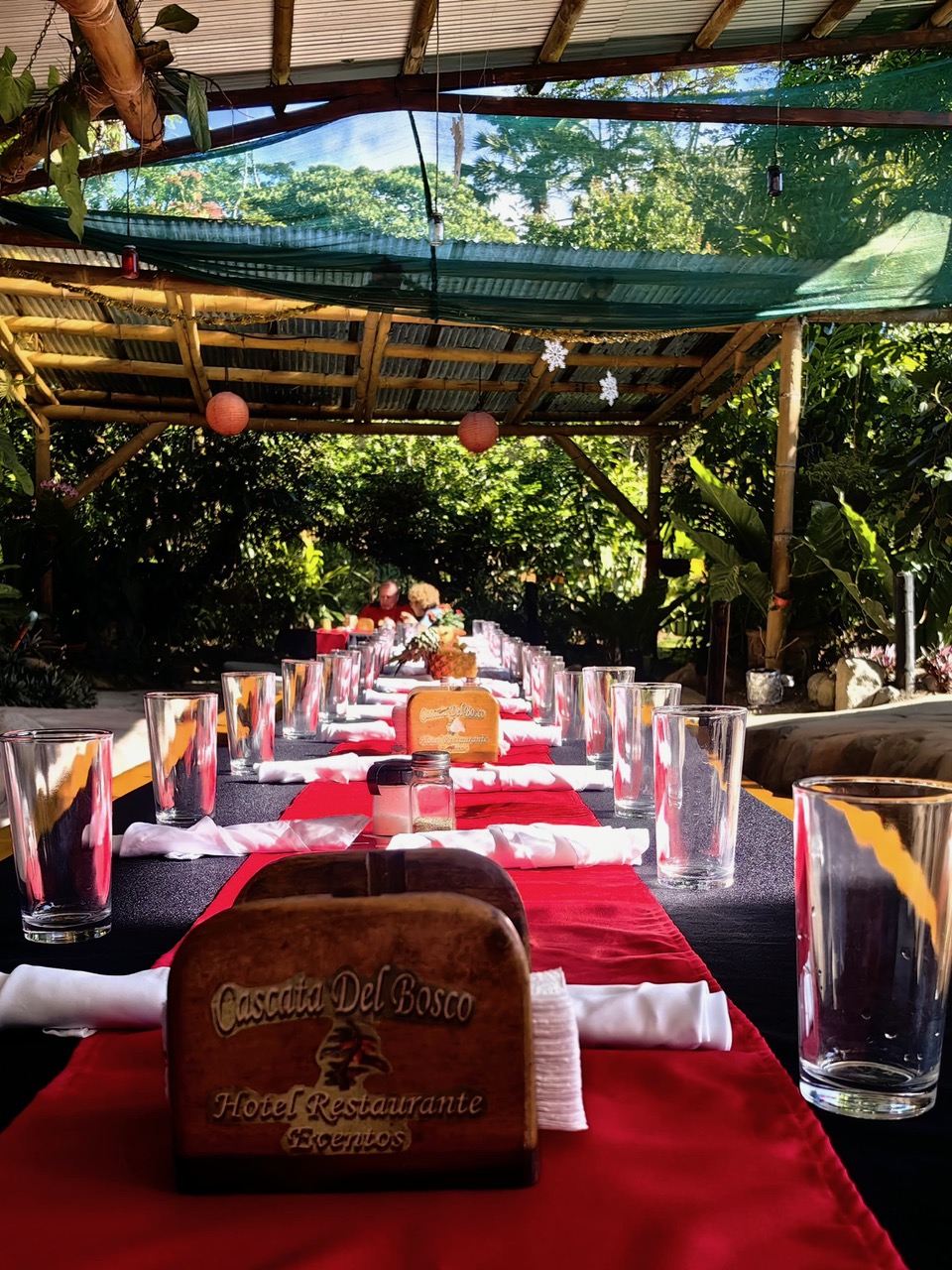
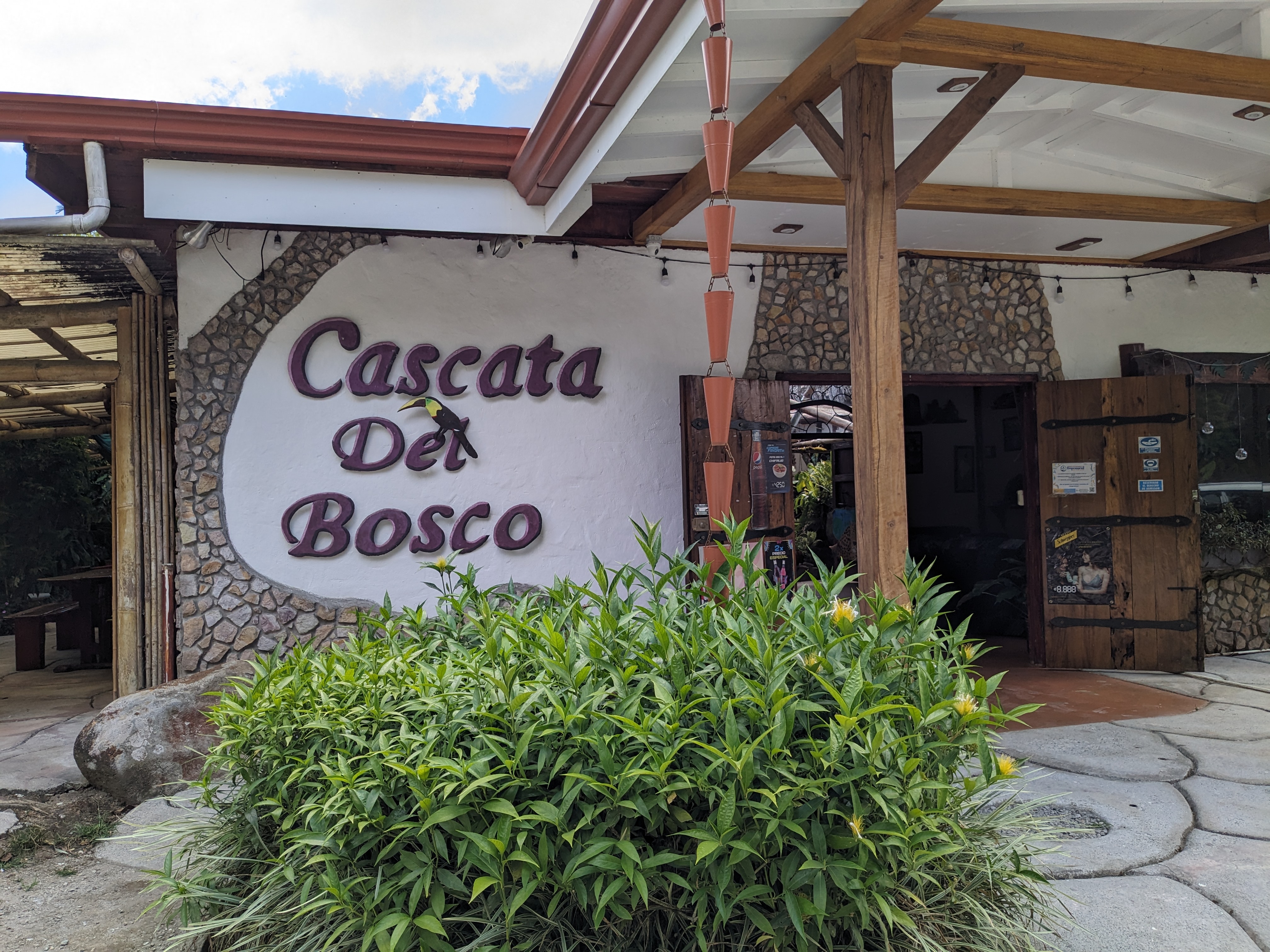
Chef Jairo Alemán and family were thrilled to have us return for our 20th anniversary to his restaurant at Cascata del Bosco.
Cascata has hosted many SVBC meetings over the past 20 years — and they really excelled this year. Jairo and Ligia made delicious Huevos Rancheros, while the whole family prepared accompaniments.
We had a great time Sunday, February 25 at Cascata Del Bosco and wish you could have been there. This year we had two themes: Celebrating 20 Years of Birding in San Vito and the incomparable Resplendent Quetzal.
Our three main speakers — Dr. Lilly Briggs, Alan Poole and Henry Barrantes — were excellent. So that you don’t miss a thing, their talks will be summarized in forthcoming posts.
For now, we begin with a short history outlining our three major achievements. (Eventually, we will add a ‘page’ to this website citing the Club’s accomplishments, small and large.)
In 2004, we began a 10-year Avian Monitoring Study with Principal Investigator Dr. Steve Latta of the National Aviary and Judy Richardson, Master Bander from the Connecticut Audubon Society. The core group included Julie Girard Woolley, Cecilia Sansonetti, Lydia Vogt, Kate Allen Desvenain, Daniel Martinez, Juan Pablo ‘Chespi’ Elizondo and many other local and international volunteers. It was a lot of work and resulted in a published paper and an article in the bulletin of the Asociación Ornitológica de Costa Rica.
In 2011, we cut the ribbon on a Canopy Tower that had taken three years of fundraising to complete. We’re happy to report it is still standing — at the Organization for Tropical Studies Las Cruces Biological Research Station — and attracting visitors from all over the world.
Finally, in 2012-13, we began presenting an environmental education program from the Cornell Lab of Ornithology, ‘Detectives de Aves’ (in English: BirdSleuth International), in local elementary schools. This program continues to this day and much more about that will be forthcoming in another post.
From left to right, 20 years ago, Alison Olivieri, Terrie Moss (formerly of Linda Vista, now of St. Louis, MO), Daniel Martinez (former Biologist at Las Cruces, now of the Ornithological Council of Costa Rica) and Julie Girard Woolley (who needs no introduction).
Please join us on Sunday, February 18 at the OTS Las Cruces reception building at 7 am for a Bird Walk lasting about an hour. We will have binoculars to share and guides to help with bird IDs. After the walk, we’ll have a social coffee in the Las Cruces dining room.
Reminder: to qualify for the Bird List Competition at our forthcoming Annual Meeting (on Sunday, February 25 at Cascatas del Bosco, starting at 8:00 am), you must send your list of all birds seen or heard from Feb. 14-16 to Julie Girard Woolley @ julgirar@gmail.com. Hopefully tonight, you will hear an owl or a potoo!
See you Sunday! Please bring friends and family; the Walk is free and open to the public.
Fiery-billed Aracari: we will see one or hear one (with any luck at all).
As promised, we have further information about the upcoming Celebratory Annual Meeting 2024!
Traditionally, we’ve had a lively contest among members as to whose bird feeder hosted the most species. Now that feeding wildlife is prohibited by law in Costa Rica (hip hip hooray!), we have a new race to the top for you.
Following in the footsteps of the Cornell Laboratory of Ornithology’s Big Backyard Count, please add up all the bird species you see or hear from Feb. 14-16 in your home territory. International Members* are invited to participate but no going far afield! Stay home! Count your birds! (We will know if you locals rush off to Guanacaste.)
Please email your list to Julie Girard: julgirar@gmail.com by Feb. 24. That is plenty of time as the cut-off date is Feb. 16. This contest starts tomorrow — Valentine’s Day — so get cracking. Our Secretary-Treasurer Lydia Vogt has a nice prize in mind for you with the longest list!
PS Gray-headed Chachalacas count…….
We also know where this one lives…………..
*If you are competing from afar, please tell Julie where you live when you submit your list. If you win, we’ll need your address to mail the prize.
Please join us for a Bird Walk at the beautiful Wilson Botanical Garden this Sunday! We will meet at the Reception Building at 7:00 am and have binoculars to share and guides to lead us.
Why come? To spend a tranquil free hour, walking leisurely through the plant collections, all the while looking for colorful and fascinating local birds. If you are a Spanish speaker, you can practise your English at the coffee hour that follows the Walk. If you are an English speaker, you can learn some new words in Spanish!
Please bring a small donation for the ladies who make the coffe and wash the cups.
All our Bird Walks are free and open to the public; hope to see you there!
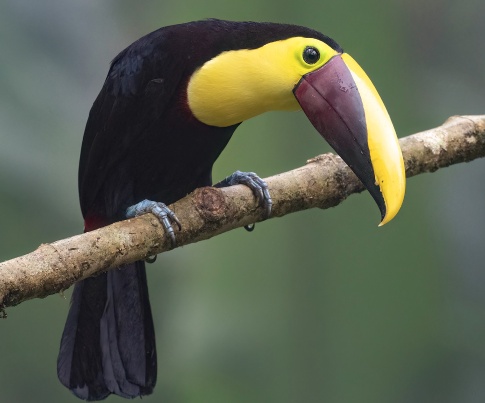
This is a Yellow-throated Toucan, the largest species of the Costa Rican toucan group. They are often seen on our walks and can be heard calling for a very long distance.
Please join us for the first walk of 2022 at Hacienda Pino Colina, next door to the Wilson Botanical Garden/Las Cruces.
Judy Richardson has kindly invited us to visit her beautiful homestead where we have seen nesting Rufous Jacamars, White- crested Coquettes, White-winged Tanagers and more, so much more!
Rufous-tailed Jacamar, photo by Yeimiri Badilla
Drive through the open gate to the right (just north) of the main Pino Colina gate at 7 am. Follow the road down the hill and park near the bodega. Judy will meet us there; as always, we will have binoculars and guides to share.
Here is a photo of our last walk of 2021 at Las Cruces/Wilson Botanical Garden.
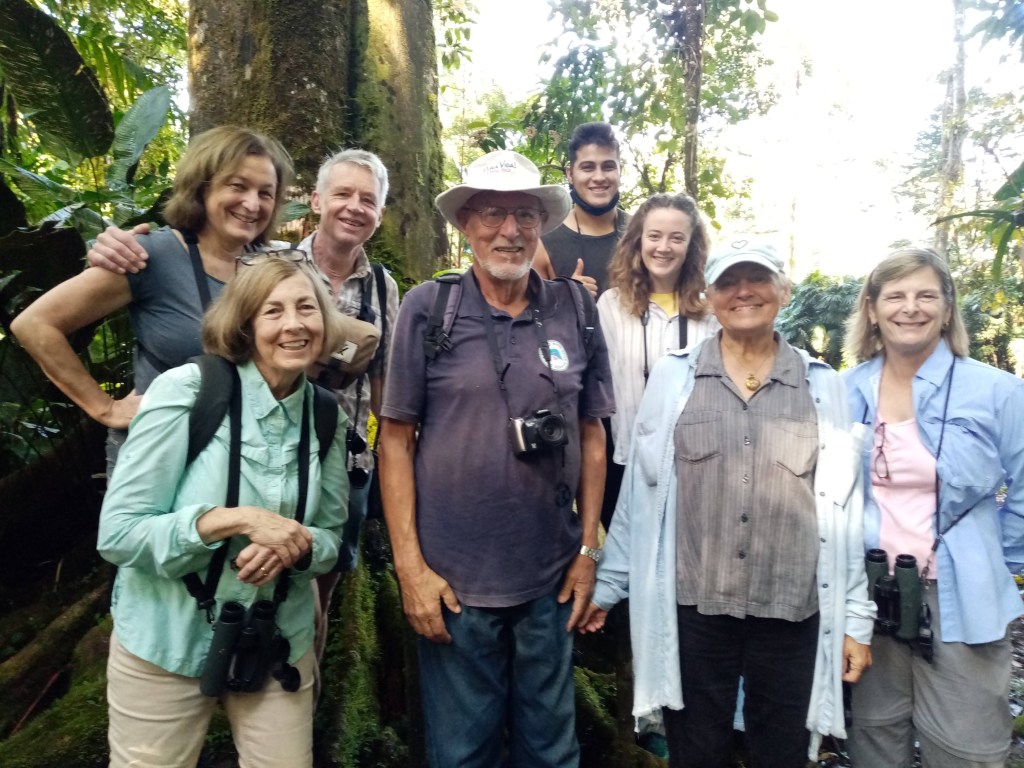
From left to right: Petra Heck, Judy Richardson, Peter Hulsinck, Tomas Wilkinson, Steffano from New Zealand, Tom and Portia’s granddaughter Ada, Portia Wilkinson and Julie Girard Woolley — photo by Alison Olivieri
Hope to see you there for fabulous birds and gorgeous gardens — it will be a real treat!
Please join us for a November bird walk at the Wilson Botanical Gardens this Sunday November 14 at 7 AM. There will be tons of migrants to see! There will be coffee and breakfast available after the walk. Admission, coffee and tea are free. Like last time, there will be two breakfast options as follows:
Option #1. Complete tico Breakfast: Gallo pinto, egg (scrambled or omelet), fried plantain and local fresh cheese with hot drink (Coffee, tea or aguadulce) and season fruit for USD $8.00/C5,000.
Option #2. Small breakfast: Egg sandwich (local cheese, bacon or ham, and egg) on whole wheat bread with hot drink (Coffee, tea or aguadulce) and season fruit for USD $5.00/C3,000.
Please fill out this form to let us know if your are planning to attend and if you want breakfast. This is just to let the Garden know how much food to prepare. Or you can contact Alison or me directly.
Por favor venga y llevar a la familia también al jardín botánico Wilson este domingo 14 de noviembre a las 7 AM para una caminata para ver aves. Estarán muchas aves migratorias para disfrutar. Habrá café y desayuno disponibles después de la caminata. Las entradas, café y té son gratis. Como la última vez habrá dos tipos de desayuno:
Opción 1: Desayuno grande y completo con pinto, huevos, queso, etcétera par $8 o C5.000.
Opción 2 Desayuno pequeño con un sandwich de huevos, jamón y queso y fruta aparte para $5 o C3.000
Las dos opciones incluyen café, té o aguadulce.
Por favor llene este formulario para indicar su intención de asistir y desayunar. O puede contactar a Alison o a mí.
Please join us for a bird walk at the Wilson Botanical Gardens this Sunday at 7 AM. The entrance will be free thanks to the generous donation of a Club member. The female White-crested Coquette has been seen hanging around the pollinator garden, and maybe we’ll be lucky enough to see her. The comedor will be open for those who would like coffee and conversation afterwards. Binoculares and guides will be available as always.
Por favor venga al jardín botánico Wilson este domingo al las 7 AM para una caminata para ver aves. Las entradas serán gratis por una donación muy amable de un miembro del Club. La hembra Coqueta crestiblanca se vea actualmente en el jardín de los polinizadores. ¡Tal vez tendríamos la suerte de verla! El comedor estará abierto para los que ocuparán un cafecito y conversación después de la caminata. Habrá binoculares y guías disponibles como siempre.







You must be logged in to post a comment.