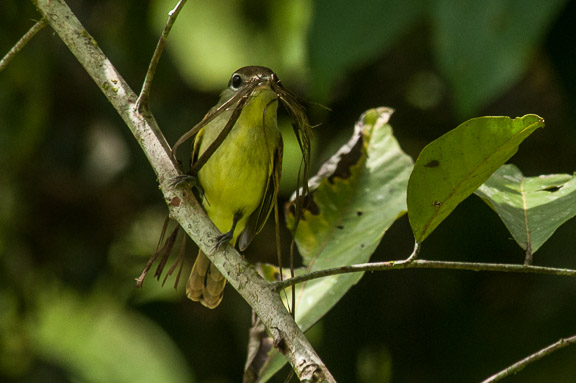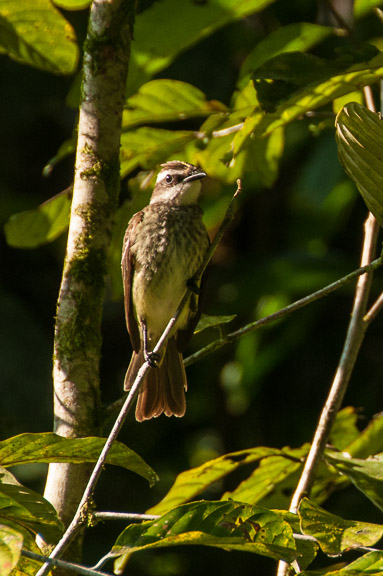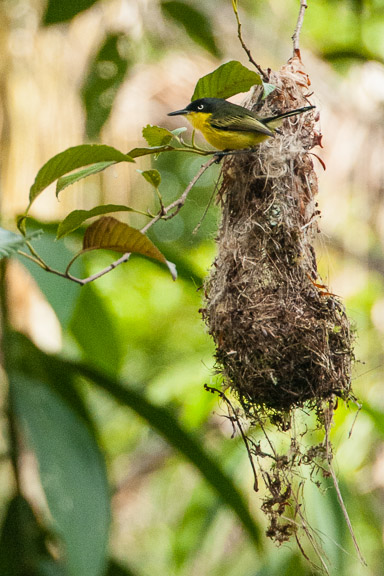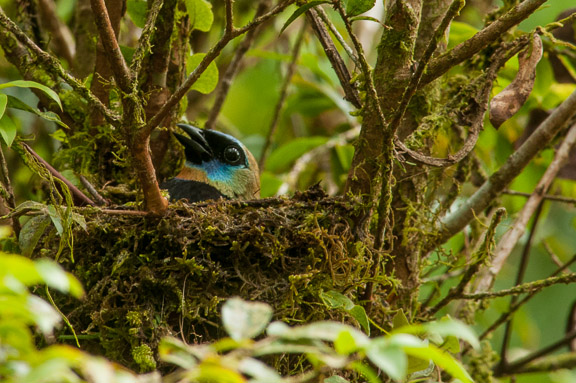
Oropendola Colony Found in San Vito/Colonia de Oropéndolas encontrada en San Vito

Sigue en espanol

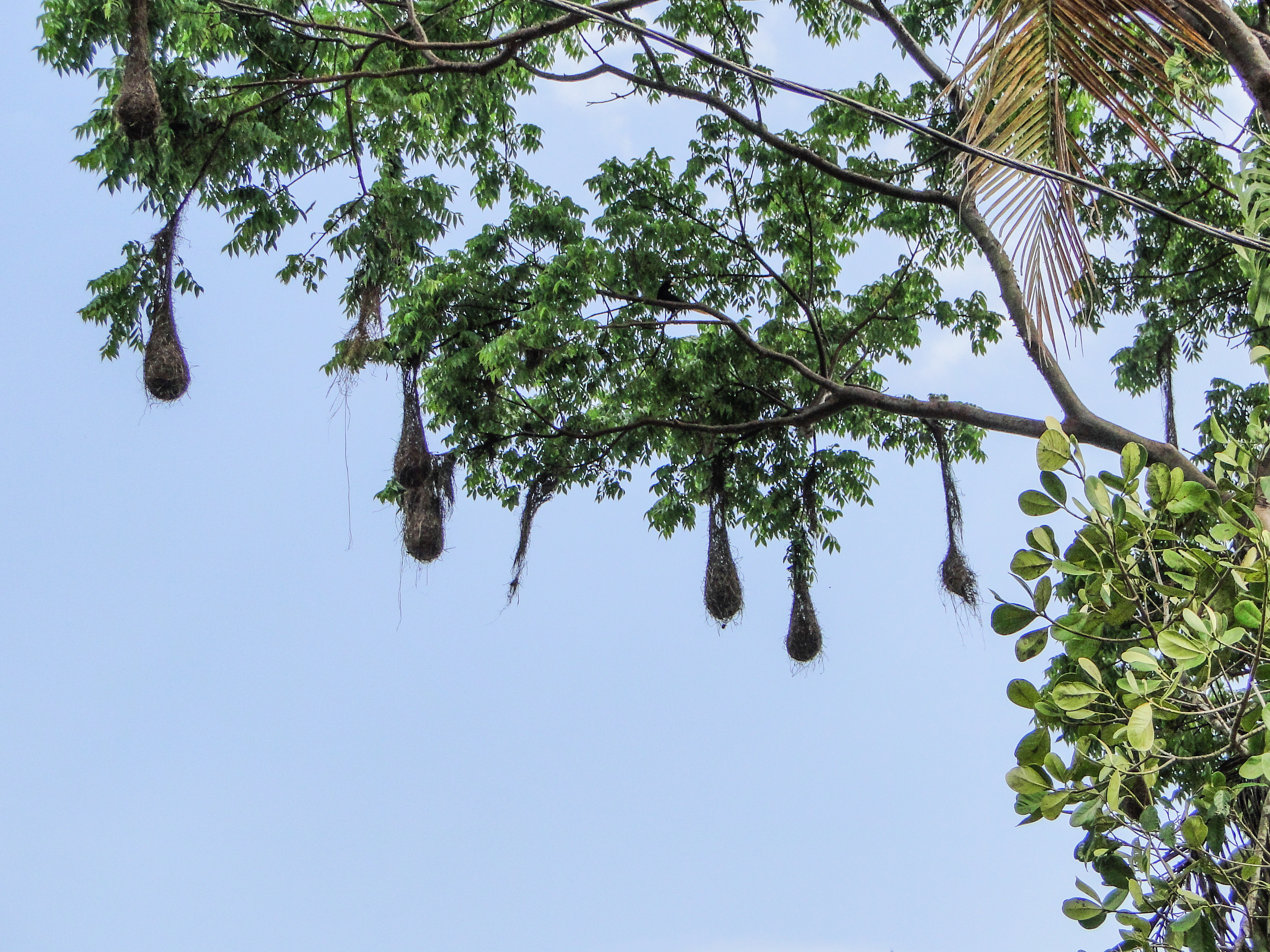
Sharp-eyed member Wendy Bernstein reported a new oropendola colony at the San Vito air strip.

Oropendola nests. Photo by Monique Girard.

Oropendola nests. Photo by Monique Girard.

If you drive from San Vito toward Sabalito, the pendant nests can be seen across the air strip about one-third of the way down the runway. They are hanging on the left side of a tree with the common name ‘Poro’ that attracts orioles, warblers, bananaquits, hummingbirds and more when it flowers.

We need to do a stake-out to be sure the birds are Crested Oropendolas! This species was first recorded here in 1999 having expanded its range from nearby Panama. Historically, San Vito had a population of Chestnut-headed Oropendolas but the newcomers routed them and are now the only species found in the southern Pacific region.

Nuestro miembro de excelente vista Wendy Bernstein nos ha reportado una nueva colonia que se ha establecido en la pista de aterrizaje de San Vito.

Si ud. viaja de San Vito a Sabalito los nidos colgantes pueden ser observados al otro lado de las pista aproximadamente a una tercera parte de la pista. Los nidos están colgando al lado izquierdo de un árbol comúnmente conocido como “Poro” que atrae además a orioles, reinitas y bananaquits, colibríes y muchos mas cuando esta en época de floración.

Necesitamos comprobar que estos nidos corresponden a Crested Oropendolas, una especie que fue primero contabilizada en 1999, habiendo expandido su rango de distribución  del contiguo país Panamá. Históricamente, San Vito tenia una población de Chestnut-headed Oropendolas pero los recién llegados las han desplazado y hoy por hoy son la única especie encontrada en el Pacifico Sur .


Kansas Students Invade Finca Cantaros

Sigue en espanol

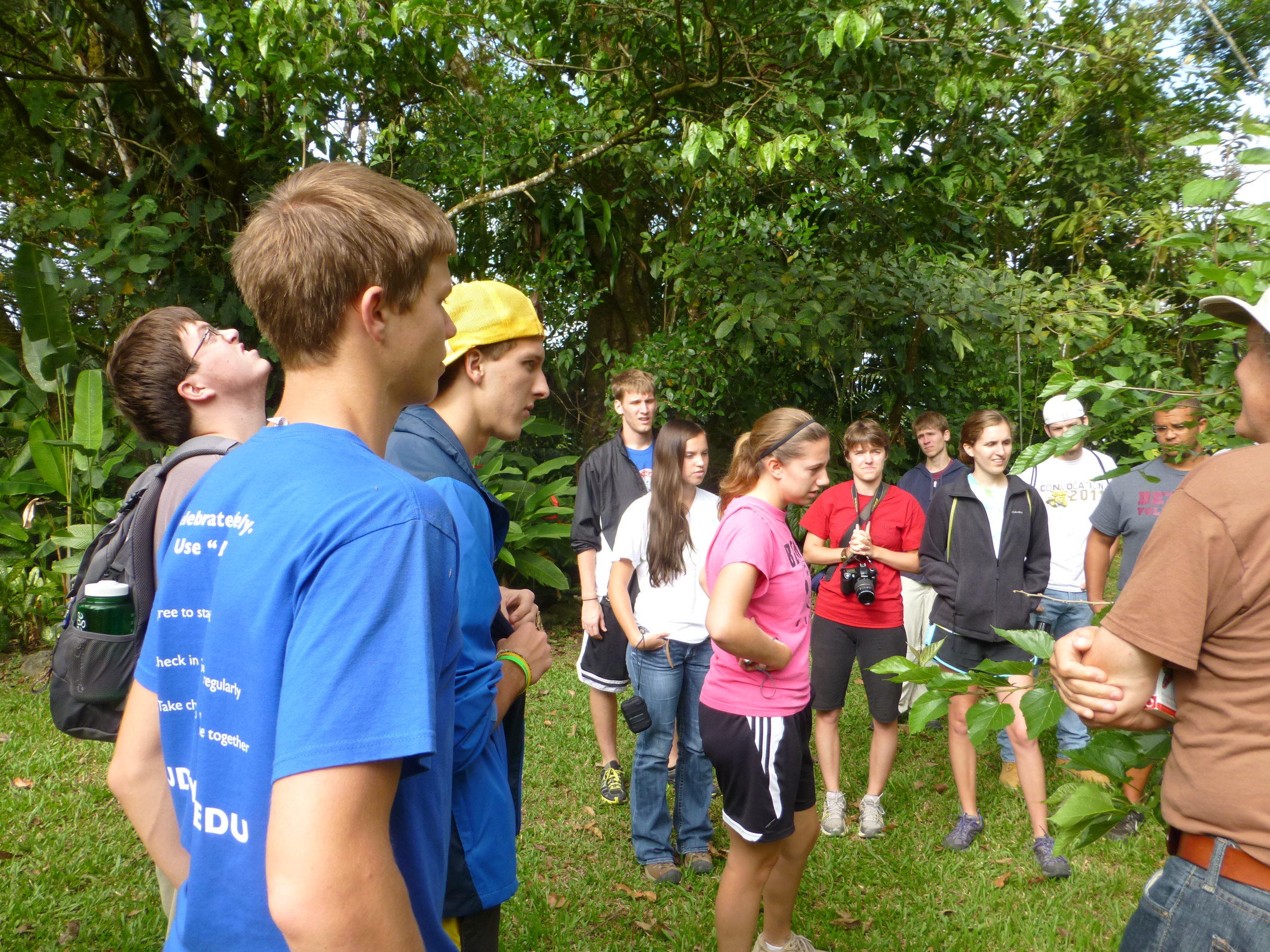
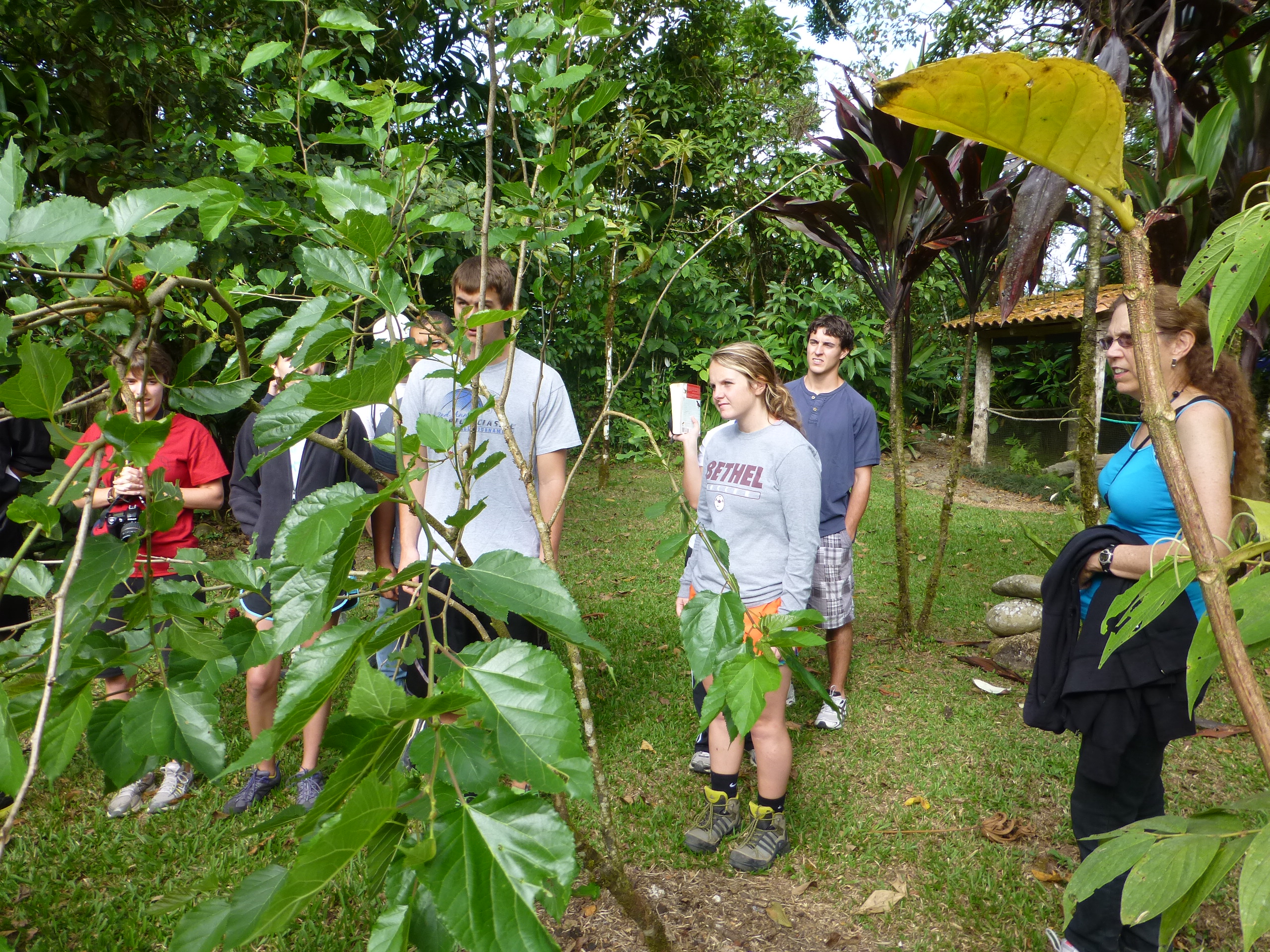
Bird banders Julie Girard and Alison Olivieri gave a Mist Netting Demonstration on January 22, 2013 for students in Professor Jon Piper’s biology course at Bethel College in North Newton, KS, the landscape of which could not possibly be more different than San Vito!

Bethel College students at Finca Cantaros.

Bethel College students at Finca Cantaros.

The 16 students have been traveling in Costa Rica since January 3 and their stay here at the Las Cruces Biological Research Station gives them an OTS hat-trick for visiting all three stations, including Palo Verde and La Selva. Their interest in birds and, we hope, bird study, was piqued by close-up looks of at a handsome White-throated Robin, Speckled Tanager, one male and one female Rufous-tailed Hummingbird and two neotropical migrants, an Ovenbird and a Northern Waterthrush.

Over many years, Jon has been bringing groups of students to Costa Rica in January where they become familiar with the many different habitats in this tiny country. They participate in biological study projects, are continually quizzed and challenged and eventually have their final exam.

Beth Piper, seen at right.

Beth Piper, seen at right.

Several years ago, the Piper family came to live in San Vito during a sabbatical year for Jon and they have been missed by all of us associated with Las Cruces/ Wilson Botanical Garden ever since. It was good to have Jon’s wife Beth with him this year — if only for a moment!  We look forward to more Piper-style visits with curious, funny and bright students in years to come.

Las Anilladoras Julie Girard y Alison Olivieri dieron una demostración con redes de niebla el pasado 22 de Enero, 2013 para estudiantes del profesor Jon Piper del curso de biología del instituto  Bethel al norte de Newton KS, en donde el paisaje no podría ser mas diferente que el de San Vito.

Los 16 estudiantes han estado viajando por Costa Rica desde Enero 3 y su estadía aquí en la Estación Biológica Las Cruces completa el triplete perfecto luego de visitar las otras dos estaciones de la OTS en Costa Rica, una localizada en Palo verde Guanacaste y la otra en la Selva en Puerto Viejo de Sarapiquí. Su interés en aves y esperamos sus futuros estudios en esta rama, se hayan acentuado después de observar a muy corta distancia un White-throated Robin, Speckled Tanager, un macho y una hembra de Rufous-tailed Hummingbird y dos migrantes neotropicales: un Ovenbird y un Northern Waterthrush.

A Piper-style Pop Quiz -- answer: Mulberry bush!

A Piper-style Pop Quiz — answer: Mulberry bush!

Por varios años, Jon ha traído grupos de estudiantes a Costa Rica en Enero donde el grupo se familiariza con los muchos y diferentes ecosistemas que ofrece este pequeño país. Los estudiantes participan en proyectos de estudio biológicos, son continuamente evaluados con exámenes cortos y desafiados con la materia, eventualmente también son examinados al  final de curso.

Hace algunos años atrás , la familia Pipier vino a vivir a San Vito durante un año Sabático para Jon y han sido extrañados por todos los que tenemos relación con las Cruces/Jardín Botánico Wilson desde entonces. Fue grandiosos el tener a la esposa de Jon (Beth) con el este año—al menos por un momento! Esperamos con ansias mas visitas al estilo Pipier con mas estudiantes curiosos , graciosos y brillantes en los años por venir.

First Publication from the Avian Monitoring Project

Sigue en espanol

As the holiday lull draws to a close, we are pleased to ramp up to 2013 by posting the first publication resulting from our Avian Monitoring Project.

After seven years of work, we have had some interesting captures and re-captures but none as exciting as finding a Black-cheeked Ant-tanager in San Vito.

Please read our short paper, published in the Boletin Zeledonia 16:2 under “Comunicaciones” (http://avesdecostarica.org/page27.html). The Zeledonia is the ornithological journal published twice a year by the Asociacion Ornitologica de Costa Rica. You can find both English and Spanish versions, by clicking here.

En vista que los días festivos están llegando a su fin, estamos complacidos en comenzar el 2013 con nuevos bríos mostrándoles nuestra primera publicación del proyecto de anillado de aves del club de aves de San Vito.

Después de 7 años de trabajo, tenemos algunas capturas y recapturas  muy interesantes, pero ninguna tan única como el encontrarnos a un Black-cheeked Ant-tanager en San Vito.

Por favor lea nuestra pequeña publicación en el Boletin Zeledonia 16:2 bajo “Comunicaciones” (http://avesdecostarica.org/page27.html). Zeledonia es una revista de ornitología publicada dos veces al año por la Asociacion Ornitologica de Costa Rica. Ud podrá encontrar ambas versiones en ingles y español: haga click aqui.

Happy Holidays / Felíz Navidad y Próspero Año Nuevo

Sigue en espanol

Happy Holidays to All!

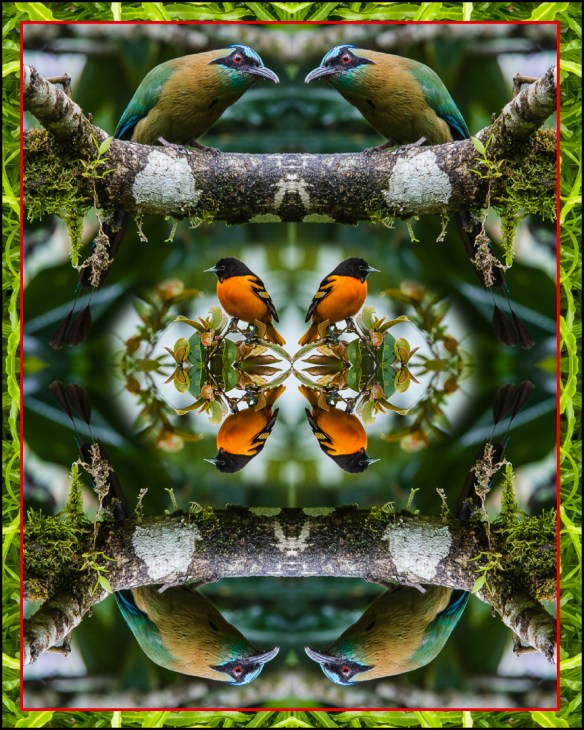
We’re “for the birds,” and we send you this card to wish you Happy Birding all year long!

Especially created for the SVBC by member Harry Hull, this card is a unique and — we hope you’ll agree — beautiful way to extend to you our very best wishes for a wonderful holiday and a fabulous 2013.

Alison Olivieri, Lydia Vogt and Fred Schroeder (executive committee for 2012)

Photo: Copyright by Harry Hull III, used by permission. Mandalagraphs.com

Photo: Copyright 2012 by Harry Hull III, used by permission. Mandalagraphs.com

Those interested in seeing more ‘mandalagraphs’ can visit Harry’s photo blog at mandalagraphs.com

Felices fiestas a Todos!

“A pajarear  se ha dicho” con esta tarjeta les deseamos felices avistamientos  para el próximo año!

Especialmente creada por el miembro del SVBC  Harry Hull, esta tarjeta es única – esperamos que estén de acuerdo – hermosa manera de extender los mejores deseos una feliz navidad y prospero año nuevo.

Alison Olivieri, Lydia Vogt and Fred Schroeder (Comité Ejecutivo del 2012)

Si quiere ver mas ‘mandalagraphs’, va al sitio de Harry se llama: manadalagraphs.com

Mystery: a Missing Colony?

Sigue en espanol

On a recent birding trip to Rio Negro, we drove home through Sabalito, looking for activity in a site where we have reliably seen Crested Oropendulas nesting in the past.

Oropendula nests. Photo by Monique Girard.

Mysteriously, all the nests have vanished and not a bird was found.

More recently, three sightings of a flock of these beautiful and conspicuous birds have been reported in San Vito — one at Casa Botania, one at Finca Cantaros, and one flying over the Linda Vista bus stop. As many as 14 birds were counted, and in two of the sightings, several were carrying nesting material in their bills. A flock was seen in Sabalito, too, near the town center.

Our question is: where are they building their new colony? Please keep your eyes and ears open, and if you find them, please CONTACT US.

Espanol aqui

En un reciente viaje a Rio Negro, manejamos a casa pasando por Sabalito, buscando actividad en el sitio donde siempre estaban las Oropéndolas anidando en el pasado. Misteriosamente, todos los nidos han desparecido y ningún ave fue encontrada.

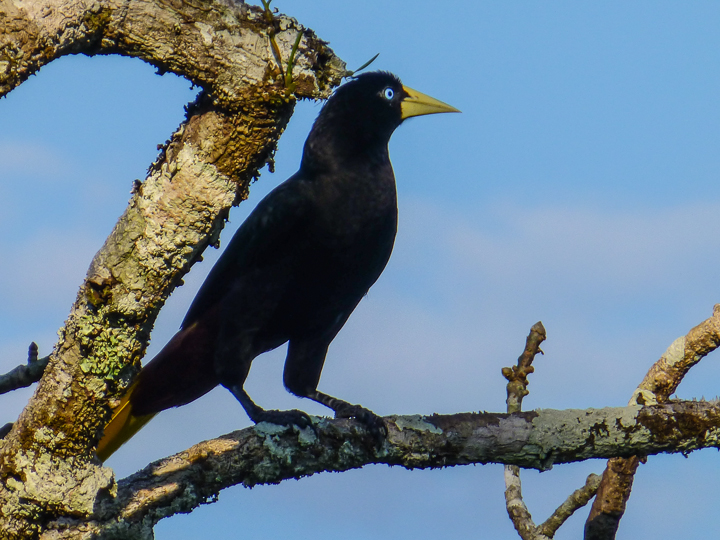
Crested Oropendula. Photo by Alison Olivieri.

Mas recientemente, tres avistamientos de estas hermosas y conspicuas aves han sido reportados en San Vito — uno en Casa Botania, uno en Finca Cantaros y otra en la parada de buses de Linda Vista divisada mientras pasaba volando por el lugar. Al menos 14 aves han sido contabilizadas y varias cargaban material para los nidos en sus picos. Una bandada fue vista en Sabalito, también, cerca del centro del pueblo.

Nuestra pregunta es: donde están construyendo su nueva colonia? Por favor mantengan sus ojos y oídos abiertos y si las encuentran, por favor déjenos saber pulsando este link: CONTACT US.

New Butterfly Photo Gallery!

Please take a look at the new Butterfly Photo Gallery we have just added to this website by clicking here. We hope this new feature will interest you as much as it does us!

The species shown are all commonly seen here in the Coto Brus region and can be found near your house (or sometimes in it!), by the roadside, in gardens and often on bird walks. They are every bit as fascinating and beautiful as birds, with complicated life cycles that, for some species, even include migrations.

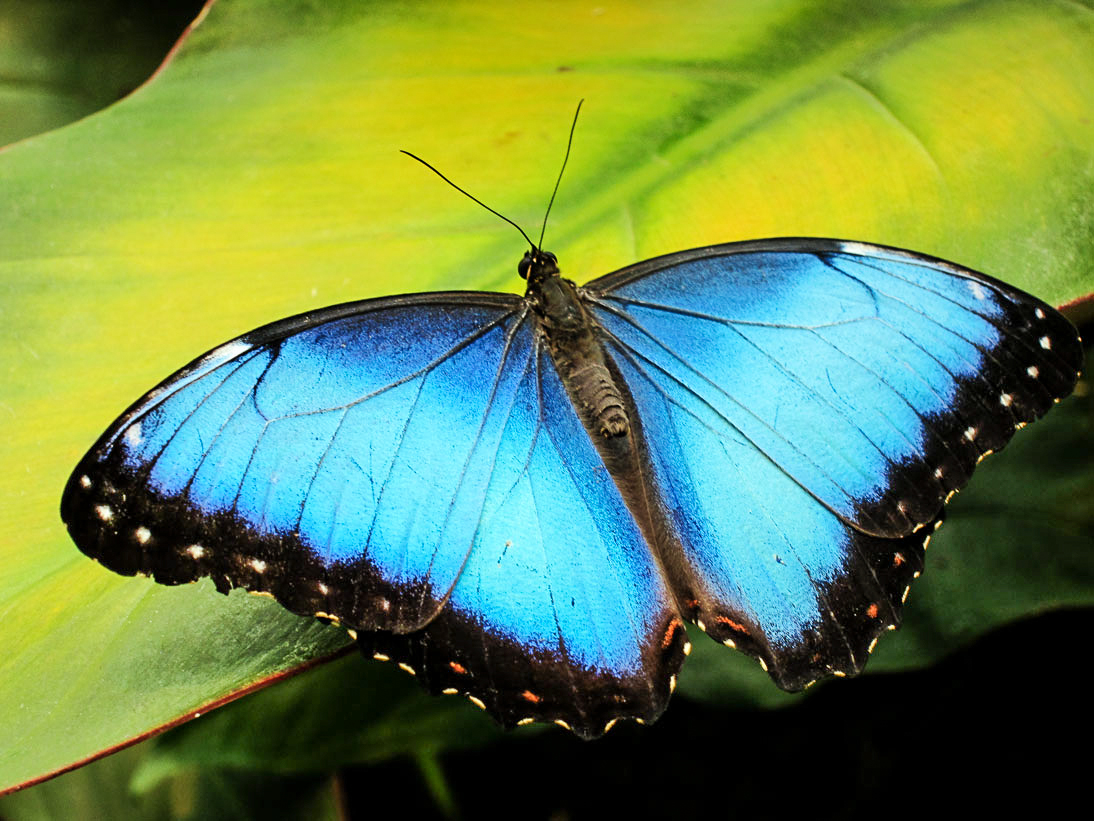
You may notice we have omitted the iconic butterfly of the tropics: the omnipresent Morpho. Here is one of those so you won’t feel bereft.

Blue Morpho. Photo by unknown photographer, posted on www.mini-life.com.

In the not too distant future, we plan to add another photo gallery — this one of moths — to complete the other half of the order Lepidoptera as well as broaden the scope of our website. We will post an announcement of this feature as soon as it is published.

Afield in Ecuador: from the Andes to the Amazon Basin

The flag of Ecuador. Photo by Alison Olivieri

Sigue en espanol

Ecuador is a wonderful country with breathtaking scenery, a violent history, fascinating and diverse cultures (shrunken heads, anyone?), bountiful natural history, yummy soup, good infrastructure and friendly people.

Due to its incredible biodiversity, birding in Ecuador is on the “Absolutely Must-do List”. If you were to wear eye patches there and only took them off to view tanagers, it would still be a ‘wildest dream’ trip of a lifetime.

Along with those tanagers, you would see the most spectacular hummingbirds, parrots and macaws, and many representatives of bird families you may not now know including: donacobius, cinclodes, conebill, plushcrown, canastero and more. All this is in addition to Andean Condors, many species of monkeys, llamas, Giant River Otters, and new and different species of lizards, insects and plants: so don’t even think about staying home.

Glacial lake in Cajas National Park. Photo by Alison Olivieri

After touring Quito, a World Heritage Site, we flew to Cuenca to visit high elevation Cajas National Park with Andean Teal, Andean Gulls on a nest, llamas in the distance, Andean Pygmy-Owls popping out of the bushes and rails calling in the reeds beside a beautiful glacial lake.

After driving south to Loja and Zamora, we stayed at Copalinga Lodge (Spangled Coquette!) and birded in nearby Podocarpus National Park, a forest with good trails, well-known to birders as the home of the Coppery-chested Jacamar.

We traveled back to Quito to fly to the town of Coca, gateway to the eastern lowland Amazon basin. From there we boated to the Napo Wildlife Center where we stealthily moved along the rivers and canals in canoes to view specialties of the flooded forest like this Hoatzin:

Hoatzin on the Rio Napo. Photo by Alison Olivieri

Potoos, macaws, toucans, trogons, puffbirds, oropendolas, raptors, woodpeckers and hummingbirds enthralled us, especially when seen from above the canopy on a 120′ tower that climbed into the crown of a ceiba tree. From there one evening after sundown we called in a Black-banded Owl that obligingly perched in our tree and called to another owl below in the forest canopy.

After this magical experience, we elevated ourselves to Antisana National Park and, at 13,000-plus’, saw Ecuadorian Hillstars, the highest elevation hummer in the world, at a nest; Silvery Grebe in a glacial lake; a flock of Baird’s Sandpipers; Carunculated Caracara, and Black-faced Ibis.

Antisana Volcano. Photo by Alison Olivieri

This is also the home of the majestic Andean Condor. On a pre-breakfast outing, we were lucky to see five of them leaving their nighttime roost of rocky crags preparing to soar off with barely a wing flap for the entire day. As only about 40 remain in the country, Andean Condors are considered critically endangered in Ecuador.

Sword-billed Hummingbird at Guango Lodge. Photo by Alison Olivieri

Our last birding stop was the hummingbird feeder-laden Guango Lodge, slightly lower, where we watched this Sword-billed Hummingbird, a bird about which the guide book says, ” . . . can never be seen enough”, in addition to Collared Inca, Long-tailed Sylph, Tourmaline Sunangel and White-bellied Woodstar.

Let me put in a shameless plug for the Ecuadorian travel company that organized this trip: Neblina Forest Tours. If you take it into your mind that you would like to see something of the natural history and cultural sights of countries in Central or South America, you’d be well advised to visit this website: www.neblinaforesttours.com and see what they have to offer: it’s impressive.

Second, a word about our group: first and foremost, we had Charlie ‘Without You We See Nothing’ Gomez, a natural history guide extraordinaire from Costa Rica; also our Ecuadorian driver Edwin Herrera whose keen eyes and ears added immeasurable pleasure to our journey (Giant Conebill, heard at 30 mph); and Remigio, a birding guide from the community of Añangu that built and runs the Napo Wildlife Center; plus four members of the SVBC: Susan England, Andrew Robertson and Alison and Michael Olivieri.  You can see us being silly in the photo below:

Charlie Gomez, Michael Olivieri, Remigio of the Anangu Community, Susan England, Alison Olivieri and Andrew Robertson

The group’s favorite birds included Paradise Tanager, Vermilion Flycatcher, Torrent Duck, Spangled Coquette, Black-necked Red Cotinga, Long-tailed Potoo, Capped Heron, Great Jacamar, Ivory-billed Aracari, Blue-and-yellow Macaw, Striped Manakin, Zigzag Heron and Gray-mantled Wren.

Are you ready? I’ll even loan you my book, The Birds of Ecuador, by Robert S. Ridgely and Paul J. Greenfield.

Espanol aqui:

Ecuador es un país maravilloso con unos paisajes que te quitan el aliento, una historia violenta, diversas y fascinantes culturas (cabezas reducidas, alguien?), amplia historia natural, sopas deliciosas, buena infraestructura y gente muy amigable.

Una iglesia bonita en Quito. Foto de Alison Olivieri.

Debido a su increíble biodiversidad, observar aves esta en la lista “Absolutamente debo de hacerlo antes de morirme’’.

Si te vendaran los ojos y solo te lo quitaras para ver tangaras, seria aun en tus sueños mas alocados el viaje más memorable de tu vida.

Junto con los tangaras, se pueden observar los mas espectaculares colibríes, loras y lapas y muchos representantes de familias de aves que posiblemente no sean del
conocimiento de algunos de nosotros, incluyendo donacobio, cinclodes, picocono, coronifelpa, canastero entre otros. Además sin olvidar el Condor Andino, muchas especies de monos, llamas, nutrias gigantes, y nuevas y diferentes especies de lagartijas, insectos y plantas: por eso ni se les ocurra pensar quedarse en casa.

Cerceta Andina. Foto de Alison Olivieri.

Después de hacer un tour por Quito, un sitio de interés cultural mundial, volamos a Cuenca a visitar el parque Nacional Cajas situado a una alta elevación del nivel del mar o tierras altas donde pudimos observar Cerceta Andina, Gaviota Andinas en un nido, llamas a la distancia, Mochuelo Andinos enanas que aparecieron repentinamente en los arbustos y Rascones Ecuatorianos llamándose entre si entre las cañas (tipo de pasto que crece en las alturas andinas) a la orilla de un bellísimo lago glaciar.

Viajamos al sur a Loja y Zamora para quedarnos en Copalinga Lodge (Coqueta Lentejuelada!) y observamos aves en el cercano parque nacional Podocarpus (arboles de la familia Podocarpaceae o coníferas que también son conocidos localmente como pinos), con un bosque con buenos senderos, muy conocidos para los observadores de aves como la casa de el Jacamar Pechicobrizo.

Regresamos a Quito para volar al pueblo de Coca, una de las ventanas de la cuenca oriental de la zona baja del rio Amazonas, de ahí viajamos en bote al centro de Fauna Napo donde nos movimos silenciosamente a lo largo de ríos y canales en canoas para ver especialidades del bosque inundado.

Pájaros estaca, lapas, tucanes, trogones, bucos, oropéndolas, aves raptoras, carpinteros y colibríes que cautivaron nuestras miradas, especialmente cuando son vistos desde la copa de los arboles en una torre de 120 pies (36 metros) que sube hasta la copa de un árbol de ceiba. Una tarde después de la puesta del sol, observamos una lechuza se llama Buho Negribandeado que convenientemente se poso en nuestro árbol llamando a otra lechuza que se encontraba bajo la copa de los arboles cercanos.

Después de esta mágica experiencia, nos desplazamos a tierras altas a el parque nacional de Antisana y a mas de 13,000 pies o mas observamos en un nido colibríes se llaman Estrella Andina, especie de colibrí que vive a la mayor altitud del mundo; Zambullidor Plateado en un lago glacial; una bandada de Playero de Baird, Caracara Curiquingue y Bandurria Carinegra:

Bandurria Carinegra en Parque Nacional Antisana. Foto de Charlie Gomez.

Este es también el hogar del majestuoso Cóndor Andino, en un pre-desayuno al aire libre tuvimos la suerte de ver 5 de ellos dejando su lugar de descanso nocturno en los acantilados o despeñaderos preparándose para remontar el vuelo con un simple aleteo que les permite volar por el transcurso de todo el día. Dado que solo 40 de ellos permanecen en el país es considerado una especie en peligro de extinción en el ecuador.

Nuestra última parada para observar aves fueron los comederos para colibríes en el Guango Lodge. Ligeramente a menor altitud, donde pudimos observar este Solangel Turmalina, además del Inca Collarejo, Silfo Colilargo, Colibri Pico Espada y Estrellita Ventriblanca.

El Solangel Turmalina. Foto de Alison Olivieri.

Déjenme decirles atentando en dar publicidad sin permiso que la experiencia con la compañía de viajes Ecuatoriana que organizo este viaje: Neblina Forest Tours ha estado fantástica. Si alguno de Uds. está considerando ver algo de historia natural o tener contacto con la cultura de Centro y Sur América, les recomiendo que visiten este sitio: www.neblinaforesttours.com y vean que tienen que ofrecer, es impresionante.

Segundo, refiriéndonos a nuestro grupo: primero y antes que todo teníamos a Charlie ’’sin ti no habríamos visto nada’’ Gomez un guía naturalista extraordinario de Costa Rica; agradecer a nuestro conductor Ecuatoriano Edwin Herrera el cual con esos ojos y oídos impresionantes dio un valor agregado e inmensurable a la experiencia (Picocono Gigante, escuchado a 30mph) ; Remigio un guía de aves de la comunidad de Añangu que es la encargada de administrar el centro de fauna Napo, y a los 4 miembros del Club de Aves de San Vito: Susan England, Andrew Robertson and Alison and Michael Olivieri.

Están listos? Hasta podría prestarles mi libro, Las Aves de Ecuador, por Robert S. Ridgely and Paul J. Greenfield.

Visit to Butterfly Paradise

Sigue en espanol

Recently, four SVBC members spent the morning visiting Butterfly Paradise, part of a development called Osa Mountain Village about halfway between Palmar Norte and Ojochal on the Pacific Coast. This is an easy drive from San Vito and the views from the road going up the hill are breathtaking.

View from Osa Mountain Village. Photo by Harry Hull.

Dave Fishell, the owner-designer-builder of this new outdoor butterfly vivarium, gave a brief talk on his ongoing efforts to manage a natural environment for his winged charges while keeping track of species counts and hatching pupas. Butterfly life cycles are complicated, involving egg-laying on specific host plants, the eating machines we know as caterpillars, pupation periods and the dramatic emergence of a re-arranged life form: the adult butterfly.

He has exciting plans to expand with an adjacent, open air hummingbird garden. We spotted a Bat Falcon perched across the road, Swallow-tailed Kites swooping overhead and heard many other birds vocalizing in the adjacent forest so we are rooting for Dave to create a birding destination as well.

A thrilling experience for would-be or even accomplished natural history photographers, we plan to offer this new day trip whenever interest is expressed by members and friends. In fact, we were so inspired we’re working on a new photo gallery for this website of butterfly beauties commonly seen in the Coto Brus region. We will announce this with a ‘post’ when it is ready to view so you won’t miss it.

Harry Hull with a new friend. Photo by Alison Olivieri

An added bonanza of this pleasant excursion is the proximity of three excellent restaurants in Ojochal: Citrus, Exotica and El Castillo. Also of note, we’ve been told by Jarvia Fishell, Dave’s wife, that Osa Mountain Village offers other activities including canopy tours, zip lines, overnight jungle excursions, vacation rental properties and more so we look forward to exploring this destination further with all of you!


Visita al paraíso de mariposas

Recientemente, 4 miembros del Club de aves de San vito  visitaron por la mañana  ‘’Butterfly Paradise’’, parte de la empresa llamada  ‘’Osa Mountain Village’’ aproximadamente a medio camino entre Palmar Norte y Ojochal en la costa pacifica.  Es un viaje sencillo en automóvil desde San Vito y por supuesto con unas vistas del camino subiendo la montaña que quitan la respiración.

Oruga de mariposa ‘morpho’. Photo by Harry Hull.

Dave Fishell , el dueño-diseñador–constructor de este nuevo vivario de mariposas al aire libre, nos dio una corta charla de sus continuos esfuerzos para ofrecerle un ambiente natural a sus amigos alados mientras intenta mantenerse al tanto de la cantidad de especies y pupas eclosionadas. Los ciclos de la mariposa son complicados, envuelven la puesta de huevos en plantas huéspedes especificas, las maquinas de comer que nosotros conocemos como orugas, periodos de población y el dramático nacimiento de una forma de vida  totalmente nueva que llamamos mariposa adulta.

También encontramos muchas plantas interesantes para expandirse con un jardín de colibrís al aire libre. Pudimos observar un halcón, Bat Falcon (Falco rufigularis) posado al otro lado del camino y Swallow-Tailed Kites (Gavilan Tijereta) descendiendo por nuestras cabezas en picada después de escuchar muchas vocalizaciones de aves en el bosque adyacente. Esperamos muy impacientemente que Dave cree un destino para ver aves.

Este lugar ofrece una experiencia inolvidable para fotógrafos interesados en la historia natural, planeamos ofrecer este viaje de un día, cuando el interés sea de nuestros miembros y amigos. De hecho nos ha inspirado tanto que estamos trabajando en una galería nueva para el sitio web de las bellas mariposas comúnmente vistas en el área de Coto Brus. Se anunciara con un mensaje cuando este listo, así que no se lo perderán.

Un agregado fantástico a esta excursión es la proximidad con tres restaurantes en Ojochal llamados: Citrus, Exotica y El Castillo, también se nos ha comentado por Jarvia Fishell esposa de Dave que ‘’Osa Mountain Village” ofrece otras actividades como canopy tours, zip lines (o cables para deslizarse en línea recta), excursiones al bosque nocturnas, renta de propiedades para vacacionar y mucho mas, por lo que esperamos explorar en mas detalle este destino con todos Uds.


Butterfly Paradise Day Trip

Please join us for a day trip Sunday, September 9, to Butterfly Paradise near the coastal town of Uvita and for lunch at Citrus Restaurant in Ojochal.

Hesperid Butterfly. Photo by Alison Olivieri

We will meet at 7:30 am at Finca Cantaros to carpool to this beautiful new butterfly garden, arriving there around 10:30 am. We will hear a talk by the designer, builder and owner Dave Fishell after which we will be free to take photos and look around on our own. The admission fee will be $10 per person with children under 5 admitted free.

At about 11:30, we will head up the coast to Ojochal for lunch at Citrus Restaurant. Lunch will cost about $20 per person. We plan to be back at Cantaros by 4:30 or 5:00 at the latest.

Please join us for this fun adventure: let us know if you plan to come so we can organize a carpool by sending an email to: sanvitobirdclub@gmail.com and DON’T forget to bring your binos and a camera.

Report from Scotland: Falconry and a Lurcher

A glorious morning. Photo by Michael Olivieri

Dramatic landscapes abound in the Scottish Highlands and, if you also like large, strong men in kilts and distilled spirits, then Scotland is the place for you. We recently visited the eastern Highlands, close to the Burgh of Tain (settled in 1066), and enjoyed watching burly and brawny men play Highland Games along with touring the Glenmorangie Scotch Distillery, visiting an inhabited castle, watching rabbits hide in prickly gorse, riding on a wee ferry, oohing and aahing over puffy lambs AND, say it with me now: b-i-r-d-i-n-g!

Falconer at Dunrobin Castle. Photo by Alison Olivieri

To start us off in that direction, we saw a Falconry Demonstration at the Dunrobin Castle in Golspie. Still inhabited by descendants of William, the first Earl of Sutherland, this castle is the most northerly of Scotland’s great houses and the largest in the highlands with 189 rooms! Pictured in the photo here is a Harris’s Hawk, native not to Scotland but to the southwestern US and as far south as Chile. This raptor is popular with falconers all over the world.

Something especially fun about birding in Europe is that no bird has a name remotely like, for example, Red-collared Foliage-thrower-upper. All the birds have sensible names. The name of the one species of swallow is “Swallow”. Any swiftlike bird you might see is the “Swift”. The kingfisher is a “Kingfisher” and so on. This makes it a whole lot easier to ID them with confidence; for example, a plump white, rust and black bird bobbling in a river? It’s the Dipper!

One of our favorites has the unfortunate name of “Buzzard”. It is a sizable and handsome raptor with honey-brown plumage, seen everyday hunting over the hills and fields. As we were there in mid-August, those fields and the moors were turning purple as the heath and heather began to bloom.

Heath and heather, blooming together. Photo by Michael Olivieri

A final note about Scotland, every third or fourth person had a well-behaved dog on a leash. We saw many breeds not commonly seen anymore like Irish Setters that require endless exercise and many Border Collies.

Lilly at the Fringe. Photo by Alison Olivieri

The most unusual dog we saw was a Skye Terrier. It was almost as big as a Basset Hound and looked like an enormous caterpillar but our personal favorite (in addition to the Golden Retrievers at our B&B) was Lilly, a Lurcher who was part of a street performance at the Fringe Festival. She is 2 1/2 and was recently rescued in London by the Ives family with whom she lives in Grimsby North East Lincolnshire. This was her first vacation in Scotland and, believe me, she was a sensation in Edinburgh!