Para leer el articulo “El ciclo de la vida comienza de nuevo!” en espanol, por favor, haga CLIQUE AQUI!
Author Archives: AWOlivieri
Life’s Cycle Begins Anew/El ciclo de la vida comienza de nuevo!
Sigue en espanol
The windows on the side of our car next to the garden are covered with black plastic and both of the side-view mirrors sport jauntily-angled BM shopping bags: this is our standard car ‘look’ for April and May. In the morning, from about 10 to noon, if we removed these defenses, the car will be splattered with bird excrement almost immediately. It is under attack by a Silver-throated Tanager AND a Clay-colored Thrush, both of which are laboring under the same mistaken conviction that their reflections in the windows and the mirror are rival males muscling into valuable nesting territories.
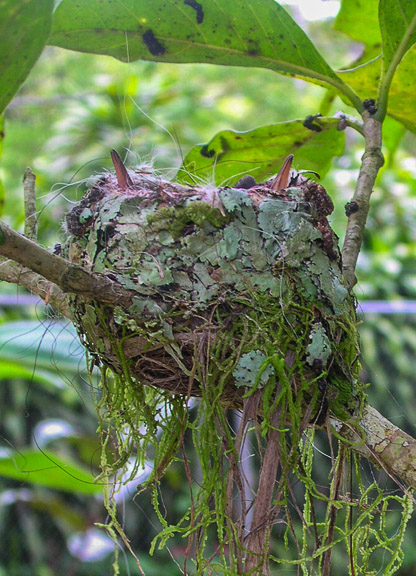
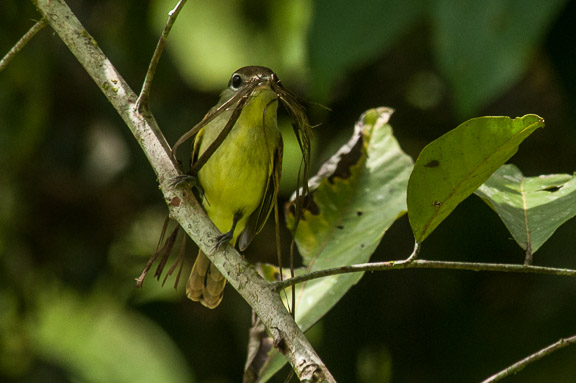
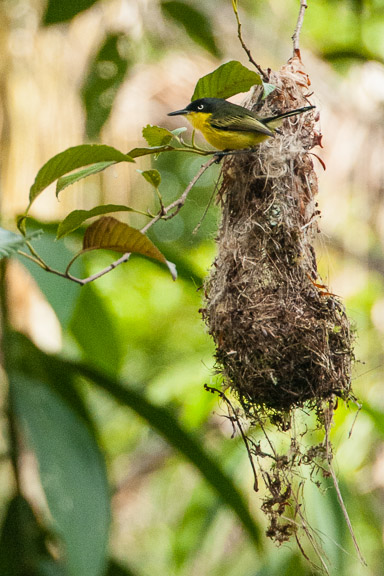
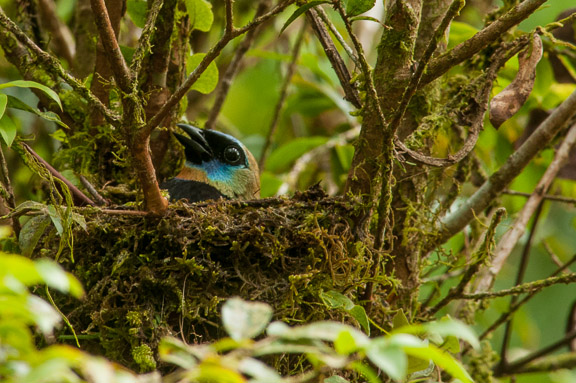
At this time of year, nearly all our resident birds are courting, staking out fruitful patches of habitat, building nests, laying eggs and feeding young. During the Club’s bird walk last week at the Wilson Botanical Garden, we found paired up Gray-capped Flycatchers, a Common Tody-Flycatcher nest and a Spot-crowned Euphonia nest inside of which we could see two huge, gaping bills attached to two tiny nestlings. An extra bonus for us: we got to watch both parents feeding the chicks!
At home over coffee, we watched a family of four Rufous-breasted Wrens working the trees close to the house and later, walking the dog, we saw Tropical Kingbirds feeding fledglings on the electric wires along the road.
Birds try to be as inconspicuous as possible during the breeding season. Understandably, they don’t want you or other predators to see them or find their nests. So, when people tell us they see fewer birds in their yards or on their feeders in April and May, we say, “Good! Their strategies are working!”
And there is another reason for this noticeable drop in casual bird sightings: the migrant species are leaving, heading north to breed in North America where they face fewer predators and can (hopefully) find more food and more space to claim. Three common ‘feeder birds’ you will NOT see now are Baltimore Oriole, Tennessee Warbler and Summer Tanager.
Thrushes, flycatchers, warblers, orioles and tanagers are included in the neotropical migrant group that leaves the tropics around April and returns, after breeding in the north, in October and November. About 25% of Costa Rica’s bird species fall into this category. To provide a local perspective, we have 21 species of warblers that can be seen in or near San Vito with relatively little effort but only six are year-around residents.
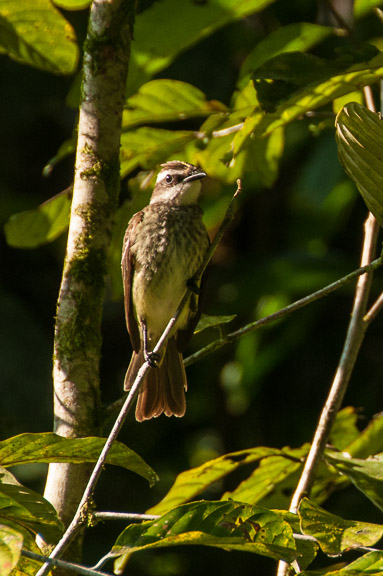
At the same time, you will hear us exclaim over migrant species from the south that come here at this time of year to breed in Costa Rica. These include the lovely and ubiquitous Swallow-tailed Kites, nest-stealing Piratic Flycatchers and cheerful Yellow-green Vireos.
So even though some birds have temporarily left, with a little effort you can still spot the remaining ones that are deliberately hiding and observe their fascinating breeding behaviors. We say, “Get up and go outside with your binoculars”! You’ll never see any of this if you’re inside watching television (or reading this on your computer) but outside birds are putting on an incredible show and you really don’t want to miss it!
Espanol aqui:
Las ventanas y espejos retrovisores al lado de nuestro auto junto al jardín están cubiertas con plástico negro: este es el ‘look’ estándar de nuestro auto para los meses de Abril y Mayo. En la mañana, hasta alrededor de la 10 am, si removemos estas defensas, el auto terminaría salpicado con excremento de aves casi inmediatamente. Nuestro auto está bajo el ataque de un Silver-throated Tanager y un Clay-colored Thrush, ambos de los cuales están empecinados y con plena convicción que su reflejo pertenece a un rival de su misma especie intentando tomar su valuable territorio para reproducción.
En estos momentos del año, la mayoría de todas nuestras aves residentes están en pleno cortejo, y territorializando los pequeños parches de árboles frutales, construyendo nidos, poniendo sus huevos y alimentando la siguiente generación. Durante la caminata del club de la semana pasada en el Jardin Botanico Wilson, encontramos una pareja de Graycapped Flycatchers, un nido de Common Tody-Flycatcher y Spot-crowned Euphonia donde pudimos observar con asombro dos picos gigantescos junto a dos minúsculos acurrucados en el nido. Como un bono extra para nosotros pudimos observar a ambos padres alimentando a los pichones.
En casa con una buena taza de café, pudimos observar una familia de Rufous-breasted Wrens trabajando en unos árboles cercanos a nuestra casa, luego cuando paseábamos el perro, pudimos observar Tropical Kingbirds alimentando a sus polluelos en uno de los cables eléctricos que sortean el camino.
Las aves tratan de ser tan poco conspicuas como les es posible durante la estación de crianza. Entendiblemente, ellos no quieren que otros predadores los vean en sus respectivos nidos. Así que cuando la gente nos comenta que ven menos aves en los comederos de su patios o jardines entre Abril y Mayo, nosotros decimos “Bien! Sus estrategias funcionan!’’
Además hay otra razón por la cual el detrimento muy notable de avistamientos casuales de aves: las especies migrantes están dejando el país, desplazándose al Norte para reproducirse en Norte América donde encontraran menos predadores y donde (afortunadamente) encontraran más fuentes de alimento y espacio donde puedan establecerse. Tres aves comúnmente encontradas en los comederos NO los veras más como es el Baltimore Oriole, Tennessee Warbler and Summer Tanager.
Thrushes, flycatchers, warblers, orioles and tanagers estan incluidos como los grupos de migrantes neotropicales que dejan los trópicos alrededor de Abril y regresan después de reproducirse en Norte America, en Octubre y Noviembre . Acerca de un 25% de las especies de aves de Costa Rica coinciden en esta categoría. Para proveer una perspectiva local, tenemos 21 especies de reinitas que pueden ser vistas alrededor de San Vito con un esfuerzo relativamente bajo, pero solo 6 de ellas son residentes anuales (se quedan todo el año).
A la vez, nos escucharan muy entusiasmados cuando se puedan observar especies migrantes del Sur que vienen a nuestro país en esta época del año a reproducirse en Costa Rica. Estas incluyen las adorables y omnipresentes Gavilán tijereta, roba nidos o Piratic Flycatchers asi como los joviales Yellow-green Vireos.
Aun así dado que algunas especies de aves nos dejan temporalmente, con un pequeño esfuerzo podemos observar a las que se quedan deliberadamente a escondidas en su época de reproducción y más aun pudiendo apreciar su comportamiento reproductivo. Nosotros decimos ‘’Levántense y vayan afuera con sus binoculars!’’ Nunca verán esto si están adentro viendo la televisión (o leyendo sobre el tema en su computadora) dado que fuera las aves están poniendo un show increíble que definitivamente no te quieres perder!
Documentary Film “Birders: the Central Park Effect”
With great pleasure, we announce the availability of an incredibly entertaining documentary video about the amazing array of migrant and resident birds in New York City’s Central Park and the birders who watch them. More than 100 species of birds and 20 birders are featured in the film, some rather surprising.
Our own Tony Pagano, peripatetic member of the SVBC, was the primary cinematographer for the film featuring stunning shots of warblers, tanagers, thrushes, hawks and more. It also delves into the often-asked question, why is it that people watch birds? Two humorous motives explored by the filmmakers are obsession and work-avoidance!
Anyone who has ever looked at a bird and said “Wow!” will love this movie. HBO Documentary Films bought it after its debut at the SXSW (South by Southwest) Film Festival in 2012, and it has been featured at many events and festivals since then. Visit the film’s website here for more information, including how to purchase the DVD.
Activities and Events in 2012/Actividades y Eventos de 2012
Sigue en espanol
For the first time last May the Club supported a Teacher Training Workshop given by Jennifer Fee and Lilly Briggs from Cornell University covering an environmental education class called “BirdSleuth” in English and “Detectives de Parajos” in Spanish, developed by Cornell’s Laboratory of Ornithology Education Department. We worked in collaboration with Ariadna Sanchez, Naturalist and Environmental Educator at OTS Las Cruces/Wilson Botanical Garden, to produce this workshop which was filled to capacity with 27 participants. Lilly, a graduate student at Cornell, gave the training in Spanish. Interestingly, many of the trainees work in local schools and at least half of them had taken last year’s Naturalist Guide Course at Las Cruces. The support materials were available to participants in English and Spanish.
I am pleased to announce that we introduced this class into the Linda Vista School at the start of the 2013 school year in February for 4th-6th grade students, taught by our intrepid Wendy Schultz.
The Club led 12 Bird Walks at the Wilson Garden and one on a Sunday at Finca Cantaros that attracted more than 40 participants. Needless to say we were a little short on binoculars that morning!
We ran three mist netting sessions as part of our ongoing research project, El Proyecto Monitoreo des las Aves de San Vito, in January, March and December. Two members represented this project at a national Bird Banding Conference at InBio Parque in San Jose in April, sponsored by Partners in Flight Mesoamerica and the Costa Rican Bird Observatory.
In February, we held our Annual Meeting and organized an overnight birding trip for 8 members to Drake Bay, guided by ornithologist Jim Zook.
In May, members including Wendy Bernstein, Gail Hull, Roni Chernin, Kata Ulenaers, Lisa Ann, Kate Desvenain and Chris Heist volunteered at the 50th Anniversary of the Wilson Botanical Garden/Festival Eco-Cultural.
During the course of the year we have shared a table with Finca Cantaros at two local Tourism Fairs, one in San Vito and one in Cuided Neily, and Heysen Esquivel and Alison Olivieri volunteered at an Eco-Culture Fair in Concepcion.
We participated in the first national Breeding Bird Survey at two local sites, Cantaros and the Wilson Garden, and two members participated in a Birding Club of Costa Rica overnight trip to Las Esquinas Rainforest Lodge in La Gamba in July.
At the present moment, the Club has 46 members who have renewed their dues for 2013. Twenty are International Members, defined as those whose primary residence is outside of Costa Rica, 20 Resident Members and six Honorary Members.
Finally, we have a new Vice President, Heysen Esquivel, who has been working hard behind the scenes to make our website bi-lingual, translating all our posts and articles into Spanish. He attended nearly every twice monthly Bird Walk at the Wilson Garden last year and recently started to lead these walks. Years ago, Heysen worked as general manager of OTS/Las Cruces and Nancy, his wife, also worked there at that time.
Espanol aqui:
Po primera vez el pasado mayo el club auspicio un taller de entrenamiento para profesores dado por Jennifer Fee y Lilly Briggs de la universidad de Cornell sobre educación ambiental curso llamado “BirdSleuth” en ingles o “Detectives de Parajos” en español, desarrollado por el departamento de educación del Laboratorio de Ornitologia de la universidad de Cornell. Trabajamos en colaboración con Ariadna Sanchez, naturalista, encargada del departamento de educación ambiental de la OTS/Jardín Botánico Wilson, para ofrecer este curso impartido a una cantidad de 27 participantes. Lilly, una estudiante graduada de la universidad de Cornell, impartió el entrenamiento en idioma español.
Interesantemente, muchos de los participantes trabajaron con las escuelas locales y al menos la mitad de ellos han tomado el último curso de guía naturalista impartido en las Cruces. Todo el material educativo estuvo disponible para los participantes en ingles y español.
Estoy muy contenta en anunciar a su vez que incluimos la primera clase en la escuela de Linda Vista a inicios de este año lectivo en febrero 2013 para estudiantes de 4to y 6to grado con nuestra intrépida profesora Wendy Schultz.
El club ha hecho 12 caminatas al Jardín Botánico Wilson y una en un día domingo en Finca Cantaros que atrajo a más de 40 participantes. Cabe mencionar que quedamos un poco cortos en binoculares esa mañana!
Hemos organizado 3 sesiones de anillado como parte de nuestro proyecto de investigación a largo plazo, El Proyecto de Monitoreo de Aves de San Vito, en enero, marzo y diciembre. Dos miembros presentaron el proyecto en la Conferencia de Anillado de Aves Nacional en el Inbio Parque en San Jose en abril, evento auspiciado por nuestros Aliados de Flight Mesoamerica y el Observatorio de Aves de Costa Rica.
En febrero, hemos organizado nuestra reunion anual y organizamos un paseo para observar aves a la Bahía de Drake, viaje que incluia estadia en el lugar donde asistieron 8 miembros del club. Viaje guiado por el ornitólogo Jim Zook.
En mayo, algunos miembros incluidos Wendy Bernstein, Gail Hull, Roni Chernin, Kata Ulenaers, Lisa Ann, Kate Desvenain and Chris Heist fueron voluntarios al evento de celebración del aniversario de los 50 años del Jardin Botanico Wilson/Festival Eco-cultural.
En el curso de este año hemos compartido una mesa con Finca Cantaros en dos ferias de turismo — una en San Vito y una en Ciudad Neily, y Heysen Esquivel y Alison Olivieri fuimos voluntarios de la feria Eco-cultural en Concepción.
Participamos además en la primer censo de anidación nacional en dos sitios locales, Cantaros y el Jardín Botánico Wilson, dos miembros participaron en un viaje de varios días con estadía incluida hecho por el Club de Aves de Costa Rica, evento realizado en Las Esquinas Rain Forest Lodge en la Gamba en julio.
En estos momentos, el club tiene 46 miembros que han renovado su membresía anual para el 2013. 20 son miembros internacionales, refiriéndose a aquellos el cual su residencia primaria es fuera de Costa Rica, 20 miembros residentes y 6 miembros honorarios.
Tengo reservado lo mejor para el final: Tengo el placer de anunciarles que tenemos un nuevo Vicepresidente Heysen Esquivel, quien ha trabajado con nosotros muy fuerte tras bastidores para hacer nuestro sitio web bilingüe, traduciendo todos los artículos y anuncios al español. El ha asistido casi a todas las caminatas que se programan mensualmente y recientemente ha empezado a liderar las caminatas también. Hace algunos años atrás Heysen laboro como gerente en la OTS/Las cruces donde también su esposa, Nancy, trabajaba en ese momento.
Annual Meeting 2013/Reunión Anual 2013
Sigue en espanol
A record number of 26 members attended our Annual Meeting held, for the second year in a row, at La Cascata del Bosco on February 24. This year’s event had several new features including a Silent Auction of two beautiful pieces of artwork by member Gail Hull and a travel video by member Andrew Robertson of a recent trip to Ecuador.
However, the biggest news to come out of the meeting is that we have a new Vice President: Heysen Esquivel.
He has been actively involved with the Club for more than a year, attending and leading our twice-monthly Bird Walks at the Wilson Botanical Garden and making our website truly bi-lingual with his translations of all our articles, publications and posts.
Treasurer Fred Schroeder assured us that the Club is now solvent—in spite of having lost a little money last year! If you would like to receive a copy of our Annual Financial Report, please CONTACT US.
Wendy Schultz gave a report on her ongoing pilot program at the Linda Vista School called ‘Detectives de Parajos’ (Bird/Sleuth). This environmental education class, created by the Cornell University Laboratory of Ornithology, has proven to be extremely popular with the “pioneer” 4th, 5th and 6th grades at Linda Vista.
It’s our hope to expand the education offering into other local schools in the near future. We’re grateful to those Club members who have renewed their 2013 dues as these funds are paying Wendy’s salary and for course materials. If any of you would like to observe the class, please CONTACT US.
Finally, Communications Chair Harry Hull gave an update on the website launched in March of last year. Surprisingly, the site has been viewed over 12,000 times by people from 104 countries including Iraq and North Korea! We’ve received numerous inquiries via email of birders planning to visit Costa Rica and are gratified that we can provide this service for foreign travelers. If you have not already done so, please sign up to “Follow” this website so you will automatically receive notifications of all new “posts” (announcements), including the free Wilson Walks, events and other activities.
For a complete inventory of the Club’s activities in 2012, please see the “2013 Annual Meeting: President’s Remarks” in the Viewpoints category of the website.
Espanol aqui:
Una impresionante cantidad de 26 miembros asistieron a nuestra reunión anual del 2013, programada por segundo año consecutivo, en La Cascata del Bosco en Febrero 24. El evento de este año incluyo varias iniciativas nuevas como la subasta silenciosa de dos hermosas piezas de arte confeccionadas por uno de nuestros miembros Gail Hull y además fue exhibido un video por nuestro miembro Andrew Robertson de un viaje reciente al Ecuador hecho por algunos de lo miembros del club.
Sin embargo, dentro de las noticias más recientes subrayamos la inclusión de nuestro nuevo vicepresidente: Heysen Esquivel. Él ha participado activamente en las actividades del club por más de un año, asistiendo y liderando las caminatas al jardín Botánico Wilson efectuadas dos veces al mes por nuestro club, y colaborando con nuestro sitio web convirtiéndolo realmente en un sitio bilingüe, donde se incluyen las traducciones al español de todos los artículos y anuncios que aquí se publican.
Nuestro Tesorero Fred Schroeder nos asegura que el club hoy por hoy presenta solvencia económica — a pesar de haber perdido algo de capital el año pasado! Si Ud. le gustaría recibir una copia de nuestro reporte Financiero Anual por favor CONTACT US.
Wendy Schultz también nos dio su reporte del proyecto piloto a largo plazo puesto en practica en la escuela de Linda Vista llamado ‘Detectivos de Parajos’ (Bird/Sleuth). Este clase de educación ambiental, creada por el laboratorio de Ornitología de estudios de la universidad de Cornell, ha probado ser extremadamente popular con los grupos pioneros de 4to, 5to y 6to grado de la escuela de Linda Vista. Es nuestra esperanza el expandir este programa de educación ambiental a otras escuelas locales en un futuro cercano. Estamos muy agradecidos a todos aquellos miembros del club quienes han renovado su membresía anual del 2013 ya que con estos fondos estamos pagando los honorarios de Wendy por el curso y los materiales didácticos que se utilizan. Si alguno de Uds. le gustaría participar como observador alguna de las clases por favor CONTACT US.
Finalmente nuestro Director de Comunicaciones Harry Hull, nos dio un reporte del rendimiento de nuestro sitio web puesto en marcha en Marzo del año pasado. Sorprendentemente, el sitio ha sido visto mas de 12.000 veces por usuarios alrededor de 104 países incluyendo Iraq y Corea del Norte! Hemos recibido numerosas preguntas vía correo de observadores de aves que planean visitar Costa Rica y están muy complacidos de que podamos brindar este servicio para viajeros extranjeros. Si no lo ha hecho aun, por favor suscríbase este sitio del red en ‘’Seguirnos’’. De esta forma recibirá Ud. automáticamente las notificaciones de los nuevos mensajes ‘’Anuncios’’ incluidas las fechas donde se realizan las caminatas libres al Jardín Botánico Wilson entre otras actividades.
Para informarse del inventario de las actividades del club en el 2012, por favor vea ‘’Reunión anual del 2013: Observaciones importantes del Presidente’’ En Categoría Opiniones (Viewpoints).
Oropendola Colony Found in San Vito/Colonia de Oropéndolas encontrada en San Vito
Sigue en espanol
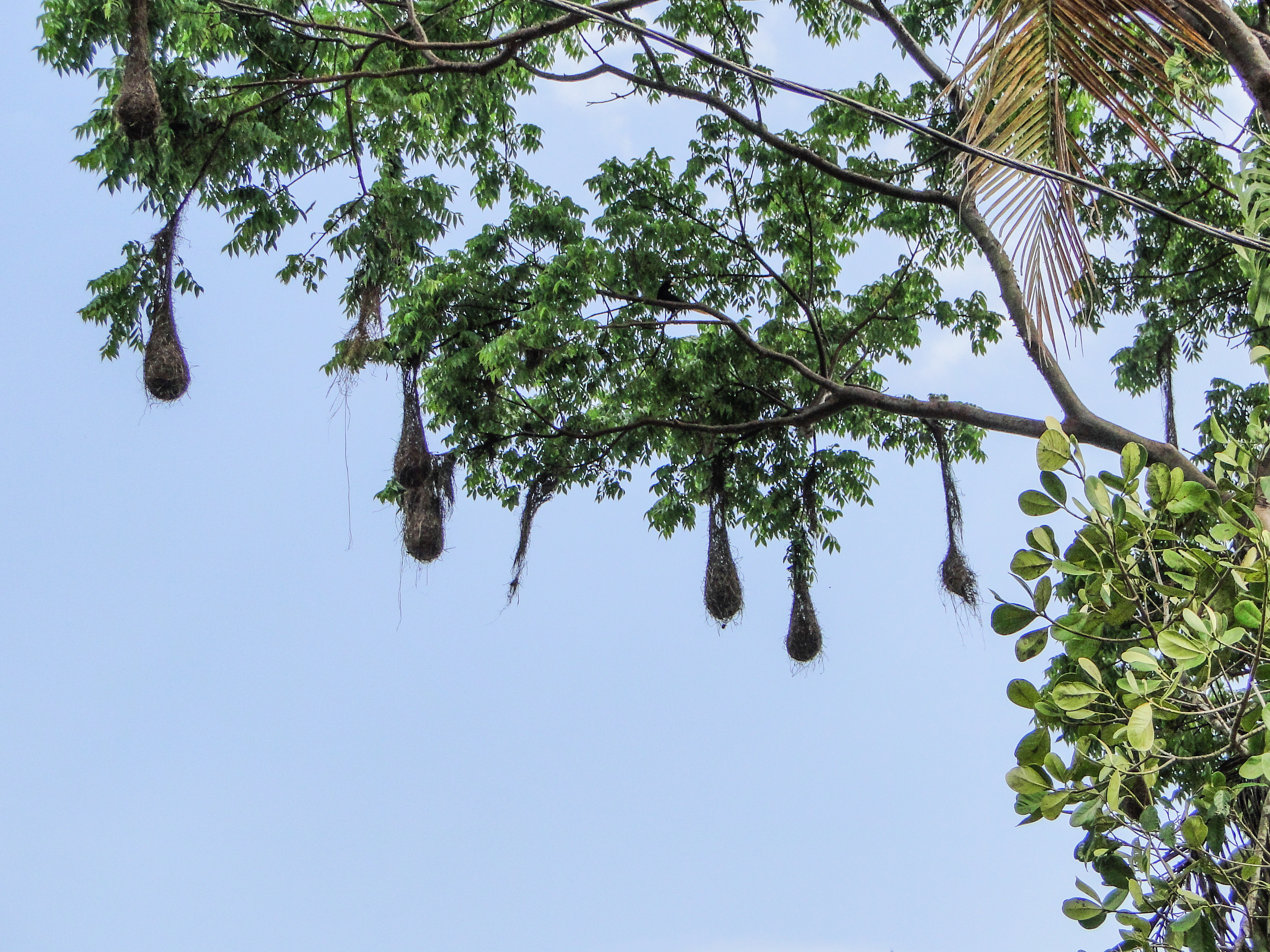
Sharp-eyed member Wendy Bernstein reported a new oropendola colony at the San Vito air strip.
If you drive from San Vito toward Sabalito, the pendant nests can be seen across the air strip about one-third of the way down the runway. They are hanging on the left side of a tree with the common name ‘Poro’ that attracts orioles, warblers, bananaquits, hummingbirds and more when it flowers.
We need to do a stake-out to be sure the birds are Crested Oropendolas! This species was first recorded here in 1999 having expanded its range from nearby Panama. Historically, San Vito had a population of Chestnut-headed Oropendolas but the newcomers routed them and are now the only species found in the southern Pacific region.
Nuestro miembro de excelente vista Wendy Bernstein nos ha reportado una nueva colonia que se ha establecido en la pista de aterrizaje de San Vito.
Si ud. viaja de San Vito a Sabalito los nidos colgantes pueden ser observados al otro lado de las pista aproximadamente a una tercera parte de la pista. Los nidos están colgando al lado izquierdo de un árbol comúnmente conocido como “Poro” que atrae además a orioles, reinitas y bananaquits, colibríes y muchos mas cuando esta en época de floración.
Necesitamos comprobar que estos nidos corresponden a Crested Oropendolas, una especie que fue primero contabilizada en 1999, habiendo expandido su rango de distribución del contiguo país Panamá. Históricamente, San Vito tenia una población de Chestnut-headed Oropendolas pero los recién llegados las han desplazado y hoy por hoy son la única especie encontrada en el Pacifico Sur .
Kansas Students Invade Finca Cantaros
Sigue en espanol
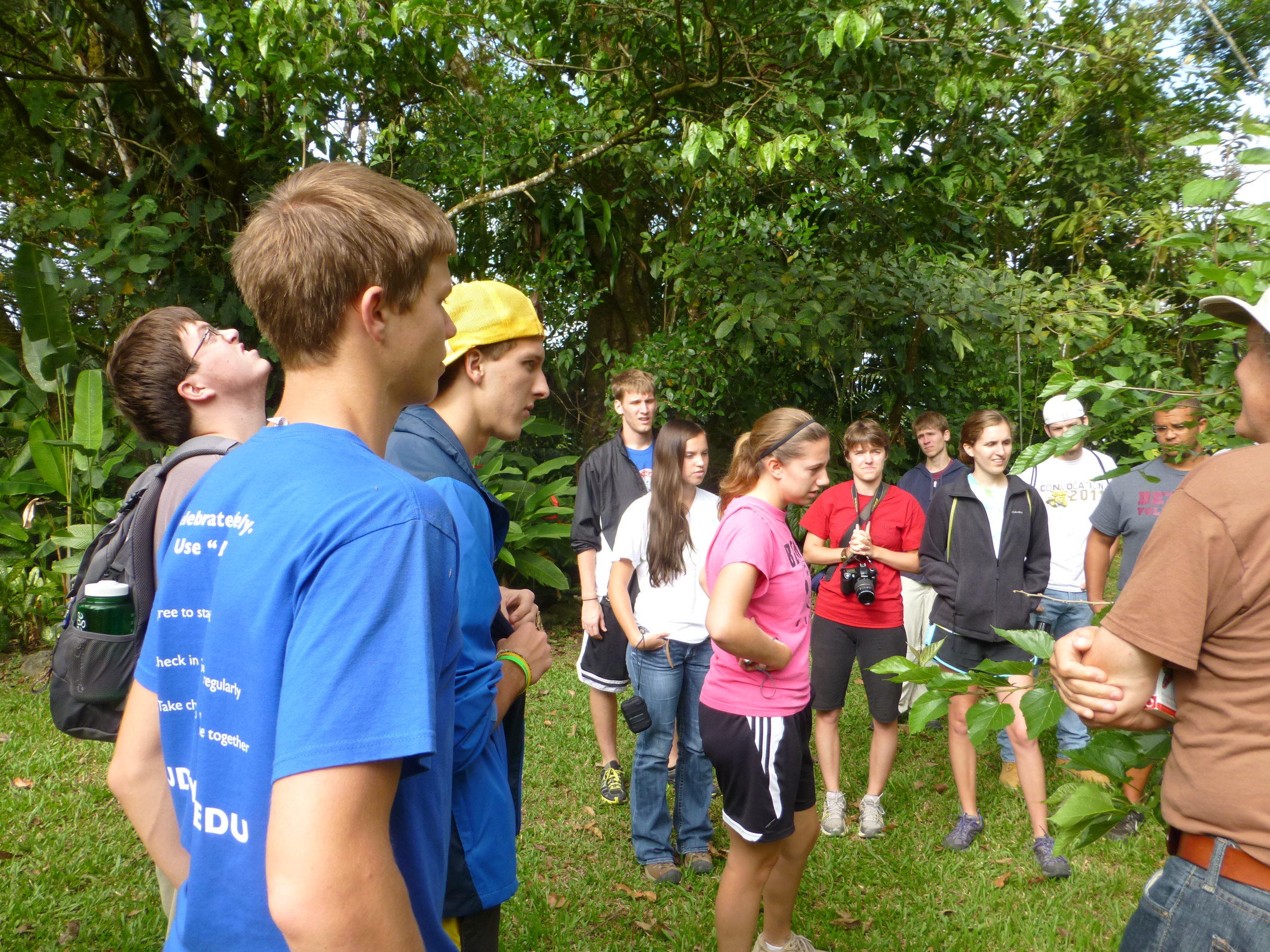
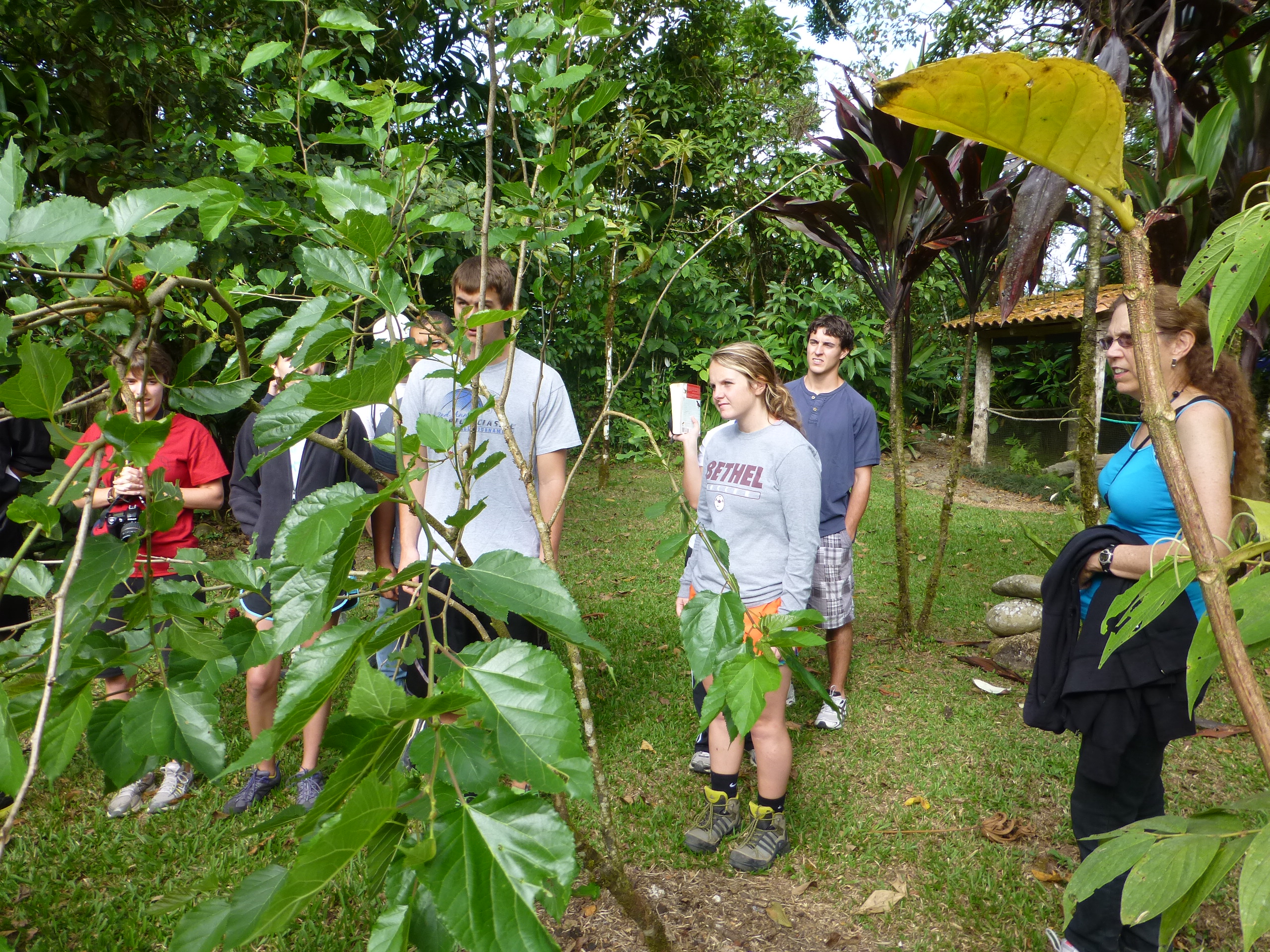
Bird banders Julie Girard and Alison Olivieri gave a Mist Netting Demonstration on January 22, 2013 for students in Professor Jon Piper’s biology course at Bethel College in North Newton, KS, the landscape of which could not possibly be more different than San Vito!
The 16 students have been traveling in Costa Rica since January 3 and their stay here at the Las Cruces Biological Research Station gives them an OTS hat-trick for visiting all three stations, including Palo Verde and La Selva. Their interest in birds and, we hope, bird study, was piqued by close-up looks of at a handsome White-throated Robin, Speckled Tanager, one male and one female Rufous-tailed Hummingbird and two neotropical migrants, an Ovenbird and a Northern Waterthrush.
Over many years, Jon has been bringing groups of students to Costa Rica in January where they become familiar with the many different habitats in this tiny country. They participate in biological study projects, are continually quizzed and challenged and eventually have their final exam.
Several years ago, the Piper family came to live in San Vito during a sabbatical year for Jon and they have been missed by all of us associated with Las Cruces/ Wilson Botanical Garden ever since. It was good to have Jon’s wife Beth with him this year — if only for a moment! We look forward to more Piper-style visits with curious, funny and bright students in years to come.
Las Anilladoras Julie Girard y Alison Olivieri dieron una demostración con redes de niebla el pasado 22 de Enero, 2013 para estudiantes del profesor Jon Piper del curso de biología del instituto Bethel al norte de Newton KS, en donde el paisaje no podría ser mas diferente que el de San Vito.
Los 16 estudiantes han estado viajando por Costa Rica desde Enero 3 y su estadía aquí en la Estación Biológica Las Cruces completa el triplete perfecto luego de visitar las otras dos estaciones de la OTS en Costa Rica, una localizada en Palo verde Guanacaste y la otra en la Selva en Puerto Viejo de Sarapiquí. Su interés en aves y esperamos sus futuros estudios en esta rama, se hayan acentuado después de observar a muy corta distancia un White-throated Robin, Speckled Tanager, un macho y una hembra de Rufous-tailed Hummingbird y dos migrantes neotropicales: un Ovenbird y un Northern Waterthrush.
Por varios años, Jon ha traído grupos de estudiantes a Costa Rica en Enero donde el grupo se familiariza con los muchos y diferentes ecosistemas que ofrece este pequeño país. Los estudiantes participan en proyectos de estudio biológicos, son continuamente evaluados con exámenes cortos y desafiados con la materia, eventualmente también son examinados al final de curso.
Hace algunos años atrás , la familia Pipier vino a vivir a San Vito durante un año Sabático para Jon y han sido extrañados por todos los que tenemos relación con las Cruces/Jardín Botánico Wilson desde entonces. Fue grandiosos el tener a la esposa de Jon (Beth) con el este año—al menos por un momento! Esperamos con ansias mas visitas al estilo Pipier con mas estudiantes curiosos , graciosos y brillantes en los años por venir.
First Publication from the Avian Monitoring Project
Sigue en espanol
As the holiday lull draws to a close, we are pleased to ramp up to 2013 by posting the first publication resulting from our Avian Monitoring Project.
After seven years of work, we have had some interesting captures and re-captures but none as exciting as finding a Black-cheeked Ant-tanager in San Vito.
Please read our short paper, published in the Boletin Zeledonia 16:2 under “Comunicaciones” (http://avesdecostarica.org/page27.html). The Zeledonia is the ornithological journal published twice a year by the Asociacion Ornitologica de Costa Rica. You can find both English and Spanish versions, by clicking here.
En vista que los días festivos están llegando a su fin, estamos complacidos en comenzar el 2013 con nuevos bríos mostrándoles nuestra primera publicación del proyecto de anillado de aves del club de aves de San Vito.
Después de 7 años de trabajo, tenemos algunas capturas y recapturas muy interesantes, pero ninguna tan única como el encontrarnos a un Black-cheeked Ant-tanager en San Vito.
Por favor lea nuestra pequeña publicación en el Boletin Zeledonia 16:2 bajo “Comunicaciones” (http://avesdecostarica.org/page27.html). Zeledonia es una revista de ornitología publicada dos veces al año por la Asociacion Ornitologica de Costa Rica. Ud podrá encontrar ambas versiones en ingles y español: haga click aqui.
Happy Holidays / Felíz Navidad y Próspero Año Nuevo
Sigue en espanol
Happy Holidays to All!
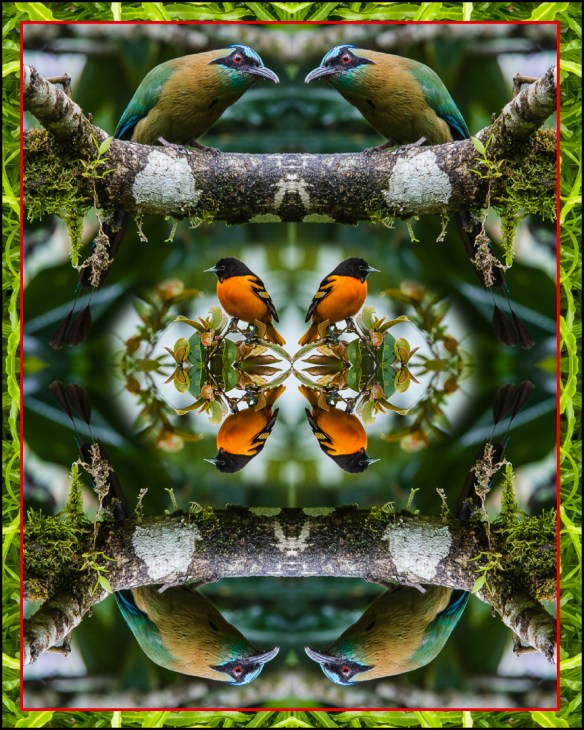
We’re “for the birds,” and we send you this card to wish you Happy Birding all year long!
Especially created for the SVBC by member Harry Hull, this card is a unique and — we hope you’ll agree — beautiful way to extend to you our very best wishes for a wonderful holiday and a fabulous 2013.
Alison Olivieri, Lydia Vogt and Fred Schroeder (executive committee for 2012)

Photo: Copyright 2012 by Harry Hull III, used by permission. Mandalagraphs.com
Those interested in seeing more ‘mandalagraphs’ can visit Harry’s photo blog at mandalagraphs.com
Felices fiestas a Todos!
“A pajarear se ha dicho” con esta tarjeta les deseamos felices avistamientos para el próximo año!
Especialmente creada por el miembro del SVBC Harry Hull, esta tarjeta es única – esperamos que estén de acuerdo – hermosa manera de extender los mejores deseos una feliz navidad y prospero año nuevo.
Alison Olivieri, Lydia Vogt and Fred Schroeder (Comité Ejecutivo del 2012)
Si quiere ver mas ‘mandalagraphs’, va al sitio de Harry se llama: manadalagraphs.com
Mystery: a Missing Colony?
Sigue en espanol
On a recent birding trip to Rio Negro, we drove home through Sabalito, looking for activity in a site where we have reliably seen Crested Oropendulas nesting in the past.
Mysteriously, all the nests have vanished and not a bird was found.
More recently, three sightings of a flock of these beautiful and conspicuous birds have been reported in San Vito — one at Casa Botania, one at Finca Cantaros, and one flying over the Linda Vista bus stop. As many as 14 birds were counted, and in two of the sightings, several were carrying nesting material in their bills. A flock was seen in Sabalito, too, near the town center.
Our question is: where are they building their new colony? Please keep your eyes and ears open, and if you find them, please CONTACT US.
Espanol aqui
En un reciente viaje a Rio Negro, manejamos a casa pasando por Sabalito, buscando actividad en el sitio donde siempre estaban las Oropéndolas anidando en el pasado. Misteriosamente, todos los nidos han desparecido y ningún ave fue encontrada.
Mas recientemente, tres avistamientos de estas hermosas y conspicuas aves han sido reportados en San Vito — uno en Casa Botania, uno en Finca Cantaros y otra en la parada de buses de Linda Vista divisada mientras pasaba volando por el lugar. Al menos 14 aves han sido contabilizadas y varias cargaban material para los nidos en sus picos. Una bandada fue vista en Sabalito, también, cerca del centro del pueblo.
Nuestra pregunta es: donde están construyendo su nueva colonia? Por favor mantengan sus ojos y oídos abiertos y si las encuentran, por favor déjenos saber pulsando este link: CONTACT US.


You must be logged in to post a comment.