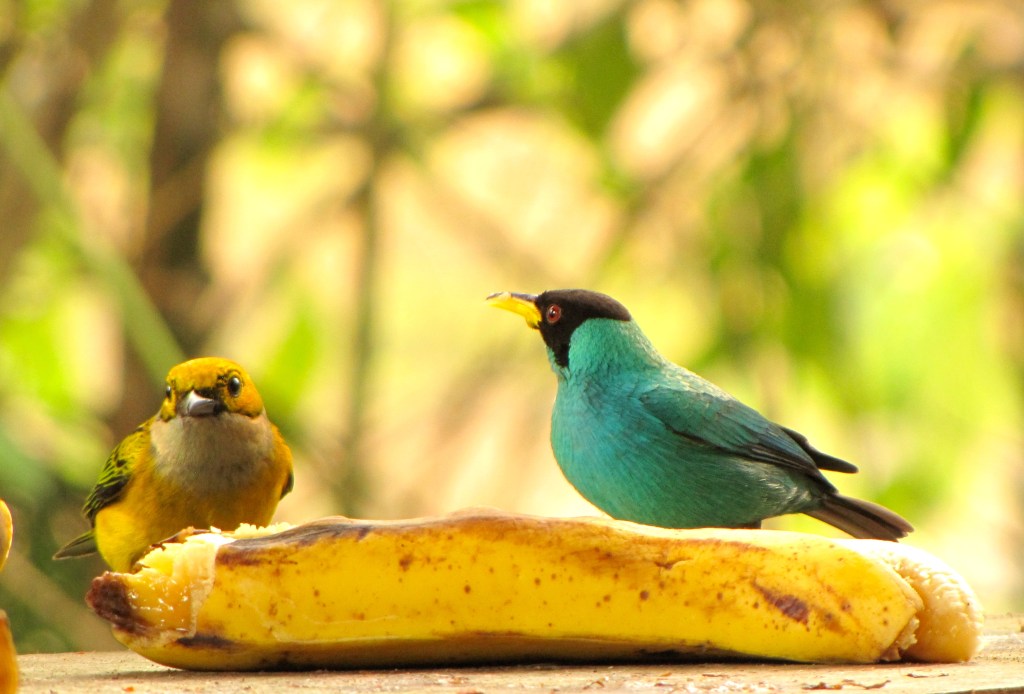
Spectacular photographer and good friend of the San Vito Bird Club, Jean-Phiilippe Thelliez has submitted some more of his bird photos from our area. Name them, if you can.
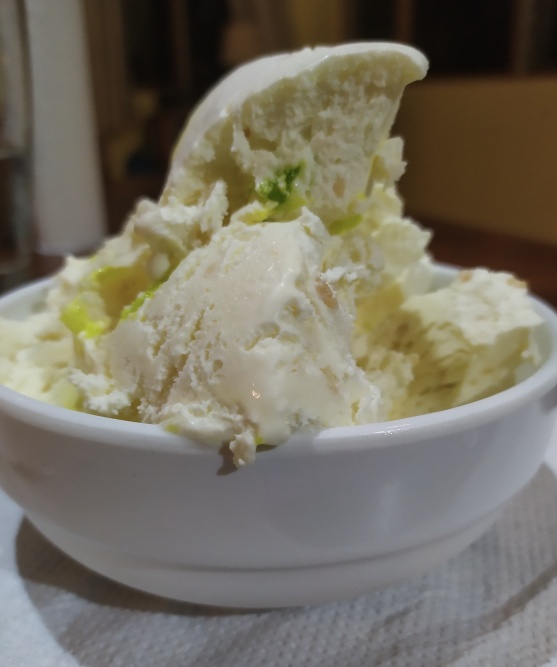
Plus, a bonus photo of Jean-Philippe’s favorite thing to eat.
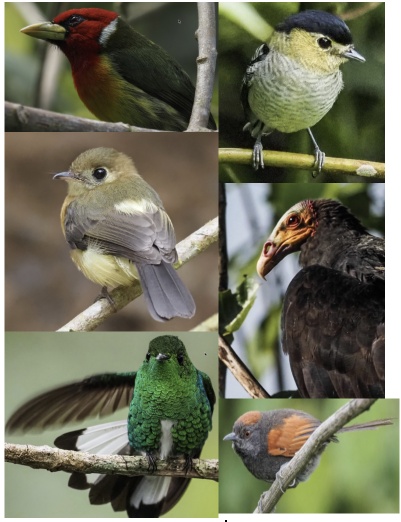

Spectacular photographer and good friend of the San Vito Bird Club, Jean-Phiilippe Thelliez has submitted some more of his bird photos from our area. Name them, if you can.
Plus, a bonus photo of Jean-Philippe’s favorite thing to eat.
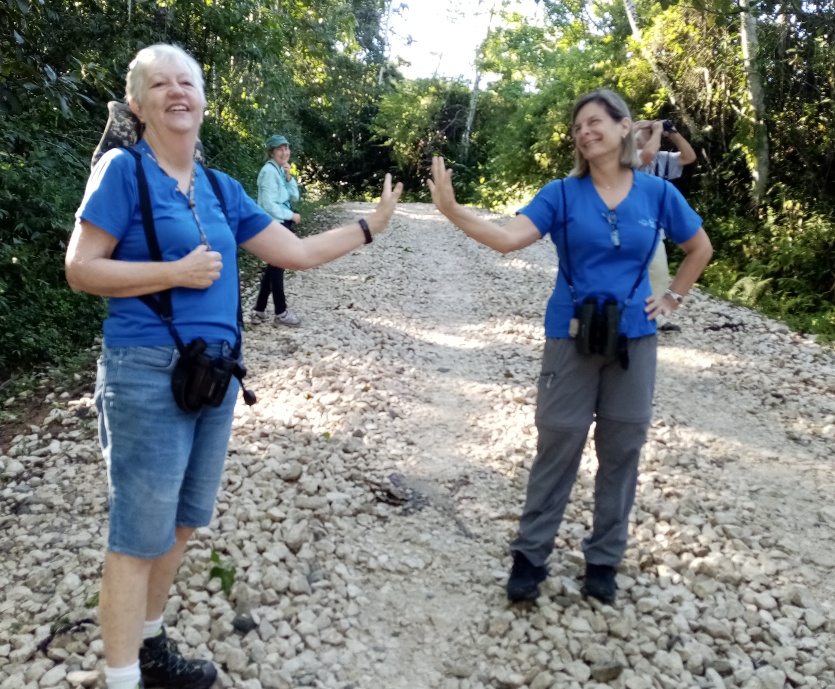
Notice the four people in the photo below. Two of them are birding and two of them are whimsically making a statement on the importance of social distancing. Which two are the closest together? CORRECT! The two that are making a point of staying a meter of two apart. The other two that are just birding? They’re already several meters apart…without even trying.
The point is…If you’re worried about social distancing, get outside and GO BIRDING! If you’re not worried about social distancing, get outside and go birding! (Feel free to replace ‘birding’ with ‘nature exploring’)
This coming dry season, we will very likely see a tsunami of foreign tourists coming to Costa Rica. Many of them have been stuck inside their homes, staring at the walls. When the travel barriers are lifted, these folks will look around and say, ‘Hmmm, I need a vacation. Where should I go on vacation? Where is a safe, healthy place to visit that doesn’t look anything like the four walls of my house? COSTA RICA!’
Tourism will return my friends…oh yes, it will return. If you are one of those wall-starers or know of any, the San Vito Bird Club and Coto Brus tourism welcome you.
(photo courtesy of Alison Olivieri)
This could be fun.
First of all, what is a hypothesis? The traditional definition of a hypothesis is–an educated guess; or a guess made upon observations. A theory, on the other hand is also known as a ‘hypothesis that has grown up’. A theory is much more than a guess. A theory has behind it not only observation but much testing and statistical data. For a theory to become fact the data must go through significant and extensive review. The data must be tested by other experts in the same field. The numbers must be crunched in an unbiased manner. In the scientific world, even after a theory has become fact it is always subject to further testing and review as new data is discovered. Contrary to what you may have heard about a certain global climate theory, the science and scrutiny is NEVER done. Fine; so back to What’s…My…Hypothesis.
Here’s how we play. Send me (see address below) your birding/natural history hypothesis. Based upon your observations and deductive reasoning, share your hypothesis or hypotheses (plural). Feel free to copy the template below and paste it into an email. Your hypothesis can be very brief and based solely upon something you have observed or even just wondered about.
Here are a couple of examples:
Hypothesis #1:
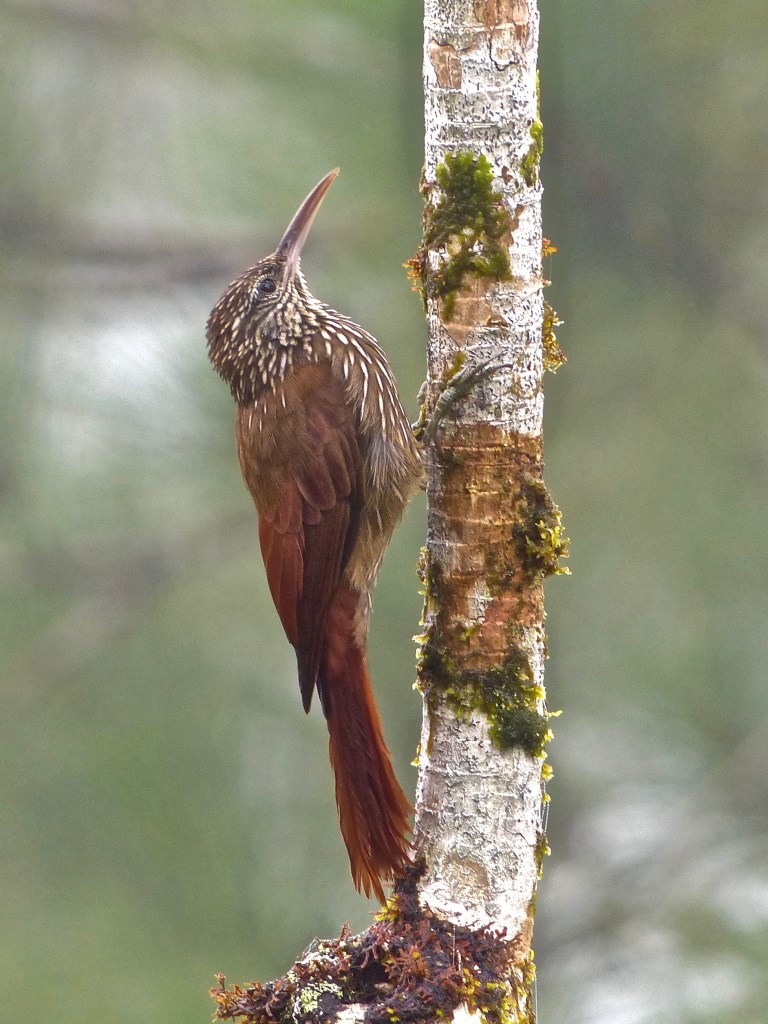
This what I have observed: Whenever I find a mixed flock of birds, there always seems to be a woodcreeper moving about and calling somewhere in the middle of that mixed flock.
This my hypothesis: Different species of birds often flock together in a loose affiliation. I believe they flock, both above and below a woodcreeper, because woodcreepers are both active and noisy and make for an obvious target around which to flock.
Hypothesis #2:
This is what I have observed: Leaf-cutter ants will travel relatively great distances to harvest leaves from citrus trees.
This is my hypothesis: Chemicals or odors found in citrus leaves could serve as a deterrent to unwanted pests down in the Leaf-cutter Ant nest. Or maybe they just make the place smell better, like one of the things you hang on the rearview mirror of your car.
Have fun with this. I will post some of the more interesting hypotheses on this website in the coming days. Who knows? Maybe your hypothesis will some day grow up to become an actual THEORY!
Please keep your observations to natural history topics, birding if possible. Here is the template:
This is what I have observed:
This is my hypothesis:
Send to:
eltangaral@gmail.com
Congratulations to the gifted, speedy and powerful Dorothy MacKinnon for solving Bird Jumble #3! Here are the jumbles and the answers:
The Challenging 3:
an ox nipples = Plain Xenops
cop mom on too = Common Potoo
darkest amity = Masked Tityra
The Easier 3:
one pig = pigeon
law owls = swallow
bitter nuns = sunbittern
The Local Name 3:
daring loon = golondrina
orangest = sargento
boob = bobo
We may be able to squeeze out ONE MORE jumble…in a couple of days.
You’re all getting plenty of exercise, right? Walking and birding and gardening and home projects. Good! Keep it up, San Vito Bird Club members.
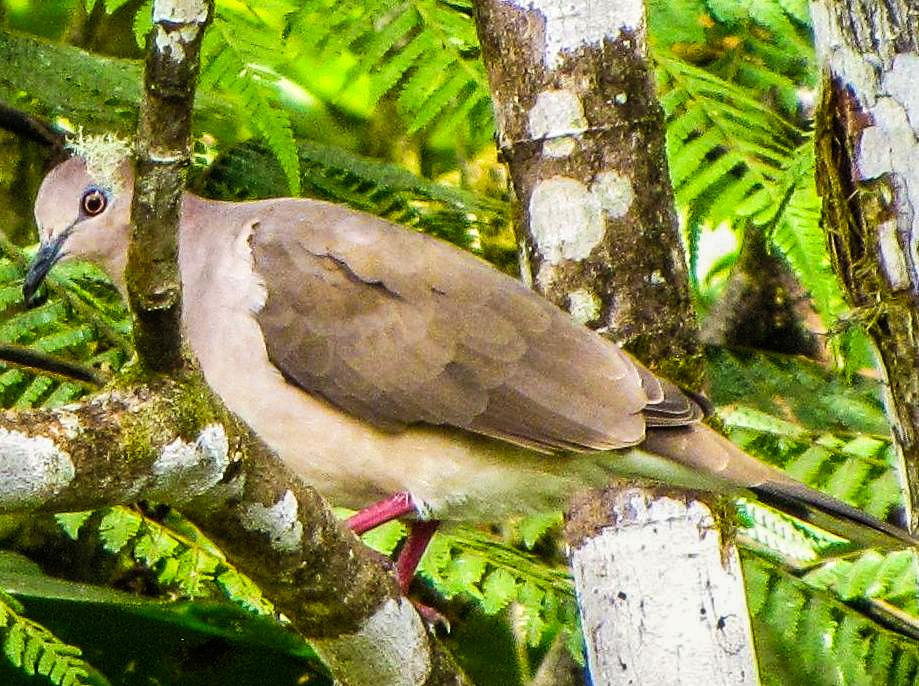
About 3 years ago following one of our Bird Walks (when you all were pretty much a captive, coffee-drinking audience) I delivered a brief tutorial on the calls of our local Pigeons and Doves. Following the tutorial, I promised deliver it again ‘…some day.’ That day has come.
All seven of these birds are easier to hear than to see. And they each have a distinctive call or song. See how many you can identify by song when you’re out and about.

Once again, here are last week’s Bird Jumbles followed by the answers:
large reactants = Scarlet Tanager
a noodle pro = Oropendola
bison poll = Spoonbill
a big drifter = Frigatebird (isn’t that one elegant?)
quick color user = Squirrel Cuckoo
camel cat wars = Scarlet Macaw
taco tune = Toucanet
porn guy died = Ruddy Pigeon
And the tie-breaker: chocolaty hurdler = Clay-colored Thrush
Hope you had some fun with this one.
Now…for Bird Jumble #3-Extravaganza!
Below you will see 3 jumbled bird names in three separate categories:
Challenging (tough ones)–Easier (but not easy)–Local Names (local bird names jumbled)
Challenging:
#1. an ox nipples
#2: cop mom on too
#3: darkest amity
Easier:
#1: one pig
#2: law owls
#3: bitter nuns
Local Names:
#1: orangest
#2: boob
#3: daring loon
Good luck and have fun!
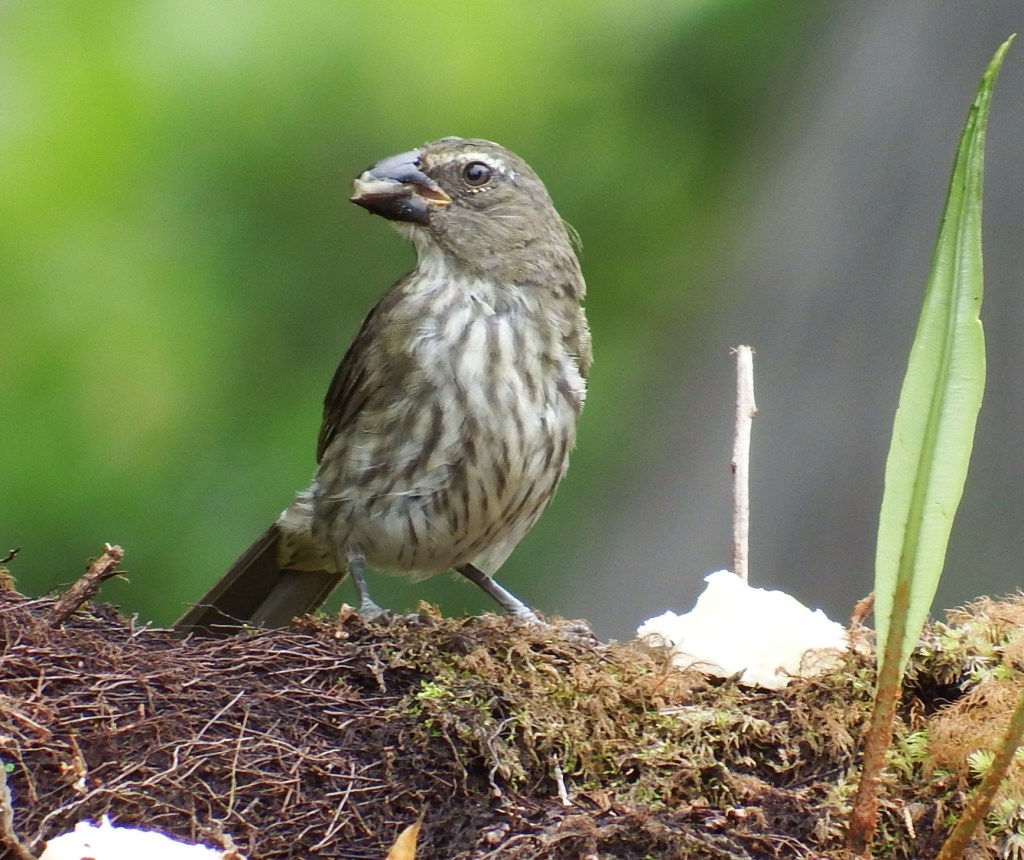
Here’s your next challenge; Bird Jumble #2. Again, rearrange the letters below to make the name of bird that can be found within an hour or two from San Vito.
Following those jumbled letters, the parenthesis lets you know how many words there are in the solved puzzle.
Tie Breaker: chocolaty hurdlers (three words)

‘Mixed Up Birds’, our challenging new game will now be known as ‘Bird Jumble’ (thanks to Alison Olivieri).
The winners of Bird Jumble #1, submitted at almost at the exact same time:
The speedy and powerful Georgea Badilla and the patient and tenacious Jo Davidson. Congratulations to you both.
Here are the correct answers to Bird Jumble #1:
Please see our page for Bird Jumble #2 tomorrow.
Cabin fever getting to you? Tired of counting the flowers on the wallpaper?
The San Vito Bird Club is here for you with a fun new, new, new contest!
We call it ‘MIXED UP BIRDS’.
Below you will see ten birds that are found around here…but the letters have been all mixed up. Your job is to rearrange the letters into the correct bird name.
Example:
erased tee = Seedeater
Some may be quite easy, others not so much. As a tie-breaker, an eleventh bird is included at the bottom This one could be much harder (hint: it is two words). Good luck!
Send your answers to:
****************
Esta usted cansado de contar las flores en su fondo de pantalla?
El Club de Aves de San Vito tiene una concurso nuevo y divertido!
“Pajaros Mezclados”/Mixed Up Birds
Abajo hay diez nombres de pajaros comun de Coto Brus; pero las letras son mezclan. El objecto es cambiar las letras a nombre del pajaro.
Ejemplo: erased tee = Seedeater
Muy buena suerte! Tambien hay #11 que es mas dificil de las otras (es dos palabras).
Envia sus repuestas a:
eltangaral@gmail.com
*****************
#11: Tie-breaker Challenge: GRACIOUS QUOTIENT
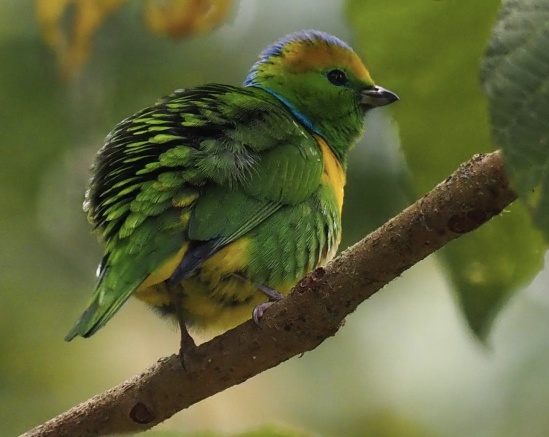
(photo courtesy of Jean-Philippe Thelliez. This bird is not one of the answers.)
Always energetic, Jean-Philippe Thelliez travels the world in search of nature photo opportunities. Submitted by Jean-Philippe himself, here are five recent photos taken in Columbia, Panama and Costa Rica.
(All photos taken by Jean-Philippe Thelliez)
Photo #1: The Hoatzin-Columbia
Living along riparian forests in the Amazon basin, the Hoatzin has been called ‘…the reptile bird’. Young Hoatzins actually have vestigial claws on their wings, allowing them to climb away from threats. Not surprisingly, this odd looking bird is only member of the taxonomic family Opisthocomidae.
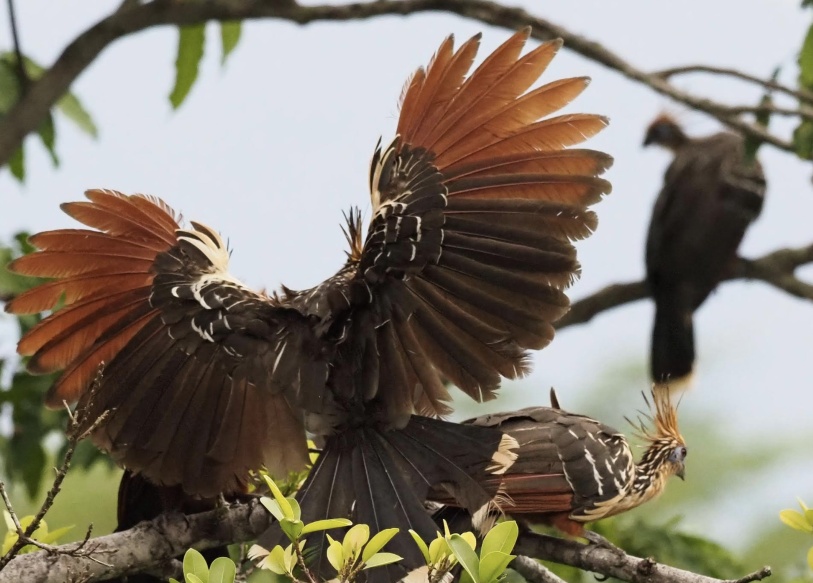
Photo #2: The Andean Cock-of-the-Rock-Columbia
What female could fail to be impressed by this male Andean Cock-of-the-Rock? Yes, it does have a bill in there somewhere
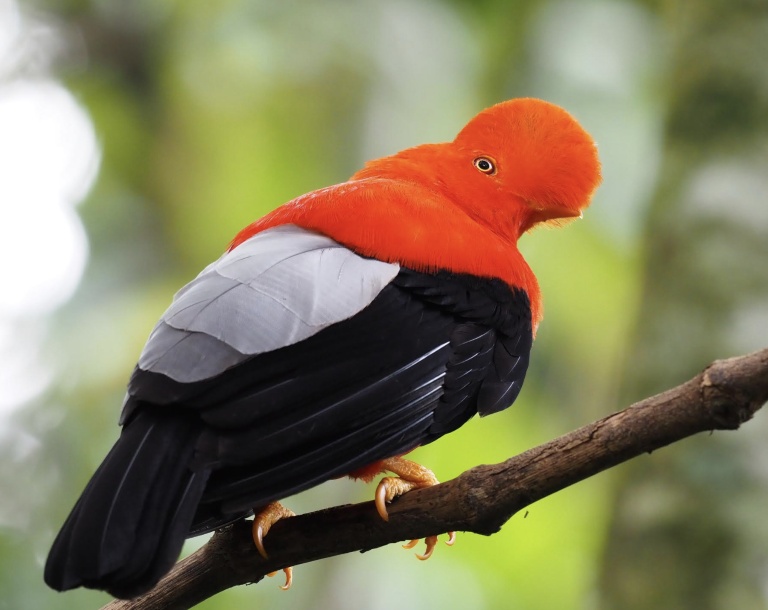
Photo #3: Harpy Eagle-Panama
For many treetop monkeys and sloths, the massive (2nd largest raptor in the world) Harpy Eagle is the last thing they ever see. Open your hand and spread your fingers as wide as you can; the Harpy Eagle’s claws are bigger!
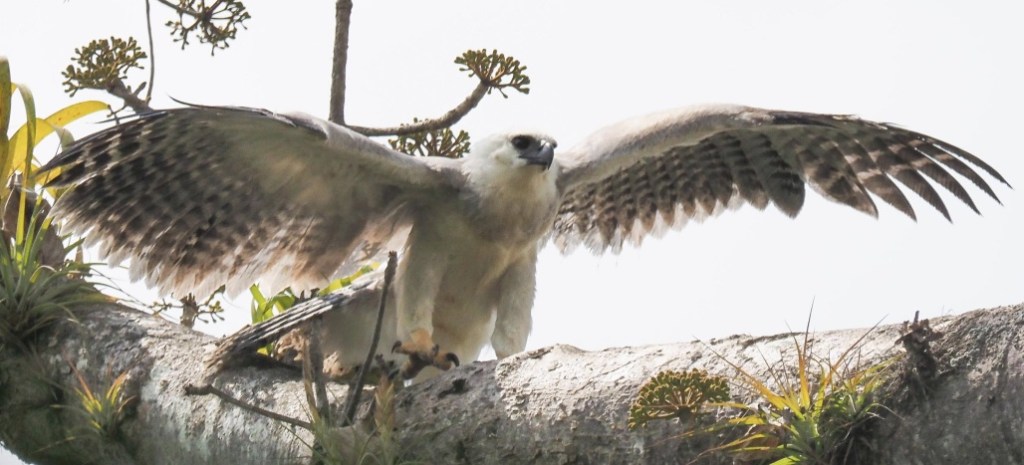
Photo #4: Three-wattled Bellbird-Costa Rica
‘BONG’ Spend a little time up in the highlands around San Vito and you’ll probably hear the male Three-wattled Bellbird give its echoing and eerie call.

Photo #5: Plumbeous Kite-Costa Rica
Our fifth and final bird is the Plumbeous Kite. This particular bird appears to be bowing a polite ‘thank you’ for viewing these wonderful photos. The Plumbeous Kite also wishes to remind all of you to remain healthy, safe, patient and most importantly…ACTIVE!

(descriptions by Greg Homer)
 San Vito Bird Club
You must be logged in to post a comment.