Birding from the Canopy Tower

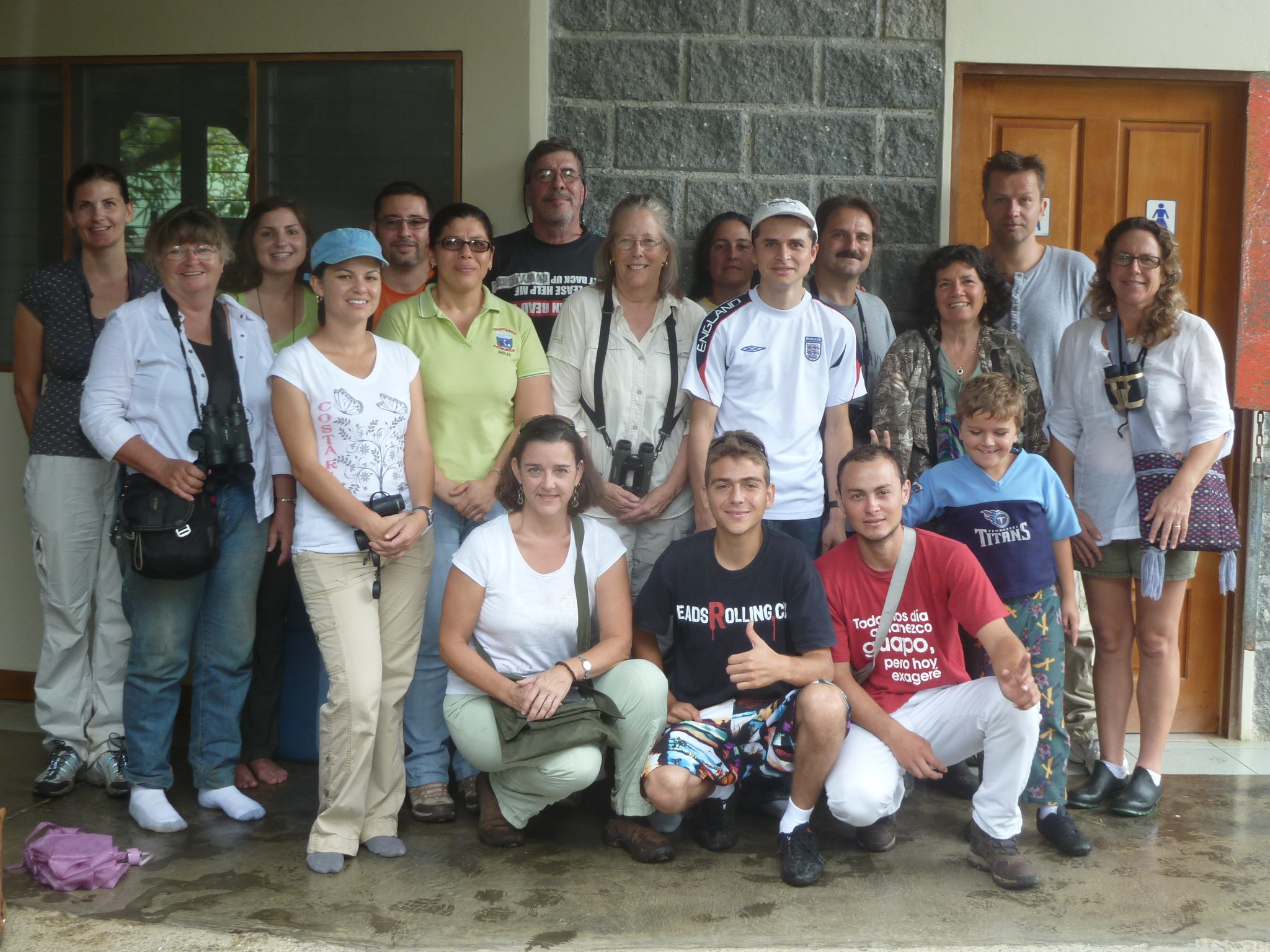
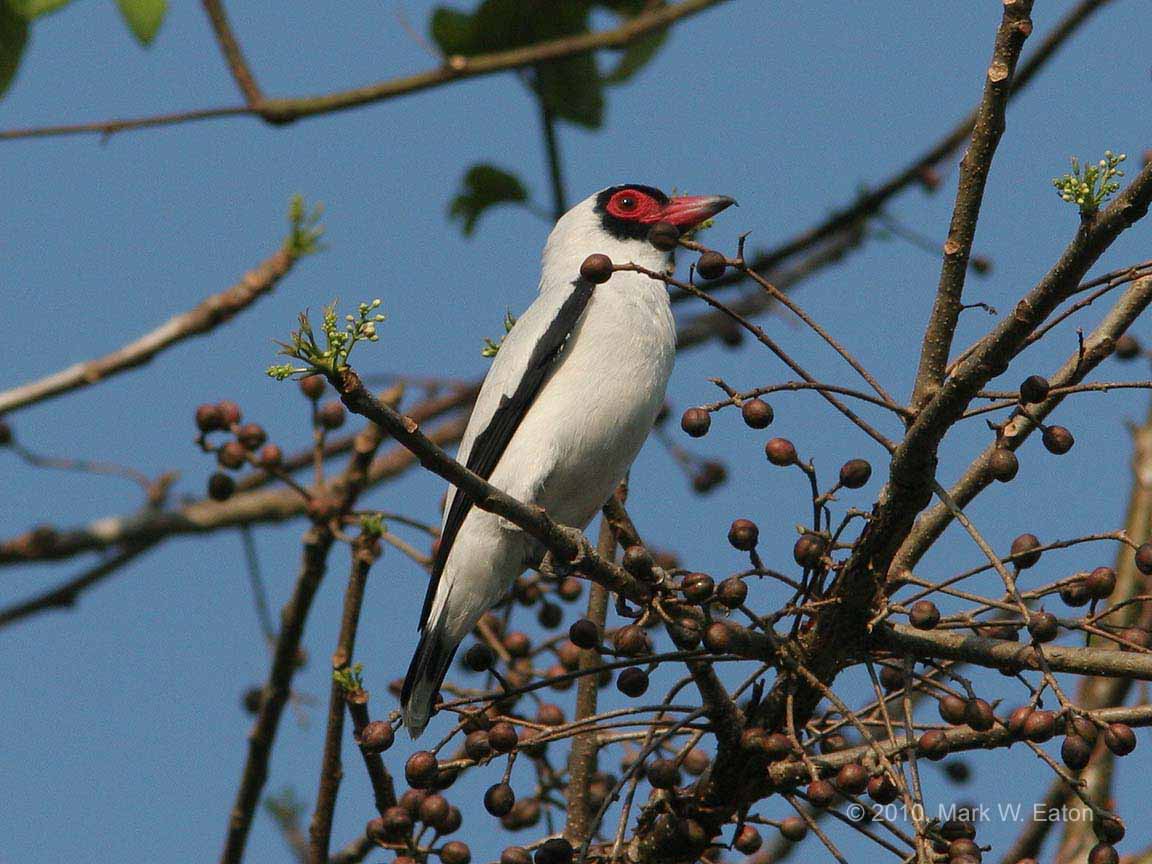
On a recent Bird Walk at the Wilson Botanical Garden, our group of 10 climbed the Canopy Tower to look for returning migrants. Although we did not see any of those, we did see two Masked Tityras, spotted by Caroline Torres.

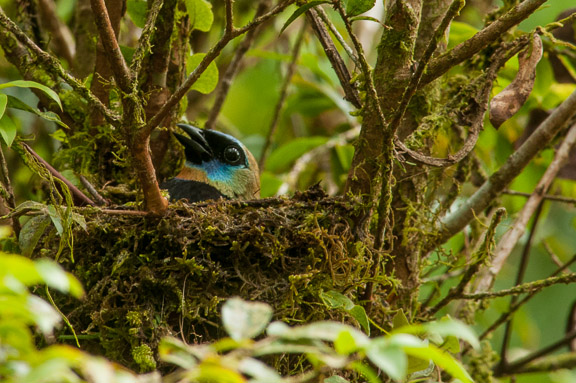
Masked Tityra. Photo by Mark W. Eaton.

Masked Tityra (Photo by Mark W. Eaton)

I’m not sure why but these birds always give me a jolt of surprise. Maybe it’s the incredible white plumage or perhaps it’s the bright pink orbital skin around the eye and face? Being close to them in the canopy was a thrill as their size is often diminished when they’re seen – typically high in the trees — from the ground. Here, on the Tower, we had the chance to view them at slightly lower than eye level, allowing us to experience them as striking-looking, big, white flycatchers.

When the Tower was inaugurated in May 2011 (click here to read more about this event), we decided to keep a list of all species seen and/or heard in the immediate vicinity. On our recent visit we added add two new ones to the Canopy Tower Bird List: Laughing Falcon (heard not seen) and Spot-crowned Euphonia.

Laughing Falcon (Photo by Alison Olivieri)

Laughing Falcon (Photo by Alison Olivieri)

The falcon’s resonant, slightly eerie call is described by F. Gary Stiles and Alexander F. Skutch in A Guide to the Birds of Costa Rica, as “. . . . a long, rhythmic series of loud, hollow notes with somewhat the quality of a child’s shout.”  The local name of this raptor, Guaco, is synchronous with its call so once you learn and hear it, you can be certain it’s a Laughing Falcon. It is well known that this bird of prey’s favorite food item is any kind of snake so they are cherished by local people and those of us who wish they would visit often and eat their fill.

Our female Spot-crowned Euphonia perched quite close to the Tower, affording some of the group excellent looks at her distinctive field marks of rufous forecrown and belly. Identifying this species is easy if you are prepared to do a little work with your field guide. The males are the only euphonia with yellow spots on the crown patch but, if you are looking from below, it is often easier to identify the female. This is a puzzle where the range maps in the Garrigues and Dean field guide (The Birds of Costa Rica) really come in handy. You’ll quickly see another species with similar markings on the female, Olive-backed Euphonia, but a glance at the map will tell you the Olive-backed is found on the Caribbean side and Spot-crowned is the bird you see here.

To date we have 67 species on this list and 10 birders have contributed sightings. If you are curious and would like a copy, don’t hesitate to contact us. Likewise, please let us know if you see or hear a species we are missing.

Thanks to Caroline Torres, Roni Chernin, Jeff Wick, Barb Barton, Judith and Joe Ippolito, Donna and Tony Pagano and their surrogate grandson Rolando for joining us on this walk.

El ciclo de la vida comienza de nuevo!

Para leer el articulo “El ciclo de la vida comienza de nuevo!” en espanol, por favor, haga CLIQUE AQUI!

Two Rufous-tailed Hummingbird nestlings. Photo by Alison Olivieri.

Two Rufous-tailed Hummingbird nestlings. Photo by Alison Olivieri.

Life’s Cycle Begins Anew/El ciclo de la vida comienza de nuevo!

Sigue en espanol

The windows on the side of our car next to the garden are covered with black plastic and both of the side-view mirrors sport jauntily-angled BM shopping bags: this is our standard car ‘look’ for April and May. In the morning, from about 10 to noon, if we removed these defenses, the car will be splattered with bird excrement almost immediately. It is under attack by a Silver-throated Tanager AND a Clay-colored Thrush, both of which are laboring under the same mistaken conviction that their reflections in the windows and the mirror are rival males muscling into valuable nesting territories.

Spot-crowned Euphonia female. Photo by Caroline Torres.

Spot-crowned Euphonia female. Photo by Caroline Torres.

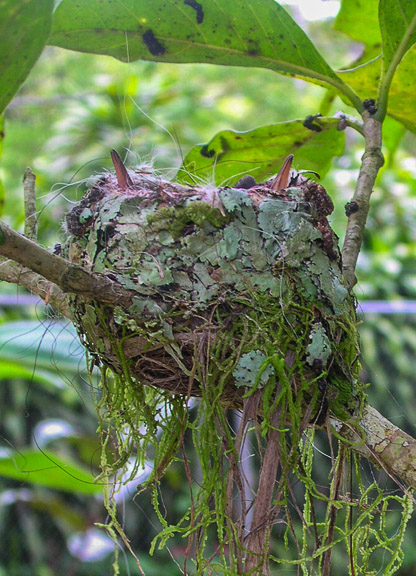
At this time of year, nearly all our resident birds are courting, staking out fruitful patches of habitat, building nests, laying eggs and feeding young. During the Club’s bird walk last week at the Wilson Botanical Garden, we found paired up Gray-capped Flycatchers, a Common Tody-Flycatcher nest and a Spot-crowned Euphonia nest inside of which we could see two huge, gaping bills attached to two tiny nestlings. An extra bonus for us: we got to watch both parents feeding the chicks!

At home over coffee, we watched a family of four Rufous-breasted Wrens working the trees close to the house and later, walking the dog, we saw Tropical Kingbirds feeding fledglings on the electric wires along the road.

Clay-colored Thrush nestlings at 11 days old. Photo by Alison Olivieri.

Clay-colored Thrush nestlings at 11 days old. Photo by Alison Olivieri.

Birds try to be as inconspicuous as possible during the breeding season. Understandably, they don’t want you or other predators to see them or find their nests. So, when people tell us they see fewer birds in their yards or on their feeders in April and May, we say, “Good! Their strategies are working!”

And there is another reason for this noticeable drop in casual bird sightings: the migrant species are leaving, heading north to breed in North America where they face fewer predators and can (hopefully) find more food and more space to claim. Three common ‘feeder birds’ you will NOT see now are Baltimore Oriole, Tennessee Warbler and Summer Tanager.

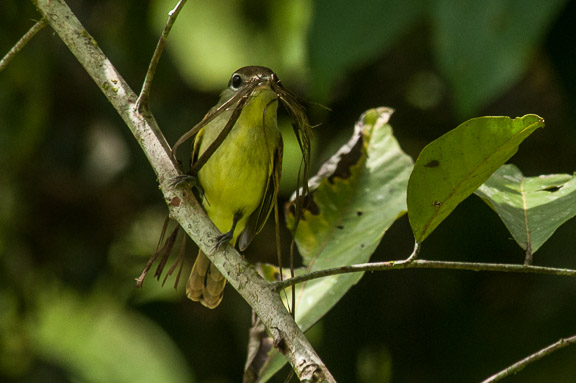
Female White-winged Becard carrying nesting material at Finca Cantaros. Photo by Harry Hull.

Female White-winged Becard carrying nesting material at Finca Cantaros. Photo by Harry Hull.

Thrushes, flycatchers, warblers, orioles and tanagers are included in the neotropical migrant group that leaves the tropics around April and returns, after breeding in the north, in October and November. About 25% of Costa Rica’s bird species fall into this category. To provide a local perspective, we have 21 species of warblers that can be seen in or near San Vito with relatively little effort but only six are year-around residents.

At the same time, you will hear us exclaim over migrant species from the south that come here at this time of year to breed in Costa Rica. These include the lovely and ubiquitous Swallow-tailed Kites, nest-stealing Piratic Flycatchers and cheerful Yellow-green Vireos.

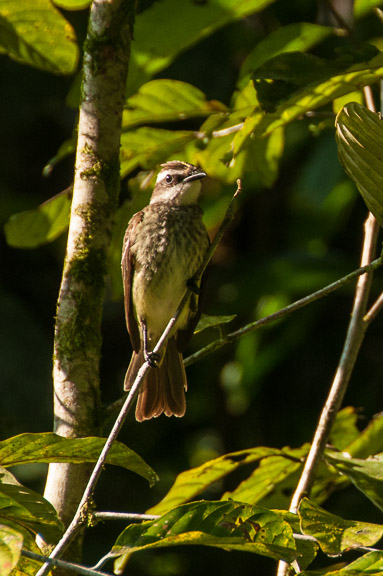
Piratic Flycatcher, an austral migrant. Photo by Harry Hull.

Piratic Flycatcher, an austral migrant. Photo by Harry Hull.

So even though some birds have temporarily left, with a little effort you can still spot the remaining ones that are deliberately hiding and observe their fascinating breeding behaviors. We say, “Get up and go outside with your binoculars”! You’ll never see any of this if you’re inside watching television (or reading this on your computer) but outside birds are putting on an incredible show and you really don’t want to miss it!

Espanol aqui:

Las ventanas y espejos retrovisores al lado de nuestro auto junto al jardín están cubiertas con plástico negro: este es el ‘look’ estándar de nuestro auto para los meses de Abril y Mayo. En la mañana, hasta alrededor de la 10 am, si removemos estas defensas, el auto terminaría salpicado con excremento de aves casi inmediatamente. Nuestro auto  está bajo el ataque de un Silver-throated Tanager y un Clay-colored Thrush, ambos de los cuales están empecinados y con plena convicción  que su reflejo pertenece a un rival de su misma especie intentando tomar su valuable territorio para reproducción.

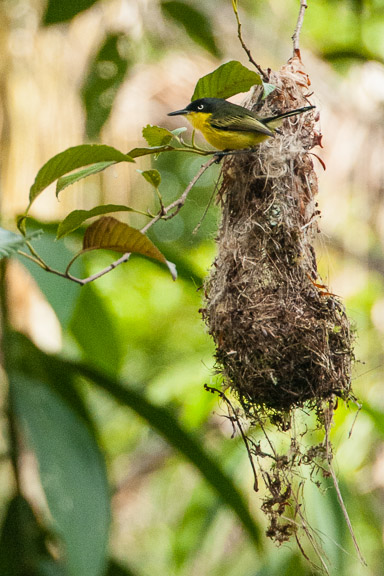
Common Tody-Flycatcher at its nest. Photo by Harry Hull.

Common Tody-Flycatcher at its nest. Photo by Harry Hull.

En estos momentos del año, la mayoría de todas nuestras aves residentes están en pleno cortejo, y territorializando los pequeños  parches de árboles frutales, construyendo nidos, poniendo sus huevos y alimentando la siguiente generación. Durante la caminata del club de la semana pasada en el Jardin Botanico Wilson, encontramos una pareja de Graycapped Flycatchers, un nido de Common Tody-Flycatcher y Spot-crowned Euphonia donde pudimos observar con asombro dos picos gigantescos junto a dos minúsculos acurrucados en el nido. Como un bono extra para nosotros pudimos observar a ambos padres alimentando a los pichones.

En casa con una buena taza de café, pudimos observar una familia de Rufous-breasted Wrens trabajando en unos árboles cercanos a nuestra casa, luego cuando paseábamos el perro, pudimos observar Tropical Kingbirds alimentando a sus polluelos en uno de los cables eléctricos que sortean el camino.

Las aves tratan de ser tan poco conspicuas como les es posible durante la estación de crianza. Entendiblemente, ellos no quieren que otros predadores los vean en sus respectivos nidos. Así que cuando la gente nos comenta que ven menos aves en los comederos de su patios o jardines entre Abril y Mayo, nosotros decimos “Bien! Sus estrategias funcionan!’’

Clay-colored Thrush nestlings. Photo by Alison Olivieri.

Clay-colored Thrush nestlings. Photo by Alison Olivieri.

Además hay otra razón por la cual el detrimento muy notable de avistamientos casuales de aves: las especies migrantes están dejando el país, desplazándose al Norte para reproducirse en Norte América donde encontraran menos predadores y donde (afortunadamente) encontraran más fuentes de alimento y espacio donde puedan establecerse. Tres aves comúnmente encontradas en los comederos NO los veras más como es el Baltimore Oriole, Tennessee Warbler and Summer Tanager.

Thrushes, flycatchers, warblers, orioles and tanagers estan incluidos como los grupos de migrantes neotropicales que dejan los trópicos alrededor de Abril y regresan después de reproducirse en Norte America, en Octubre y Noviembre . Acerca de un 25% de las especies de aves de Costa Rica coinciden en esta categoría. Para proveer una perspectiva local, tenemos 21 especies de reinitas que pueden ser vistas alrededor de San Vito con un esfuerzo relativamente bajo, pero solo 6 de ellas son residentes anuales (se quedan todo el año).

A la vez, nos escucharan muy entusiasmados cuando se puedan observar especies migrantes del Sur que vienen a nuestro país en esta época del año a reproducirse en Costa Rica. Estas incluyen las adorables y omnipresentes Gavilán tijereta, roba nidos o Piratic Flycatchers asi como los joviales Yellow-green Vireos.

Golden-hooded Tanager at Finca Cantaros. Photo by Harry Hull.

Golden-hooded Tanager at Finca Cantaros. Photo by Harry Hull.

Aun así dado que algunas especies de aves nos dejan temporalmente, con un pequeño esfuerzo podemos observar a las que se quedan deliberadamente a escondidas en su época de reproducción y más aun pudiendo apreciar su comportamiento reproductivo. Nosotros decimos ‘’Levántense y vayan afuera con sus binoculars!’’ Nunca verán esto si están adentro viendo la televisión (o leyendo sobre el tema en su computadora) dado que fuera las aves están poniendo un show increíble que definitivamente no te quieres perder!

Costa Rica birding applications revisited

by Harry Hull

Bird apps for Costa Rica have now been around for several years, and this post revisits the birding applications (“apps”) dedicated to Costa Rica’s rich bird life that I reviewed in March 2013: Costa Rica Birds Field Guide and BirdSounds Costa Rica. Both apps are now available for Android devices as well as Apple mobile devices—iPhone, iPod Touch, and iPad.

costaricabirds-appCosta Rica Birds Field Guide, published by Birding Field Guides. $14.99 for full version, $2.99 for Basic version  for Apple iOS 8.0 or later for iPhone, iPod Touch, or iPad. $9.99 for full version, $2.99 for Basic version for Android 2.3.3 and later. Size: 405 MB (full version); 206 MB (Basic). This app became available in January of 2012 in the iTunes Store, and is now also available on Google Play. It has steadily been improved as the publishers continue to add species, photos, and sounds. It considers itself the first digital field guide completely focused on birds that are seen in Costa Rica. (The publisher also has an app for the birds of Panama.) Michael Mullin, head of programming for Birding Field Guides, expects this app to make it easier for eco-tourists and birders of all levels of experience to identify and learn about Costa Rican birds with images, range maps, and text for more than 890 species. Vocalizations of more than 660 bird species are also included along with a search filter and other features. The latest full version now seems appropriate for serious birders as well as more casual bird enthusiast visitors to Costa Rica.

Basic features of the full version:

  • All Costa Rica bird species are listed. (The Basic version covers 360 of “the most spectacular and commonly encountered bird species”, appropriate for more casual birders.)
  • Photographs for more than 890 species.
  • Range map for each bird.
  • Description, including field marks and habitat for each bird.
  • Bird sounds for around 660 species.
  • Extensive search options, including searching by name, by “Group” (for example, “Barbets & Toucans”), by Family (for example, “Accipitridae”), and detailed search filters (for example, “Region” and “Stratum”; “Color[s] (2)” and “Size”, “Head Pattern”, etc.). [“Stratum” indicates whether the bird frequents the “Understory”, “Mid Canopy”, “High Canopy”, “Ground”, “Sky” or “Water”.]
  • New “Similar Species” feature allows quick comparison of field sightings.
  • Place for personal notes, recording GPS position, and ability to email notes.
  • Ability to access device’s camera and photos from within the app.

My take: Based on my use of the app on my iPhone, I find the data included in the app quite well organized and easy to navigate, with the search functions comprehensive and pretty intuitive; and the latest version of the app is very comprehensive, enough to be a digital substitute for a paper guide, especially if you’re only a visitor to Costa Rica.

birdsounds-costa-rica-appBirdSounds Costa Rica, published by Bernard Geling/BirdingApps (they don’t yet have a new website up and running as of this writing). $19.99 for full version, free for Lite version; requires Apple iOS 5.1 or later for iPhone, iPod Touch, or iPad. The same price for the full  version (and free for Lite) on Android 2.3.3 and later. Size: 1.02 GB for the full version, slightly less for Android version; 69.5 MB for the Lite version. This app became available in January of 2013 in the iTunes Store, and is now also available for Android devices on Google Play. This app is dedicated exclusively to an extensive collection of bird sound recordings: there are no bird photos, range maps, or other data about the birds covered. According to the publisher, BirdSounds of Costa Rica is “the perfect complement to your paper field guide to the birds of Costa Rica;” however, the most recent version of the Costa Rica Birds Field Guide app reviewed above has bird sounds for about 660 species, so some might not feel this is as essential as it once was. All of the sounds are included in the app, so there is no need to connect to the internet to access sounds or other content. This is why the full version of the app is in the hefty 1 GB range.

Basic features of the full version:

  • More than 2000 recordings for 764 species of birds found in Costa Rica, a pretty high percentage of the species found here, leaving about 80-90 species unrecorded. (The Lite version covers 133 recordings for only 30 species, clearly a teaser version.) There are multiple recordings for most birds.
  • Several playback modes, including ability to automatically repeat a single track or all of the tracks for a species. There are no annoying voice-overs identifying the bird or track number.
  • Extensive search options, including browsing by Group (for example, Tinamous, Pigeons & Doves; Parrots & Parakeets), by first or last name of the bird, or by typing in any part of a bird or species name.
  • A customizable list of favorite species for quick access.
  • A list of the 20 most recently accessed species.
  • Information behind most of the recordings, including where and when the recording was made and by whom.

My take: I’ve found the bird sounds included in the app of good quality, quite comprehensive and easy to access. The automatic repeat playback mode is really handy if you’re in the field and want to play the bird sound several times in succession without having to resort to the controls. While there are still about 10% of Costa Rica’s bird species not yet included, this is an app worth considering as an audio complement to your bird guidebook; however, now that the Costa Rica Birds Field Guide app reviewed above has bird sounds for about 660 species, this app might be less compelling.

birdeye-costarica-appBirdsEye Costa Rica, published by Birds in The Hand. $9.99 for Apple iOS 7.0 or later; Size: 13.4 MB. This app became available in May 2014, after my initial review of Costa Rica birding apps, and I hasten to add at the outset that I have not yet used this app for reasons I’ll mention below. A “free” app for Android 4.1 and later–BirdsEye Bird Finding Guide–purports to do much the same thing but to also cover birding “around the world”; but “in-app purchases” ranging from $0.99 to $79.99 mean the actual cost for Costa Rica use isn’t clear.

This app is somewhat of a hybrid in that it requires an active internet connection in order to access images and bird sounds “for the first time”. (A companion Birds of Costa Rica Sound Collection data base can be purchased and downloaded from the publisher for $24.99 that can then also be installed on your device  via the BirdsEye Costa Rica app.) The description of the app on iTunes contains these caveats: “BirdsEye is not a field guide” (although it’s claimed to be “an indispensable field tool for finding birds”). The bird sounds accessible on the app “are available only for the migrants from North America.” And as mentioned, an active internet connection is required for to access eBird sightings for your location and “to download images and sounds for the first time. Photos are available for more than 95% species but are missing for a few birds that are rare in Costa Rica.”

One of the key features of this app seems to be access to the eBird data base that could give you “up to the minute” updates on species seen in your location. (The app is described as being “powered by eBird,” and all purchases of the BirdsEye app helps support the Cornell Laboratory of Ornithology, a good thing!) For all practical purposes, this requires that you to have a cellular data internet connection, something not that reliable in many birding areas and certainly not practical for most casual visitors to Costa Rica who don’t sign up for a cellular data plan during their visit. The description of the app also mentions the requirement to sign up for a free Birds in the Hand account in order to take advantage of some customization features (personal bird lists, etc.) and an optional $4.99 monthly BirdsEye Membership “to unlock all the media available in the app for each bird (new photos and updates available daily)” and other search and bird list features. It’s somewhat unclear if this membership requirement applies for access to the basic “media” (especially photos) for the app or only new media, whatever that might mean.

My take. Because the more straightforward Costa Rica Birds Field Guide app reviewed above requires no internet connection to use in the field (only to download from the relevant app store), I am not inclined to pursue this app further. However, if anyone reading this has used this app in Costa Rica, I’d welcome your thoughts. It’s certainly possible that by not personally trying the app,  I’m not doing it justice here.

Some last thoughts. In 2013, shortly after I wrote my initial review of these apps,  I ran into Robert Dean, co-author of Garriques & Dean’s The Birds of Costa Rica: A Field Guide, and he confirmed that an app based on this popular field guide is underway. One of his goals is that the app be as complete digitally as his field guide is in the print media, with the addition of other features such as bird sounds, photos, and access options that digital guides can so readily provide. Presumably, such an app will also include Robert Dean’s wonderful bird illustrations. I suspect that when this app eventually appears–and as of this writing, it still hasn’t–it will likely become the best Costa Rica bird app available.

Activities and Events in 2012/Actividades y Eventos de 2012

Sigue en espanol

For the first time last May the Club supported a Teacher Training Workshop given by Jennifer Fee and Lilly Briggs from Cornell University covering an environmental education class called “BirdSleuth” in English and “Detectives de Parajos” in Spanish, developed by Cornell’s Laboratory of Ornithology Education Department. We worked in collaboration with Ariadna Sanchez, Naturalist and Environmental Educator at OTS Las Cruces/Wilson Botanical Garden, to produce this workshop which was filled to capacity with 27 participants. Lilly, a graduate student at Cornell, gave the training in Spanish. Interestingly, many of the trainees work in local schools and at least half of them had taken last year’s Naturalist Guide Course at Las Cruces. The support materials were available to participants in English and Spanish.

I am pleased to announce that we introduced this class into the Linda Vista School at the start of the 2013 school year in February for 4th-6th grade students, taught by our intrepid Wendy Schultz.

The Club led 12 Bird Walks at the Wilson Garden and one on a Sunday at Finca Cantaros that attracted more than 40 participants. Needless to say we were a little short on binoculars that morning!

We ran three mist netting sessions as part of our ongoing research project, El Proyecto Monitoreo des las Aves de San Vito, in January, March and December. Two members represented this project at a national Bird Banding Conference at InBio Parque in San Jose in April, sponsored by Partners in Flight Mesoamerica and the Costa Rican Bird Observatory.

In February, we held our Annual Meeting and organized an overnight birding trip for 8 members to Drake Bay, guided by ornithologist Jim Zook.

In May, members including Wendy Bernstein, Gail Hull, Roni Chernin, Kata Ulenaers, Lisa Ann, Kate Desvenain and Chris Heist volunteered at the 50th Anniversary of the Wilson Botanical Garden/Festival Eco-Cultural.

During the course of the year we have shared a table with Finca Cantaros at two local Tourism Fairs, one in San Vito and one in Cuided Neily, and Heysen Esquivel and Alison Olivieri volunteered at an Eco-Culture Fair in Concepcion.

We participated in the first national Breeding Bird Survey at two local sites, Cantaros and the Wilson Garden, and two members participated in a Birding Club of Costa Rica overnight trip to Las Esquinas Rainforest Lodge in La Gamba in July.

 At the present moment, the Club has 46 members who have renewed their dues for 2013. Twenty are International Members, defined as those whose primary residence is outside of Costa Rica, 20 Resident Members and six Honorary Members.

Finally, we have a new Vice President, Heysen Esquivel, who has been working hard behind the scenes to make our website bi-lingual, translating all our posts and articles into Spanish. He attended nearly every twice monthly Bird Walk at the Wilson Garden last year and recently started to lead these walks. Years ago, Heysen worked as general manager of OTS/Las Cruces and Nancy, his wife, also worked there at that time.

 Espanol aqui:

Po primera vez el pasado mayo el club auspicio un taller de entrenamiento para profesores dado por Jennifer Fee y Lilly Briggs de la universidad de Cornell sobre educación ambiental curso llamado “BirdSleuth” en ingles o “Detectives de Parajos” en español, desarrollado por el departamento de educación del Laboratorio de Ornitologia de la universidad de Cornell. Trabajamos en colaboración con Ariadna Sanchez, naturalista,  encargada del departamento de educación ambiental de la OTS/Jardín Botánico Wilson, para ofrecer este curso impartido a una cantidad de 27 participantes. Lilly, una estudiante graduada de la universidad de Cornell, impartió el entrenamiento en idioma español.

Interesantemente, muchos de los  participantes trabajaron con las escuelas locales y al menos la mitad de ellos han tomado el último curso de guía naturalista impartido en las Cruces. Todo el material educativo estuvo disponible para los participantes en ingles y español.

Estoy muy contenta en anunciar a su vez que incluimos la primera clase en la escuela de Linda Vista a inicios de este año lectivo en febrero 2013 para estudiantes de 4to y 6to grado con nuestra intrépida profesora Wendy Schultz.

El club ha hecho 12 caminatas al Jardín Botánico Wilson y una en un día domingo en Finca Cantaros que atrajo a más de 40 participantes. Cabe mencionar que quedamos un poco cortos en binoculares esa mañana!

Hemos organizado 3 sesiones de anillado como parte de nuestro proyecto de investigación a largo plazo, El Proyecto de Monitoreo de Aves de San Vito, en enero, marzo y diciembre. Dos miembros presentaron el proyecto en la Conferencia de Anillado de Aves Nacional en el Inbio Parque en San Jose en abril, evento auspiciado por nuestros Aliados de Flight Mesoamerica y el Observatorio de Aves de Costa Rica.

En febrero, hemos organizado nuestra reunion anual y organizamos un paseo para observar aves a la Bahía de Drake, viaje que incluia estadia en el lugar donde asistieron 8 miembros del club. Viaje guiado por el ornitólogo Jim Zook.

En mayo, algunos miembros incluidos Wendy Bernstein, Gail Hull, Roni Chernin, Kata Ulenaers, Lisa Ann, Kate Desvenain and Chris Heist fueron voluntarios al evento de celebración del aniversario de  los 50 años del Jardin Botanico Wilson/Festival Eco-cultural.

En el curso de este año hemos compartido una mesa con Finca Cantaros en dos ferias de turismo — una en San Vito y una en Ciudad Neily, y Heysen Esquivel y Alison Olivieri fuimos voluntarios de la feria Eco-cultural en Concepción.

Participamos además en la primer censo de anidación nacional en dos sitios locales, Cantaros y el Jardín Botánico Wilson, dos miembros participaron en un viaje de varios días con estadía incluida hecho por el Club de Aves de Costa Rica, evento realizado en Las Esquinas Rain Forest Lodge en la Gamba en julio.

En estos momentos, el club tiene 46 miembros que han renovado su membresía anual para el 2013. 20 son miembros internacionales, refiriéndose a aquellos el cual su residencia primaria es fuera de Costa Rica, 20 miembros residentes y 6 miembros honorarios.

Tengo reservado lo mejor para el final: Tengo el placer de anunciarles que tenemos un nuevo Vicepresidente Heysen Esquivel, quien ha trabajado con nosotros muy fuerte tras bastidores para hacer nuestro sitio web bilingüe, traduciendo todos los artículos y anuncios al español. El ha asistido casi a todas las caminatas que se programan mensualmente y recientemente ha empezado a liderar las caminatas también. Hace algunos años atrás Heysen laboro como gerente en la OTS/Las cruces donde también su esposa, Nancy, trabajaba en ese momento.

Happy Holidays / Felíz Navidad y Próspero Año Nuevo

Sigue en espanol

Happy Holidays to All!

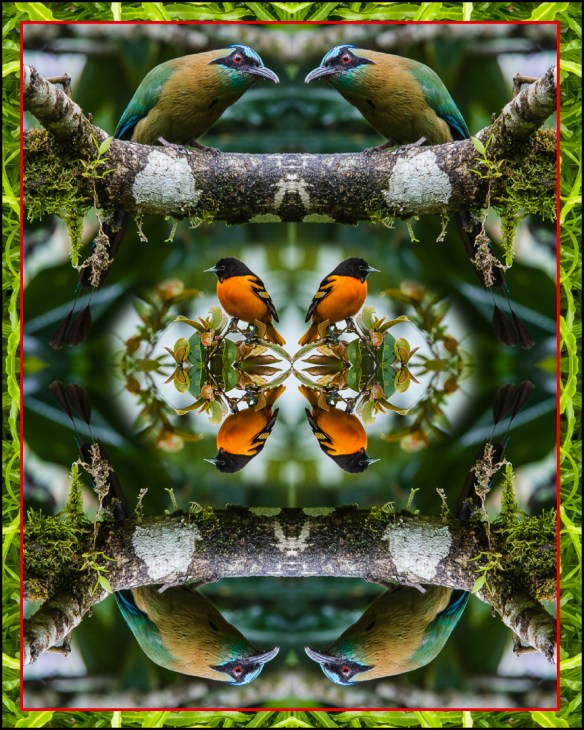
We’re “for the birds,” and we send you this card to wish you Happy Birding all year long!

Especially created for the SVBC by member Harry Hull, this card is a unique and — we hope you’ll agree — beautiful way to extend to you our very best wishes for a wonderful holiday and a fabulous 2013.

Alison Olivieri, Lydia Vogt and Fred Schroeder (executive committee for 2012)

Photo: Copyright by Harry Hull III, used by permission. Mandalagraphs.com

Photo: Copyright 2012 by Harry Hull III, used by permission. Mandalagraphs.com

Those interested in seeing more ‘mandalagraphs’ can visit Harry’s photo blog at mandalagraphs.com

Felices fiestas a Todos!

“A pajarear  se ha dicho” con esta tarjeta les deseamos felices avistamientos  para el próximo año!

Especialmente creada por el miembro del SVBC  Harry Hull, esta tarjeta es única – esperamos que estén de acuerdo – hermosa manera de extender los mejores deseos una feliz navidad y prospero año nuevo.

Alison Olivieri, Lydia Vogt and Fred Schroeder (Comité Ejecutivo del 2012)

Si quiere ver mas ‘mandalagraphs’, va al sitio de Harry se llama: manadalagraphs.com

Afield in Ecuador: from the Andes to the Amazon Basin

The flag of Ecuador. Photo by Alison Olivieri

Sigue en espanol

Ecuador is a wonderful country with breathtaking scenery, a violent history, fascinating and diverse cultures (shrunken heads, anyone?), bountiful natural history, yummy soup, good infrastructure and friendly people.

Due to its incredible biodiversity, birding in Ecuador is on the “Absolutely Must-do List”. If you were to wear eye patches there and only took them off to view tanagers, it would still be a ‘wildest dream’ trip of a lifetime.

Along with those tanagers, you would see the most spectacular hummingbirds, parrots and macaws, and many representatives of bird families you may not now know including: donacobius, cinclodes, conebill, plushcrown, canastero and more. All this is in addition to Andean Condors, many species of monkeys, llamas, Giant River Otters, and new and different species of lizards, insects and plants: so don’t even think about staying home.
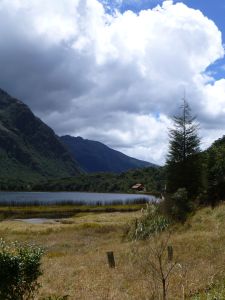
Glacial lake in Cajas National Park. Photo by Alison Olivieri

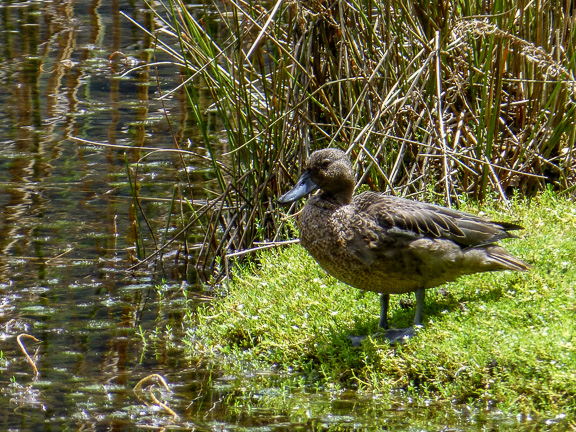
After touring Quito, a World Heritage Site, we flew to Cuenca to visit high elevation Cajas National Park with Andean Teal, Andean Gulls on a nest, llamas in the distance, Andean Pygmy-Owls popping out of the bushes and rails calling in the reeds beside a beautiful glacial lake.

After driving south to Loja and Zamora, we stayed at Copalinga Lodge (Spangled Coquette!) and birded in nearby Podocarpus National Park, a forest with good trails, well-known to birders as the home of the Coppery-chested Jacamar.

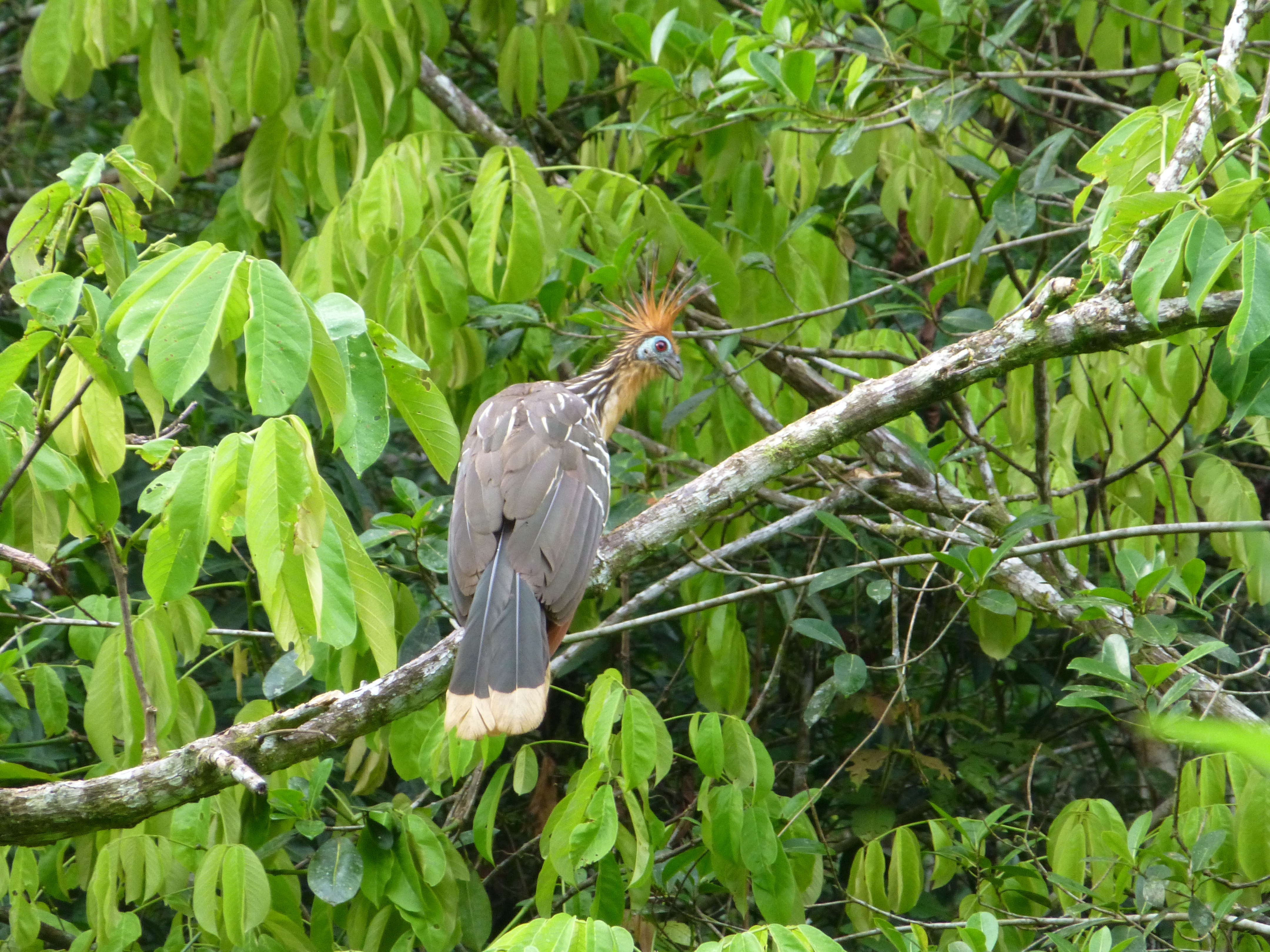
We traveled back to Quito to fly to the town of Coca, gateway to the eastern lowland Amazon basin. From there we boated to the Napo Wildlife Center where we stealthily moved along the rivers and canals in canoes to view specialties of the flooded forest like this Hoatzin:
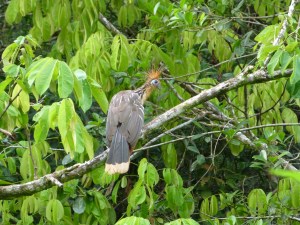
Hoatzin on the Rio Napo. Photo by Alison Olivieri

Potoos, macaws, toucans, trogons, puffbirds, oropendolas, raptors, woodpeckers and hummingbirds enthralled us, especially when seen from above the canopy on a 120′ tower that climbed into the crown of a ceiba tree. From there one evening after sundown we called in a Black-banded Owl that obligingly perched in our tree and called to another owl below in the forest canopy.

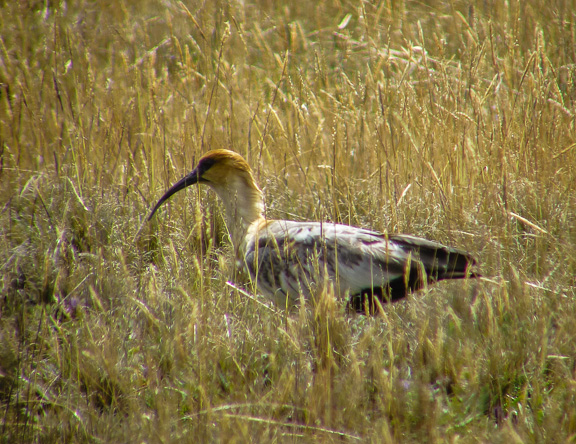
After this magical experience, we elevated ourselves to Antisana National Park and, at 13,000-plus’, saw Ecuadorian Hillstars, the highest elevation hummer in the world, at a nest; Silvery Grebe in a glacial lake; a flock of Baird’s Sandpipers; Carunculated Caracara, and Black-faced Ibis.
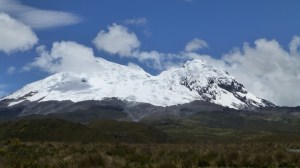
Antisana Volcano. Photo by Alison Olivieri

This is also the home of the majestic Andean Condor. On a pre-breakfast outing, we were lucky to see five of them leaving their nighttime roost of rocky crags preparing to soar off with barely a wing flap for the entire day. As only about 40 remain in the country, Andean Condors are considered critically endangered in Ecuador.
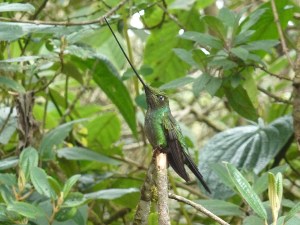
Sword-billed Hummingbird at Guango Lodge. Photo by Alison Olivieri

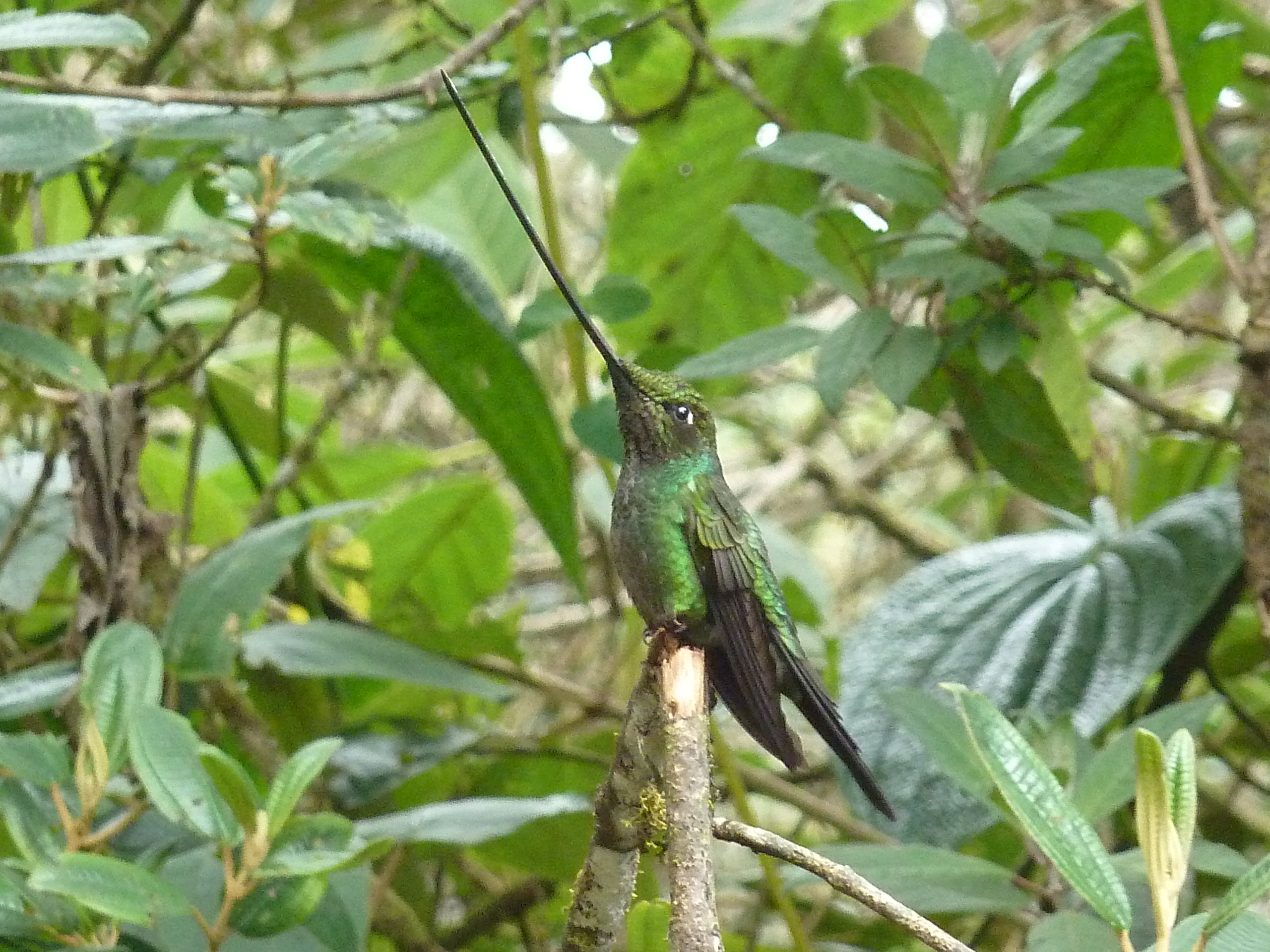
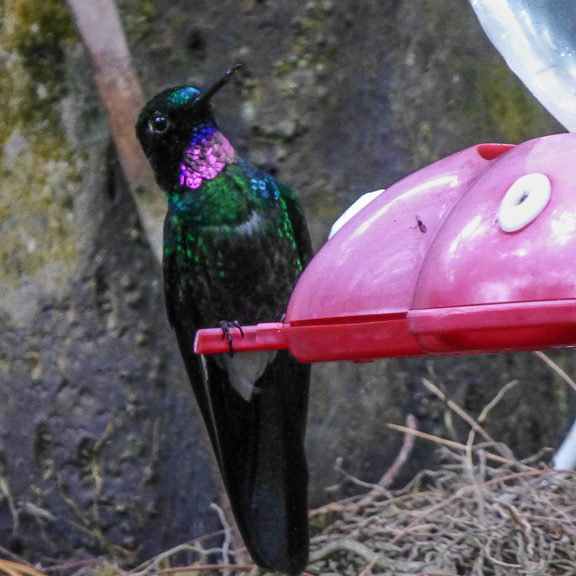
Our last birding stop was the hummingbird feeder-laden Guango Lodge, slightly lower, where we watched this Sword-billed Hummingbird, a bird about which the guide book says, ” . . . can never be seen enough”, in addition to Collared Inca, Long-tailed Sylph, Tourmaline Sunangel and White-bellied Woodstar.

Let me put in a shameless plug for the Ecuadorian travel company that organized this trip: Neblina Forest Tours. If you take it into your mind that you would like to see something of the natural history and cultural sights of countries in Central or South America, you’d be well advised to visit this website: www.neblinaforesttours.com and see what they have to offer: it’s impressive.

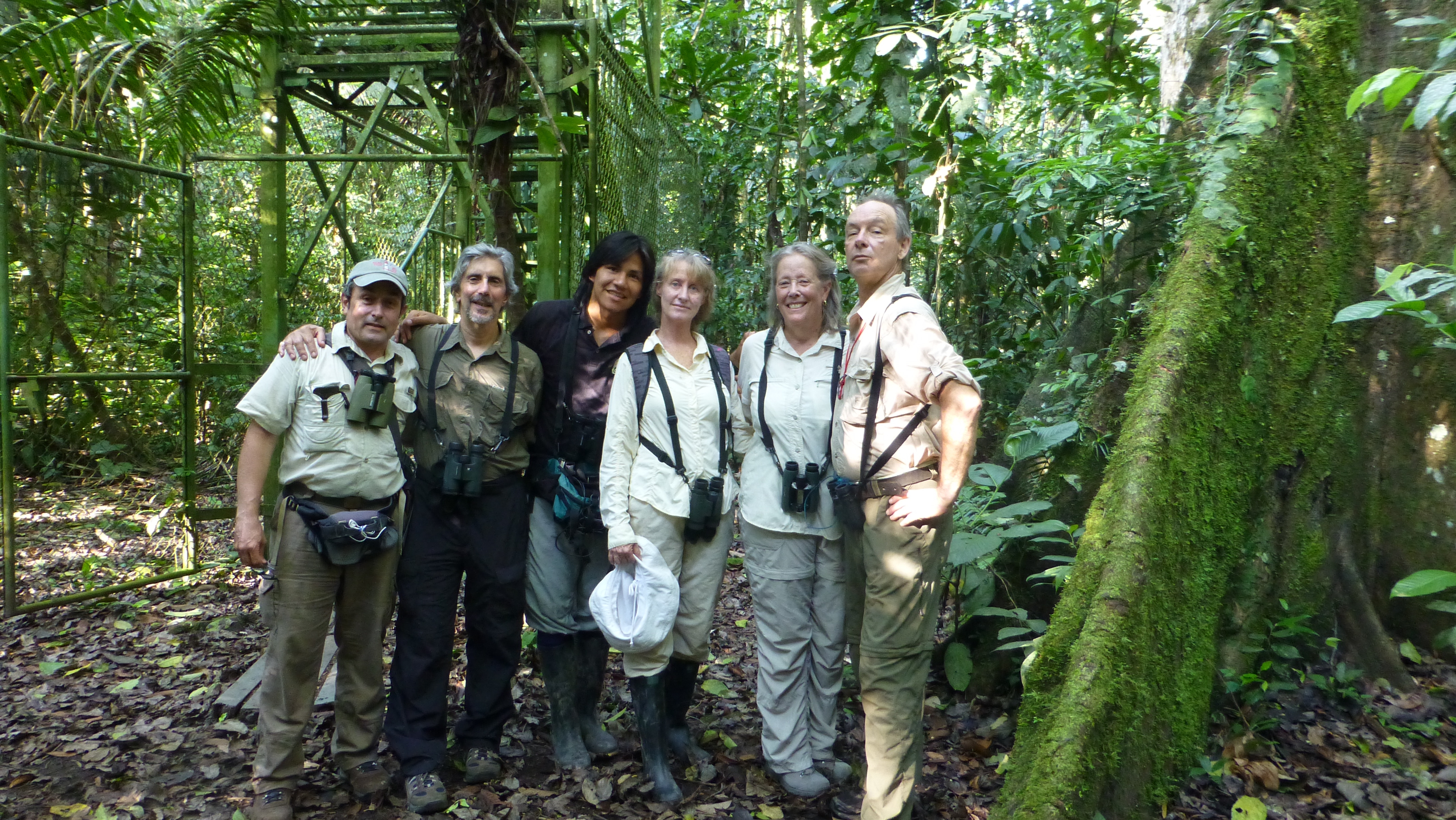
Second, a word about our group: first and foremost, we had Charlie ‘Without You We See Nothing’ Gomez, a natural history guide extraordinaire from Costa Rica; also our Ecuadorian driver Edwin Herrera whose keen eyes and ears added immeasurable pleasure to our journey (Giant Conebill, heard at 30 mph); and Remigio, a birding guide from the community of Añangu that built and runs the Napo Wildlife Center; plus four members of the SVBC: Susan England, Andrew Robertson and Alison and Michael Olivieri.  You can see us being silly in the photo below:
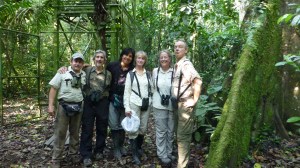
Charlie Gomez, Michael Olivieri, Remigio of the Anangu Community, Susan England, Alison Olivieri and Andrew Robertson

The group’s favorite birds included Paradise Tanager, Vermilion Flycatcher, Torrent Duck, Spangled Coquette, Black-necked Red Cotinga, Long-tailed Potoo, Capped Heron, Great Jacamar, Ivory-billed Aracari, Blue-and-yellow Macaw, Striped Manakin, Zigzag Heron and Gray-mantled Wren.

Are you ready? I’ll even loan you my book, The Birds of Ecuador, by Robert S. Ridgely and Paul J. Greenfield.

Espanol aqui:

Ecuador es un país maravilloso con unos paisajes que te quitan el aliento, una historia violenta, diversas y fascinantes culturas (cabezas reducidas, alguien?), amplia historia natural, sopas deliciosas, buena infraestructura y gente muy amigable.
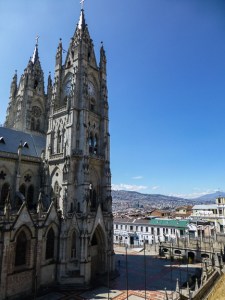
Una iglesia bonita en Quito. Foto de Alison Olivieri.

Debido a su increíble biodiversidad, observar aves esta en la lista “Absolutamente debo de hacerlo antes de morirme’’.

Si te vendaran los ojos y solo te lo quitaras para ver tangaras, seria aun en tus sueños mas alocados el viaje más memorable de tu vida.

Junto con los tangaras, se pueden observar los mas espectaculares colibríes, loras y lapas y muchos representantes de familias de aves que posiblemente no sean del
conocimiento de algunos de nosotros, incluyendo donacobio, cinclodes, picocono, coronifelpa, canastero entre otros. Además sin olvidar el Condor Andino, muchas especies de monos, llamas, nutrias gigantes, y nuevas y diferentes especies de lagartijas, insectos y plantas: por eso ni se les ocurra pensar quedarse en casa.

Cerceta Andina. Foto de Alison Olivieri.

Después de hacer un tour por Quito, un sitio de interés cultural mundial, volamos a Cuenca a visitar el parque Nacional Cajas situado a una alta elevación del nivel del mar o tierras altas donde pudimos observar Cerceta Andina, Gaviota Andinas en un nido, llamas a la distancia, Mochuelo Andinos enanas que aparecieron repentinamente en los arbustos y Rascones Ecuatorianos llamándose entre si entre las cañas (tipo de pasto que crece en las alturas andinas) a la orilla de un bellísimo lago glaciar.

Viajamos al sur a Loja y Zamora para quedarnos en Copalinga Lodge (Coqueta Lentejuelada!) y observamos aves en el cercano parque nacional Podocarpus (arboles de la familia Podocarpaceae o coníferas que también son conocidos localmente como pinos), con un bosque con buenos senderos, muy conocidos para los observadores de aves como la casa de el Jacamar Pechicobrizo.

Regresamos a Quito para volar al pueblo de Coca, una de las ventanas de la cuenca oriental de la zona baja del rio Amazonas, de ahí viajamos en bote al centro de Fauna Napo donde nos movimos silenciosamente a lo largo de ríos y canales en canoas para ver especialidades del bosque inundado.

Pájaros estaca, lapas, tucanes, trogones, bucos, oropéndolas, aves raptoras, carpinteros y colibríes que cautivaron nuestras miradas, especialmente cuando son vistos desde la copa de los arboles en una torre de 120 pies (36 metros) que sube hasta la copa de un árbol de ceiba. Una tarde después de la puesta del sol, observamos una lechuza se llama Buho Negribandeado que convenientemente se poso en nuestro árbol llamando a otra lechuza que se encontraba bajo la copa de los arboles cercanos.

Después de esta mágica experiencia, nos desplazamos a tierras altas a el parque nacional de Antisana y a mas de 13,000 pies o mas observamos en un nido colibríes se llaman Estrella Andina, especie de colibrí que vive a la mayor altitud del mundo; Zambullidor Plateado en un lago glacial; una bandada de Playero de Baird, Caracara Curiquingue y Bandurria Carinegra:
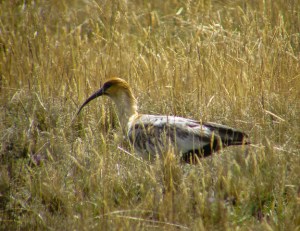
Bandurria Carinegra en Parque Nacional Antisana. Foto de Charlie Gomez.

Este es también el hogar del majestuoso Cóndor Andino, en un pre-desayuno al aire libre tuvimos la suerte de ver 5 de ellos dejando su lugar de descanso nocturno en los acantilados o despeñaderos preparándose para remontar el vuelo con un simple aleteo que les permite volar por el transcurso de todo el día. Dado que solo 40 de ellos permanecen en el país es considerado una especie en peligro de extinción en el ecuador.

Nuestra última parada para observar aves fueron los comederos para colibríes en el Guango Lodge. Ligeramente a menor altitud, donde pudimos observar este Solangel Turmalina, además del Inca Collarejo, Silfo Colilargo, Colibri Pico Espada y Estrellita Ventriblanca.
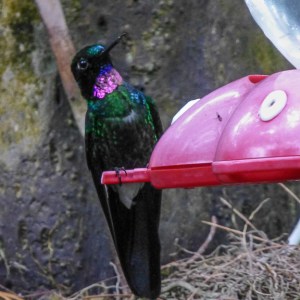
El Solangel Turmalina. Foto de Alison Olivieri.

Déjenme decirles atentando en dar publicidad sin permiso que la experiencia con la compañía de viajes Ecuatoriana que organizo este viaje: Neblina Forest Tours ha estado fantástica. Si alguno de Uds. está considerando ver algo de historia natural o tener contacto con la cultura de Centro y Sur América, les recomiendo que visiten este sitio: www.neblinaforesttours.com y vean que tienen que ofrecer, es impresionante.

Segundo, refiriéndonos a nuestro grupo: primero y antes que todo teníamos a Charlie ’’sin ti no habríamos visto nada’’ Gomez un guía naturalista extraordinario de Costa Rica; agradecer a nuestro conductor Ecuatoriano Edwin Herrera el cual con esos ojos y oídos impresionantes dio un valor agregado e inmensurable a la experiencia (Picocono Gigante, escuchado a 30mph) ; Remigio un guía de aves de la comunidad de Añangu que es la encargada de administrar el centro de fauna Napo, y a los 4 miembros del Club de Aves de San Vito: Susan England, Andrew Robertson and Alison and Michael Olivieri.

Están listos? Hasta podría prestarles mi libro, Las Aves de Ecuador, por Robert S. Ridgely and Paul J. Greenfield.
Report from Scotland: Falconry and a Lurcher

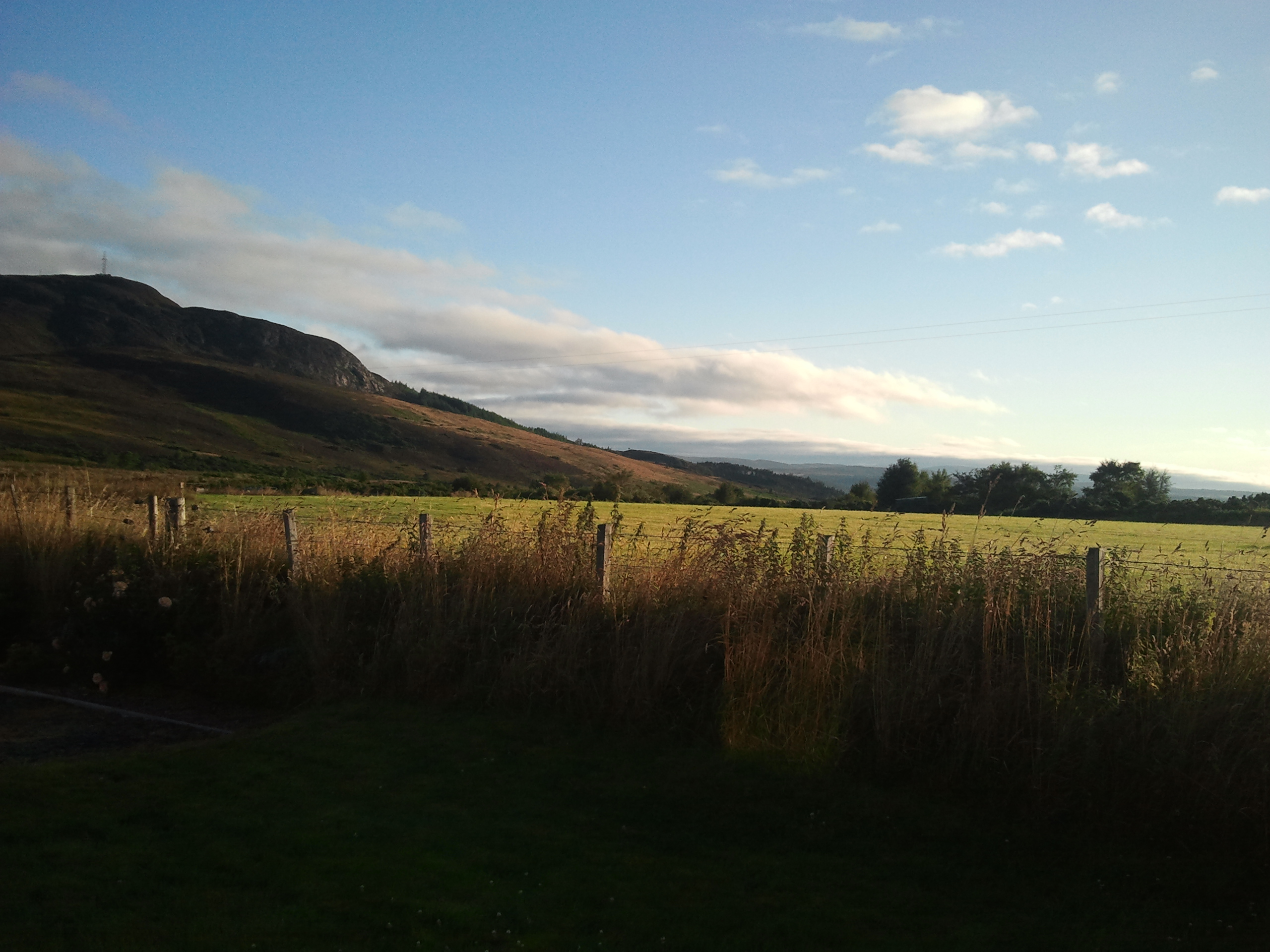
A glorious morning. Photo by Michael Olivieri

Dramatic landscapes abound in the Scottish Highlands and, if you also like large, strong men in kilts and distilled spirits, then Scotland is the place for you. We recently visited the eastern Highlands, close to the Burgh of Tain (settled in 1066), and enjoyed watching burly and brawny men play Highland Games along with touring the Glenmorangie Scotch Distillery, visiting an inhabited castle, watching rabbits hide in prickly gorse, riding on a wee ferry, oohing and aahing over puffy lambs AND, say it with me now: b-i-r-d-i-n-g!

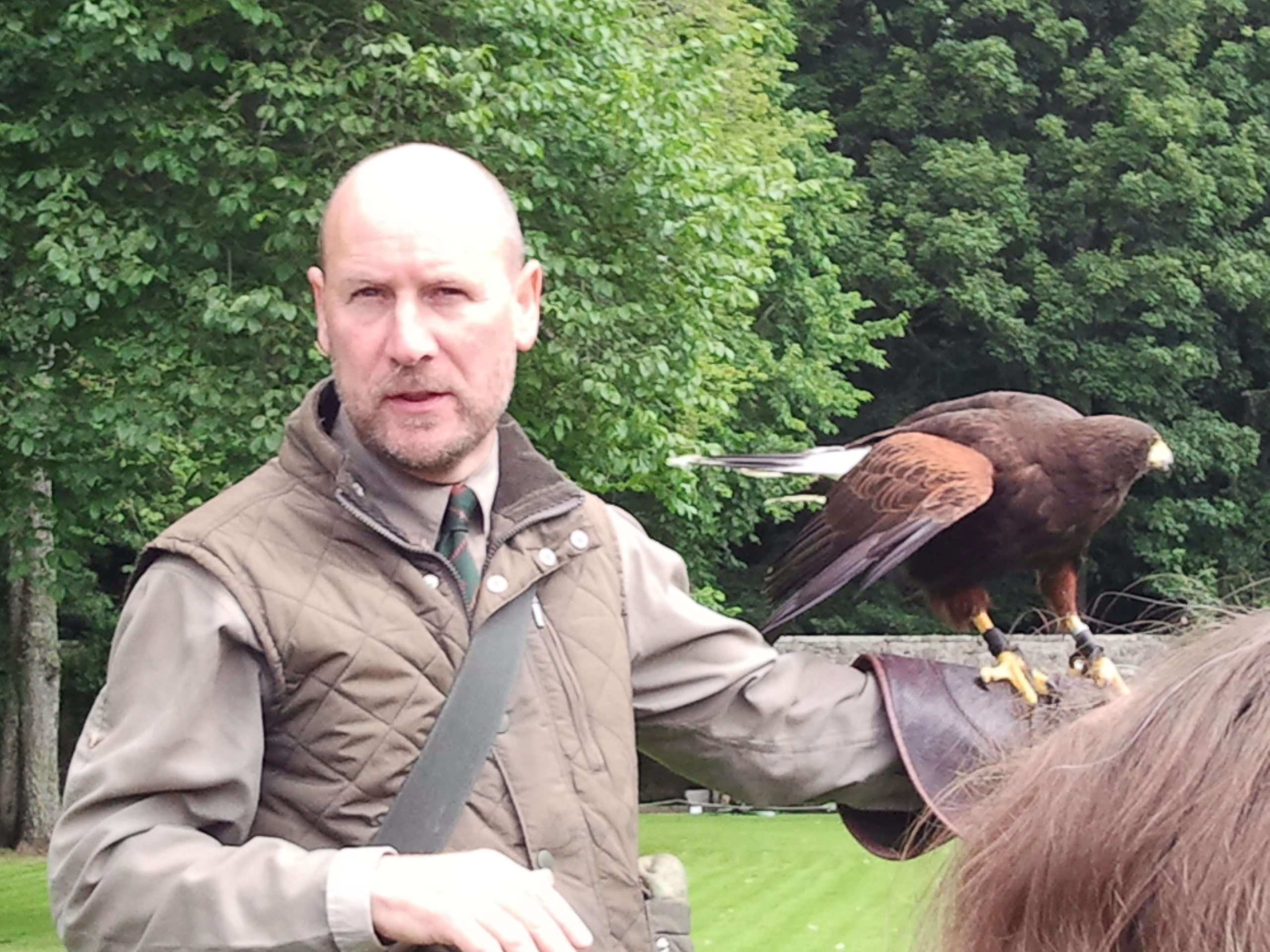
Falconer at Dunrobin Castle. Photo by Alison Olivieri

To start us off in that direction, we saw a Falconry Demonstration at the Dunrobin Castle in Golspie. Still inhabited by descendants of William, the first Earl of Sutherland, this castle is the most northerly of Scotland’s great houses and the largest in the highlands with 189 rooms! Pictured in the photo here is a Harris’s Hawk, native not to Scotland but to the southwestern US and as far south as Chile. This raptor is popular with falconers all over the world.

Something especially fun about birding in Europe is that no bird has a name remotely like, for example, Red-collared Foliage-thrower-upper. All the birds have sensible names. The name of the one species of swallow is “Swallow”. Any swiftlike bird you might see is the “Swift”. The kingfisher is a “Kingfisher” and so on. This makes it a whole lot easier to ID them with confidence; for example, a plump white, rust and black bird bobbling in a river? It’s the Dipper!

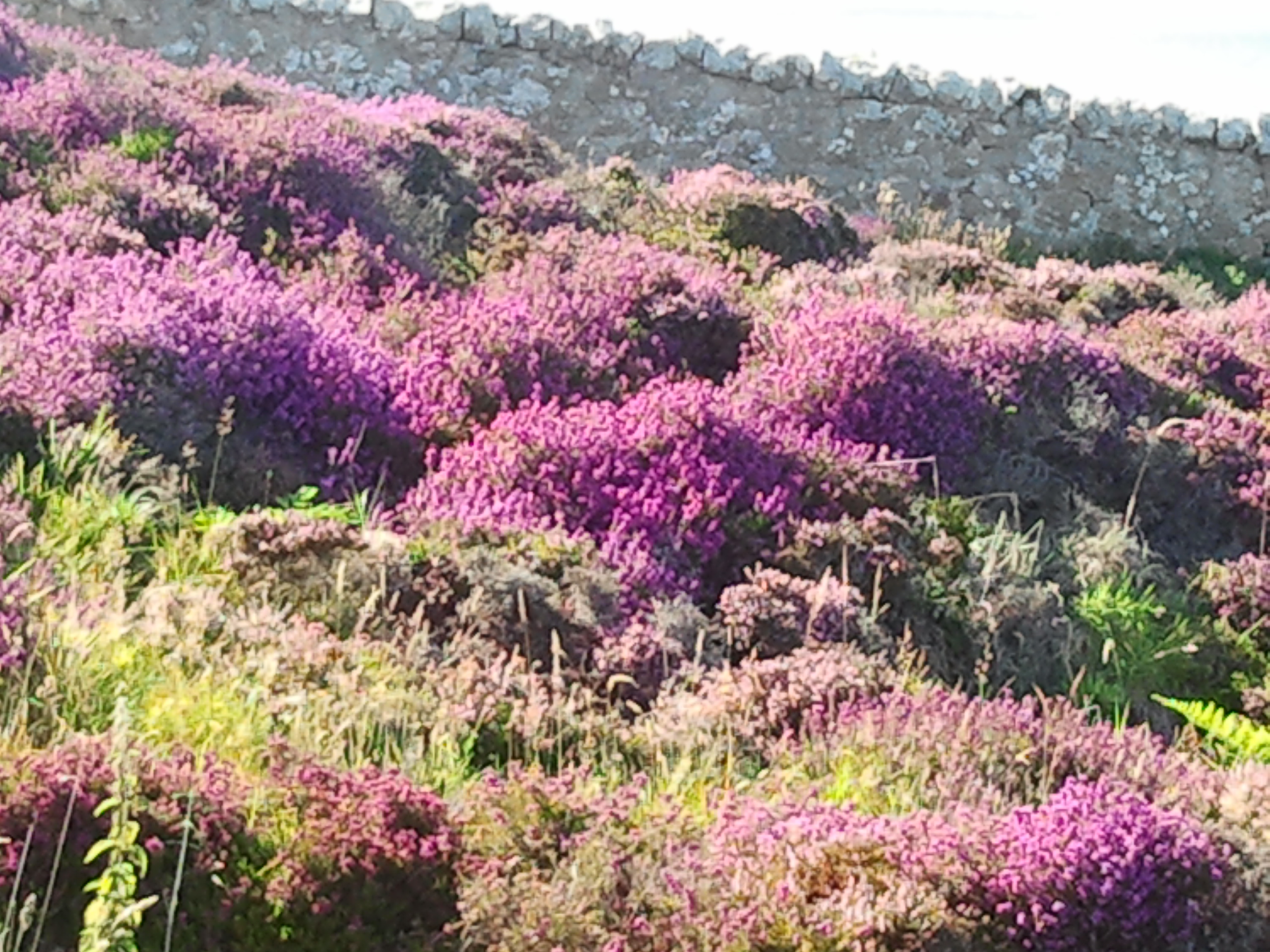
One of our favorites has the unfortunate name of “Buzzard”. It is a sizable and handsome raptor with honey-brown plumage, seen everyday hunting over the hills and fields. As we were there in mid-August, those fields and the moors were turning purple as the heath and heather began to bloom.

Heath and heather, blooming together. Photo by Michael Olivieri

A final note about Scotland, every third or fourth person had a well-behaved dog on a leash. We saw many breeds not commonly seen anymore like Irish Setters that require endless exercise and many Border Collies.

Lilly at the Fringe. Photo by Alison Olivieri

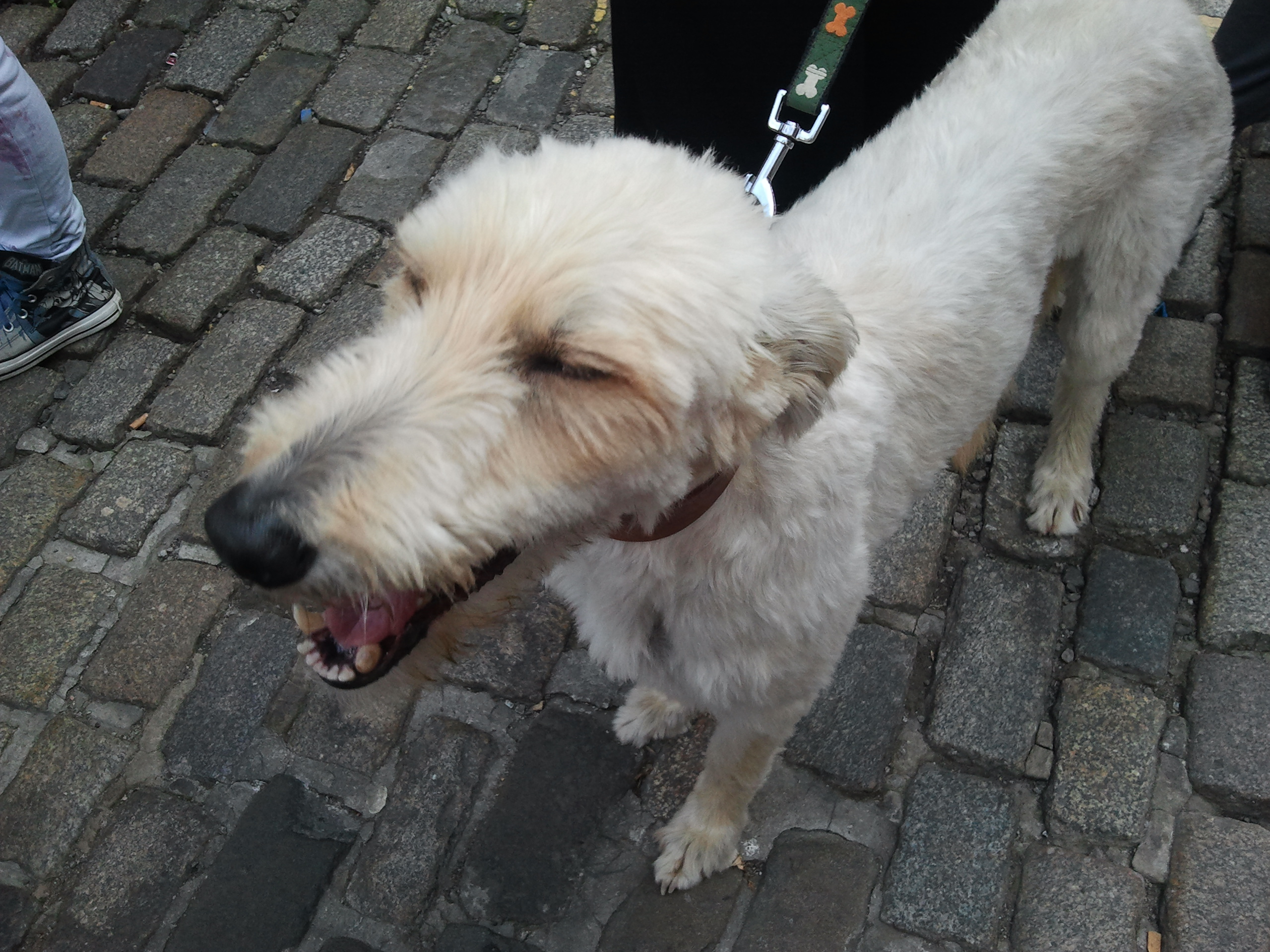
The most unusual dog we saw was a Skye Terrier. It was almost as big as a Basset Hound and looked like an enormous caterpillar but our personal favorite (in addition to the Golden Retrievers at our B&B) was Lilly, a Lurcher who was part of a street performance at the Fringe Festival. She is 2 1/2 and was recently rescued in London by the Ives family with whom she lives in Grimsby North East Lincolnshire. This was her first vacation in Scotland and, believe me, she was a sensation in Edinburgh!

Going to Heaven

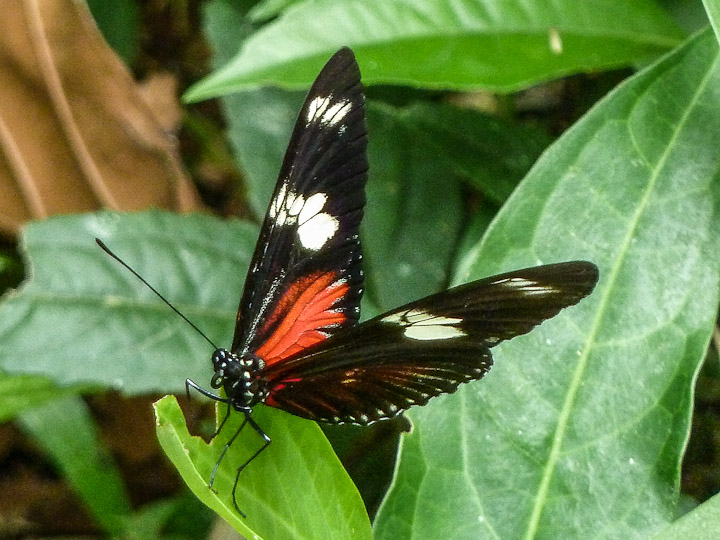
Unidentified Butterfly (Photo by Alison Olivieri)

The other day, Liz Allen and I went to heaven. At least, if there is anyplace resembling heaven anywhere on earth, this would be it. And it’s only about two hours northwest of San Vito, near the town of Uvita on the Pacific Coast.

Heaven’s real name is “Butterfly Paradise” and it is part of the Osa Mountain Village community. It looks like a 16-sided circus Big Top but instead of clowns and jugglers, it’s full of butterflies. We found ourselves surrounded by shining blue Morpho Butterflies and many other drop-dead beautiful creatures going about their butterfly business.

For you butterfly enthusiasts, we saw Malachites, Swallowtails, Crackers, Postmen and Caligos. Not only that, we found caterpillars and a chrysalis with help from Dave Fishell who owns, designed and built “Butterfly Paradise”.

So, I say, let’s all go to heaven! Admission is $12 per person; children under 5 get in free. We can arrange a tour with Dave and a group discount for a Sunday morning in September. Let’s plan to spend some time in heaven and then have lunch at Citrus or Exotica, wonderful restaurants in nearby Ojochal. Send us an email if you are interested with dates that work for you and we’ll make a plan!

The Departing Desvenains

Our VP Kate and her family, Patrick and Luca, recently left Costa Rica for Washington, DC, a city that Kate has described many times as one of her favorite places to live.

All of us who have enjoyed Patrick’s hospitality and culinary skills; who have walked, talked, birded and banded with Kate, and who have played with “Luca-paduca” will miss them terribly. But naturally we saw them off with a terrific Farewell Party at Las Cascatas and we wish them all the best the world has to offer!

‘Kate’s Last Walk’ photo by Landon Daft

This photo was taken on June 16 at the Wilson Botanical Garden to commemorate what will now be known as “Kate’s Last Wilson Walk”. Standing from left to right are Liz Allen, Barbara Keeler-Barton, Peace Corps Volunteer Darien Combs, Elena Murillo, Heysen Esquivel, Hellen Castillo, Wally Barton, Alison Olivieri, Judith Ippolito, Erick Ilama Loria, Joe Ippolito, Roni Chernin, Mark (who is taking over Morphose Mountain Retreat B&B) and Wendy Schulz. Kneeling in front are (from left to right) Kate Allen Desvenain, Edwin Borbon Abarca, Yoiner and Royce Schulz (really not kneeling). Special thanks to visitor Landon Daft for taking this picture.