Congratulations/felicidades a Jeff Worman y Harry Hull.
Theme: Not birds/No pajaros!
Photo/foto #1–White-faced Monkeys displaying bravado. Photo by Jeff Worman.

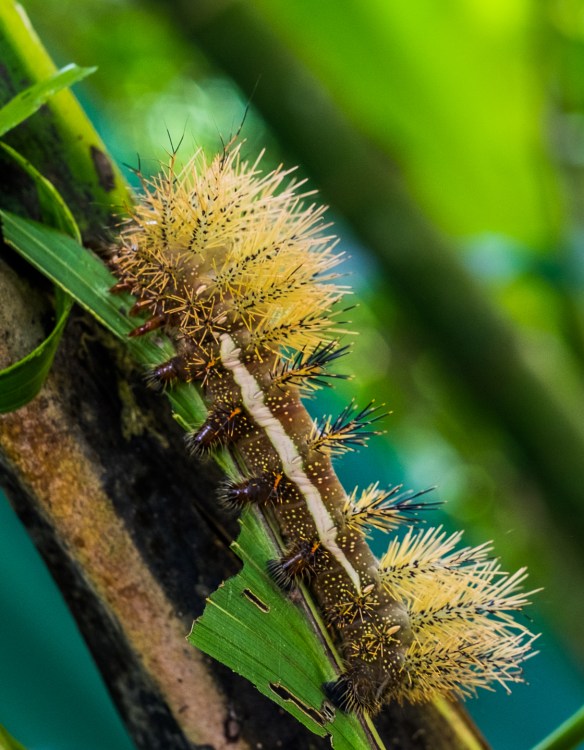
Photo/foto #2–Saturnid moth larva with urticating hairs. Photo by Harry Hull.
Theme: Not birds/No pajaros!
Photo/foto #1–White-faced Monkeys displaying bravado. Photo by Jeff Worman.
Photo/foto #2–Saturnid moth larva with urticating hairs. Photo by Harry Hull.
It’s almost time for our next POW (Photos Of the Week)! Send your birding/nature photos now.
photos@sanvitobirdclub.org
Es casi la hora por FDLA (Fotos de la semana). Envia sus fotos de aves o la naturaleza pronto!
photos@sanvitobirdclub.org
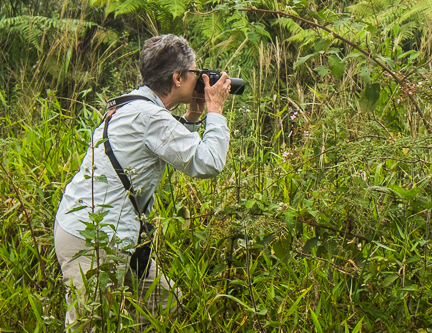
Photo: Harry Hull III.
Theme: Birds on branches/Aves en ramas
Photo #1: Yellow-throated Vireo. Photo by Gail Hewson Hull.
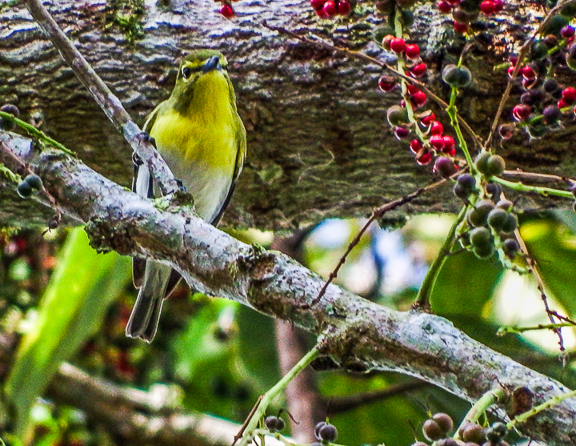
Photo #2: Slaty Spinetail. Photo by Jo Davidson.

Theme: Young birds! Aves jovenes!
Photo/Foto #1–Clay-colored Thrush chicks in the nest. Yiguirros bebes en su nido. Photo by Alison Wickwire Olivieri.

Photo/Foto #2–Young male Three-wattled Bellbird practicing his call. Macho Pajaro Campana joven, practicando su cancion. Photo by Gail H. Hull.

We hope you enjoy our new weekly feature; Photos Of the Week (or POW).
SVBC members–we want to see and display your photos! For more information:
Members: send us your photos for our Photos of the Week page!
*********************
Esperamos que usted disfruta nuestra característica nueva: Fotos De La Semana (o FDLS).
Miembros de SVBC–queremos miran y exhibir sus fotos. Por mas información:
Members: send us your photos for our Photos of the Week page!
We’ve had some very powerful and dramatic storms lately in San Vito, storms generating massive amounts of energy; energy enough to snap big branches off of trees and even knock over sizeable rain forest trees.
Should we look at this storm damage as a bad or negative thing? Absolutely not! One reason a tropical rain forest is so vibrant and diverse is because of this damage. A rain forest, you see, never gets too comfortable; never reaches a state of stability.
Instability and change are a constant part of a rain forest ecosystem. Storms, landslides and other natural environmental events do isolated damage, yes, but in so doing, opportunities are created for new plant species to join the club. Plant diversity follows damage; and bird diversity too!
Rain forest trees have a very shallow root system. It doesn’t take much to knock one over; and when a rain forest tree is knocked over a ‘light gap’ is created. This ‘light gap’ permits sunlight to reach a patch of ground where the full sun may not have shone in many years. Sunlight, as we all know, is how plants make their living, through photosynthesis.
Here is how a rain forest ‘light gap’ works; many rain forest seeds lay dormant until a ‘light gap’ appears and the sunlight warms and shines on them. Some rain forest trees grow to no more than a few meters and then stop growing until a ‘light gap’ appears and they are finally bathed in sunlight. Then, stand back boy…those little trees quickly shoot up to canopy height.
So when you hear that ‘CRAAAACK’ sound out in the forest…don’t despair; its just part of the natural cycle of diversity.
Also, my horticulturist friend and SVBC member Dave Janas, gets real jazzed when branches and trees fall down. This gives him the opportunity to go out and search for rare and seldom seen canopy epiphytes…like orchids!
—
Hemos tenido unas cuantas tormentas fuertes y dramáticas últimamente en San Vito, tormentas que generan cantidades masivas de energía; suficientes para separar ramas grandes de los árboles e incluso traerse abajo algunos cuantos árboles del bosque lluvioso.
¿Deberíamos ver los daños de estas tormentas como algo malo o negativo? ¡Absolutamente no! Estos daños son una de las razones por las que el bosque tropical lluvioso es tan vibrante y diverso. Un bosque lluvioso, verá, nunca está muy cómodo; nunca llega a un estado de estabilidad.
La inestabilidad y el cambio son constantes en el ecosistema del bosque lluvioso. Tormentas, deslizamientos y otros eventos de origen natural provocan daño aislado, sí, pero al hacerlo, se crean oportunidades para que nuevas especies vegetales se unan al club. La diversidad vegetal viene después del daño; ¡al igual que la diversidad de aves!
Los árboles del bosque lluvioso tienen un sistema de raíces muy superficial. No hace falta mucho para hacerlos caer; y cuando un árbol del bosque lluvioso cae, se crea un “claro de luz”. Este “claro de luz” permite que la luz del sol llegue a zonas del suelo a las cuales el sol no había alcanzado en muchos años. La luz del sol, como todos sabemos, permite a las plantas vivir, a través de la fotosíntesis.
Así funciona un “claro de luz”; muchas semillas de árboles del bosque lluvioso “duermen” hasta que un claro aparece y el sol las ilumina y calienta. Muchos árboles crecen solamente un par de metros y luego dejan de crecer hasta que aparece un claro y finalmente son alcanzados por la luz del sol. Entonces, mantenga su distancia por favor…esos pequeños árboles se disparan rápidamente a la altura del dosel.
Así que cuando usted escuche ese sonido de “CRAAAACK” en el bosque lluvioso…no se desespere; es solo parte del ciclo natural de la biodiversidad.
Además, mi amigo horticultor y miembro del SVBC, Dave Janas, se siente animado cuando las ramas de los árboles caen. Esto le da la oportunidad de salir a buscar epífitas raras y difíciles de observar… ¡como las orquídeas!

This Saturday, May 14th, is the 2nd annual Global Big Day of birding. For complete information see the link attached below:
http://ebird.org/globalbigday/
Please join the San Vito Bird Club for a short walk in the upper garden of El Tangaral; 7:00am-9:00am. Our bird species list will be added via eBird to lists from around the world!
If you cannot attend the walk at El Tangaral, please feel free to observe and document the bird species where you live on that day. Send your list of bird species, no later than 6pm on May 14th, to:

Harry Hull
Location: Los Angeles road.
A Hint: Not common around here.
Be the first to send the CORRECT answer to eltangaral@gmail.com and you will win, one dozen home-baked Snickerdoodle cookies! Winner will be announced at the SVBC bird walk, April 23rd.
Good luck all!
******************************************************
Ubicación: La carretera Los Angels.
Una Pista: No es comun aqui.
Sea el primero en enviar la respuesta CORRECTA a eltangaral@gmail.com y ganará ¡una docena de galletas Snickerdoodle caseras! Anunciaremos el ganador a la SVBC caminata a April 23.
¡Buena suerte a todos!
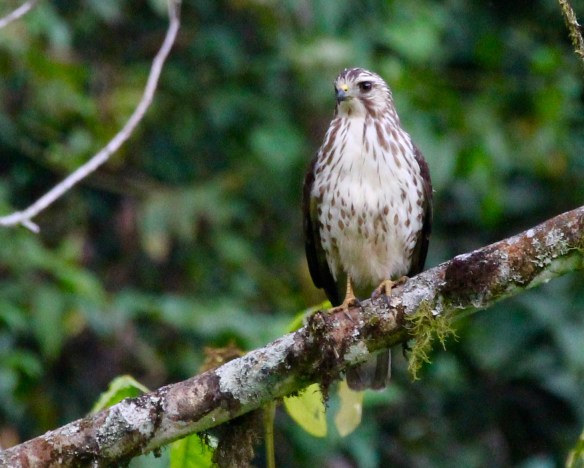
What a good thing it is that birds sing! Aside from the wonderful music, bird songs give us the opportunity to identify a species without even seeing it.
‘Hey, that sounded like a Black-faced Antthrush.’
‘I think I heard a Bat Falcon!’
As you know, learning to identify a bird by its appearance takes some practice. It is no different in learning to identify a bird by its song; this takes some time and effort as well. Here are a few links to bird song recording websites to help you get started.
Our own Las Cruces Biological Station has a link to the Bird Songs of Las Cruces. It doesn’t include every species but does have quite a few.
http://www.ots.ac.cr/index.php?option=com_content&task=view&id=964&Itemid=429
Cornell University and the Macaulay Library is the largest source of bird song recordings in the world.
https://macaulaylibrary.org/browse/taxa/aves
Here is another great source for bird songs.
And one more.
Want to take the bird songs with you out in the field? There are several apps available for your Apple phone. I’m not suggesting you get this one; but I like it and it works for me.
https://itunes.apple.com/en/app/costa-rica-birds-field-guide/id568719936?mt=8
For Android phones:
https://play.google.com/store/apps/details?id=nl.BirdSounds.CostaRica
Enjoy the music.
********************************
¿Qué es eso?
¡Qué grandioso es que las aves canten! Además de la maravillosa música, el canto de las aves nos da la oportunidad de identificar una especie sin siquiera verla.
“Hey, eso sonó como un Gallito Hormiguero Carinegro.”
“¡Creo que escuché un Halcón Cuelliblanco!”
Como usted sabrá, aprender a identificar un pájaro por su aspecto lleva cierta práctica. Aprender a identificar un ave por su canto no es diferente; esto también toma cierto tiempo y esfuerzo. Aquí hay algunos enlaces a sitios web de grabaciones de cantos de aves para ayudarle a comenzar.
Nuestra Estación Biológica Las Cruces tiene un enlace a Bird Songs of Las Cruces. No incluye todas las especies, pero tiene algunas cuantas.
http://www.ots.ac.cr/index.php?option=com_content&task=view&id=964&Itemid=429&lang=es
La Universidad de Cornell y la Macaulay Library es el acervo de grabaciones de cantos de aves más grande del mundo.
https://macaulaylibrary.org/browse/taxa/aves
Aquí hay otra gran fuente de cantos de aves.
Y otra más.
¿Quiere llevar el canto de los pájaros con usted al campo? Hay varias aplicaciones disponibles para su teléfono celular. No estoy sugiriendo que consiga esta; pero a mí me gusta y sirve para mí.
https://itunes.apple.com/en/app/costa-rica-birds-field-guide/id568719936?mt=8
Para dispositivos Android.
https://play.google.com/store/apps/details?id=nl.BirdSounds.CostaRica
Disfrute la música.
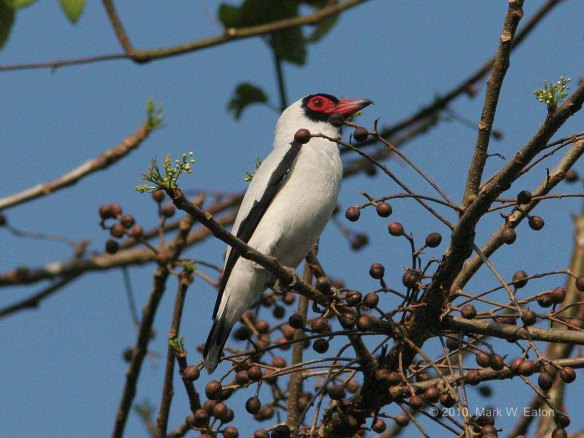
Masked Tityra. Photo by Mark W. Eaton.
[An essay from SVBC Members and regular visitors Jeff Worman and Denise Dausey]
While on the every-other-Saturday San Vito Bird Club bird walk (this one near Campo Dos y Media), my husband Jeff and I were surprised hear the haunting lyrical call of the Black-faced Solitaire; puzzling since we were a good 4000 feet below the Solitaire’s natural environment. We were soon immensely troubled to discover that the song came not from the forest but from a cage suspended from a nearby porch. While making his urgent calls, the Solitaire flitted about the cage, frequently crashing into the walls in a vain attempt to escape. As you can imagine, this caged beauty was a very disturbing sight for a group of naturalist/birders such as ourselves.
Simply opening the cage door and releasing the Solitaire was not the answer. One, we didn’t want to anger the “owner” and two, the Solitaire would quite likely not survive in an environment other than its much cooler natural montane habitat.
For those who feel compelled to keep a caged bird in the home, we implore you; please enjoy the beauty of your native birds in the wild where they belong rather than imprisoning them against their will, unable to live out their lives as nature intended. In addition, please consider initiating a discussion with those who keep caged birds in their homes so that they might give some thought to appropriately releasing these beautiful creatures to enjoy the freedom they deserve. Thanks for listening – – – Jeff Worman and Denise Dausey
*************************
[Un Ensayo de SVBC miembros y visitantes regulares Jeff Worman y Denise Dausey]
Durante una sabatina caminata para pajarear del Club de Pájaros de San Vito (esta cerca Campo Dos Y Medio), mi esposo Jeff y yo nos sorprendimos al escuchar el inquietante y lírico llamado del Solitario Carinegro (Jilguero); desconcertante dado que estábamos unos buenos 4000 pies [1200 m] debajo del ambiente natural del Solitario. Pronto nos sentimos severamente atribulados tras descubrir que la canción no venía del bosque, sino de una jaula colgada en un corredor cercano. Mientras hacía su desesperado llamado, el Solitario revoloteaba dentro de la jaula, chocando frecuentemente contra sus paredes en un vano intento de escapar. Como usted podrá imaginar, esta belleza enjaulada fue un inquietante avistamiento para un grupo de naturalistas/pajareros como el nuestro.
Simplemente abrir la jaula y liberar el Solitario no era la respuesta. Primero, no queríamos hacer enojar al “dueño” y, segundo, el Solitario probablemente no iba a sobrevivir en un ambiente distinto a su (mucho más frío) hábitat montano natural.
A aquellos que se sientan forzados a mantener un ave enjaulada, les imploramos; por favor disfrute de sus aves nativas en su ambiente natural – en donde pertenecen – en lugar de aprisionarlos contra sus voluntad, incapaces de vivir su vida como la naturaleza dispuso. Además, por favor considere comenzar una discusión con aquellos que tengan aves enjauladas en sus hogares de forma que tengan oportunidad de pensar sobre liberar apropiadamente estas bellas aves para que disfruten la libertad que merecen. Gracias por escuchar – – – Jeff Worman y Denise Dausey

 San Vito Bird Club
You must be logged in to post a comment.