Birds We Rarely See (possibly because they don’t want to be seen): part II

Oilbird: photo courtesy of Randall Jimenez

The bird you see above is an extreme rarity…the Oilbird. Rarely seen for three reasons:

  1. It is a nocturnal bird and is dressed in the colors of the night.
  2. It lives primarily in caves during the day.
  3. It is,,,rare. To learn more about the Oilbird, one of the most unusual bird species on Earth, follow the link below. But be sure to come back.

https://ebird.org/species/oilbir1

Now let’s have a look at some more of our local birds; those with subtile and clandestine coloration.

Ruddy Foliage-gleaner: photo courtesy of David Rodriguez Arias.

A lot of birders come down to Coto Brus to see rarities and localized species. These species are often referred to as ‘target birds’. The Ruddy Foliage-gleaner (above) is definitely one of our most targeted. You’ll hear it more often than see it; and almost always in the lower stratum of the forest.
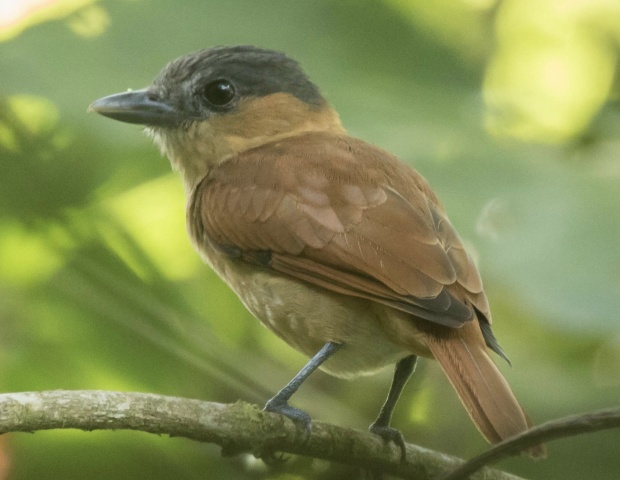
Rose-throated Becard (female): photo courtesy of Randall Jimenez
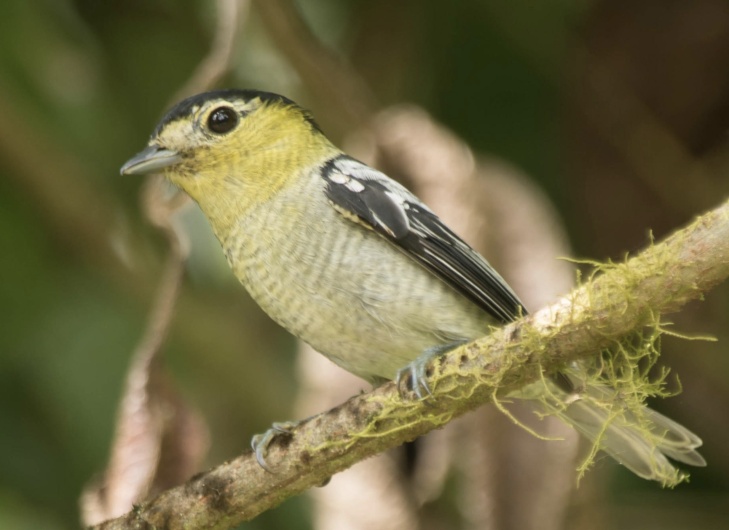
Barred Becard (male): photo courtesy of Randall Jimenez

A bit like Cotingas, a bit like Flycatchers the Becards are an interesting family. Dressed in subtile and elegant earth-tones you’ll find them (if you’re lucky and quick) in the upper middle to canopy level of our forests. Both the Rose-throated Becard (the first one above) and the Barred Becard (just above) have distinct sexual dimorphism; meaning males and females look different. But all Becards seem to have heads just a little too big for their bodies.
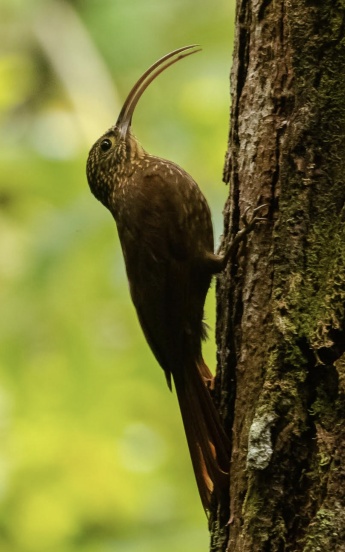
Brown-billed Scythebill: photo courtesy of David Rodriguez Arias

If you ever need a bird to retrieve the last olive out of the olive jar, may I suggest the Brown-billed Scythebill (above). One of our many Woodcreeper species; all having a shadowy brown coloration and robust calls.
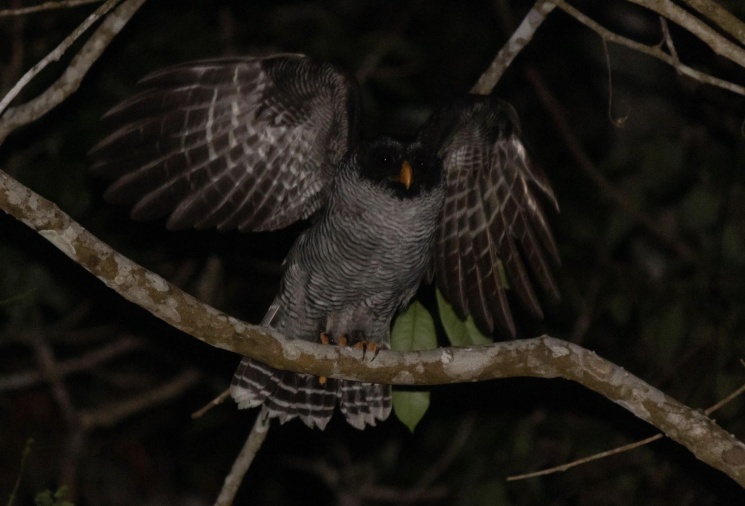
Black-and-White Owl: photo courtesy of Randall Jimenez

For the gloriously-marked Black-and-Whitle Owl (above), a bright street light on a clear, dark night has all the attraction of a full buffet to a hungry tourist. Big moths and other nocturnal insects are irresistibly attracted to bright lights…Black-and-White Owls are irresistibly attracted to big moths (and bats!). As Walt Disney taught us; IT’S THE CIRCLE…THE CIRCLE OF LIFE.
Birds We Rarely See (but would like to see more often). Part 1

Do birders like colorful birds more than drab birds? That’s a tough question…but the answer is clearly a YES! However, when two or more birders get together you will often hear them waxing rhapsodic about such features as ‘…that subtile bran-colored wash on the primaries‘ ‘…a slight pinkish tinge on the lower mandible‘ and especially ‘…wing bars‘; we just LOVE talking about wing bars.

But when beautiful, colorful, charismatic birds (like the ones below) show up, birders turn into little kids who have been let into an ice cream shop.

So, yes; we like pretty birds more than drab birds just like everyone else.

The photos below, all submitted by our good friend Pepe Castiblanco, are examples of colorful, beautiful and charismatic birds that we rarely see but would like to see more often.

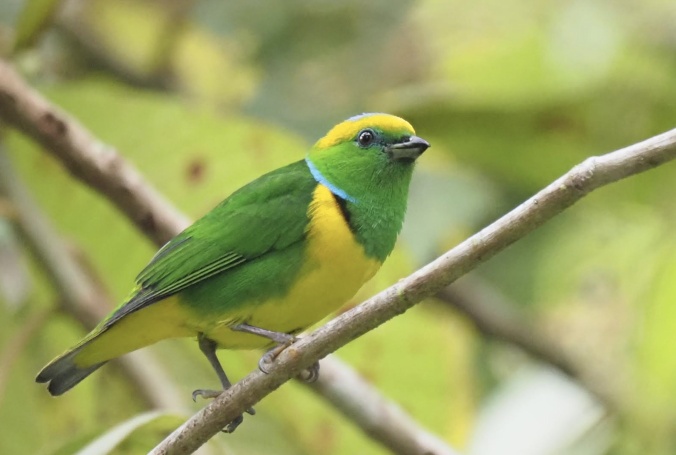
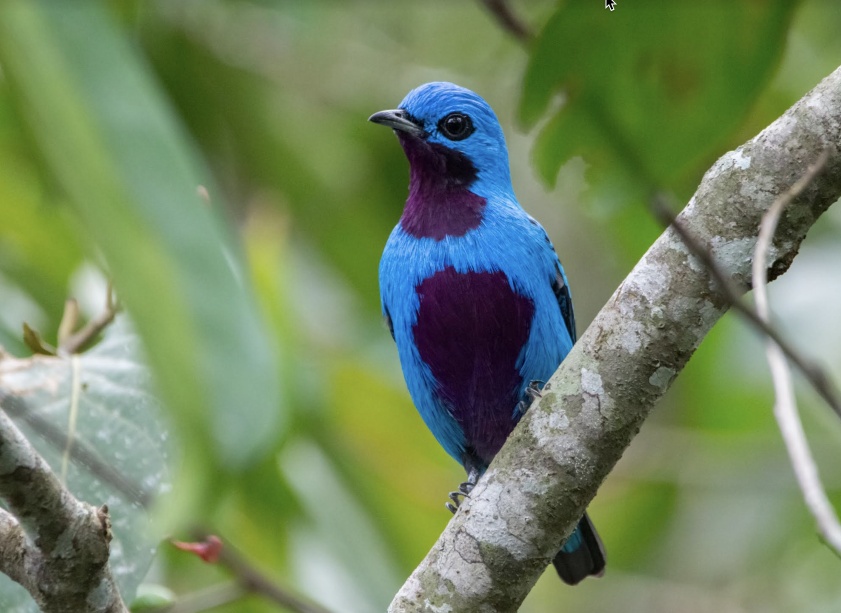
Turquoise Cotinga: photo by Pepe Castiblanco
Resplendent Quetzal: photo by Pepe Castiblanco
Rosy Thrush Tanager: photo by Pepe Castiblanco
Golden-browed Chlorophonia: photo by Pepe Castiblanco

Next week, on ‘Birds We Rarely See‘ the focus will be on some of those bird species that are less brightly colored and with more subtile beauty…and possibly wing bars.

ps: If I ever open a saloon for birders I’m going to call it ‘The Wing Bar’.

Surprise Bonus! Where We Bird

I’m not recommending you should drop everything you’re doing and speed out to this spot; but our Bonus Where We Bird location does have a couple of nice birds you can add to your list. The location is the Rio Java Gas Station (between the BM supermarket and Grupo Materiales). These two species are not your typical stand-offish, I-must-have-privacy, please be quiet birds. These two species seem to just LOVE being around us humans…with all of our noises and smells and dropped potato chips.

The House Sparrow and the Gray-breasted Martin.

Please enjoy watching these two species when you are there. They are as worthy of our time and admiration as any of the other 900 bird species in Costa Rica.

It’s Time for…Kids’ Korner!

This week, Kids’ Korner brings us a question from Mandi Prudehomme, age 8, from Toulouse, France. She writes:

‘Dear Uncle Greg. Do birds have teeth?’

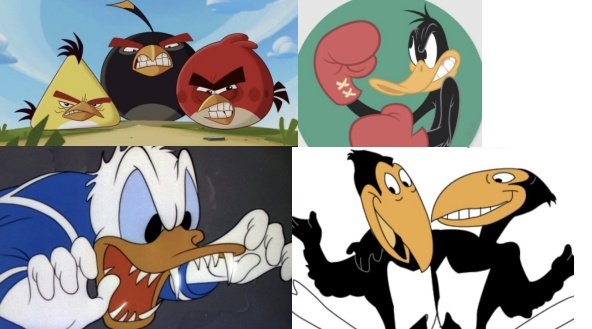
‘Hi Mandi and thank you for asking that wonderful question. No, birds do not have teeth. But it’s easy to see why you could become confused and think that birds have teeth. Several cartoon birds do have teeth. See the pictures below. But cartoon birds are not real birds. Real birds do hot have teeth.’

Welcome to New SVBC Members and Neighbors

Tom and Kim

A very warm and enthusiastic San Vito Bird Club welcome to Tom Johnson and Kimberly Dawson; new members and new neighbors. These two great birders have settled into their new home in Santa Teresa de Sabalito and plan to become active in the San Vito Bird Club.

Tom and Kim are both long time birders; Tom for over 30 years and Kim for over 8 years. Kim is also a skilled photographer (see her work below). They hail from west and southern Texas (a great birding area) and have participated in many birding tours including Belize. But, as with us all, they have fallen and fallen hard for Coto Brus.

Please join me in welcoming them.

(Hopefully, we’ll be doing some bird walks very soon!)

Photos from Kim Dawson:

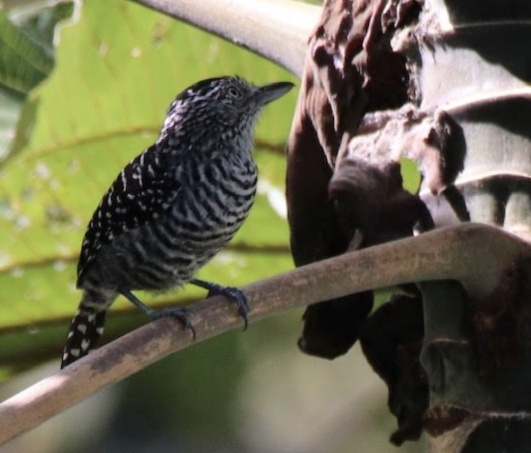
Barred Antshrike-male. Taken on the Magic Road, March 17th.
Yellow-throated Toucan in nest. Tres Rios, March 17th.
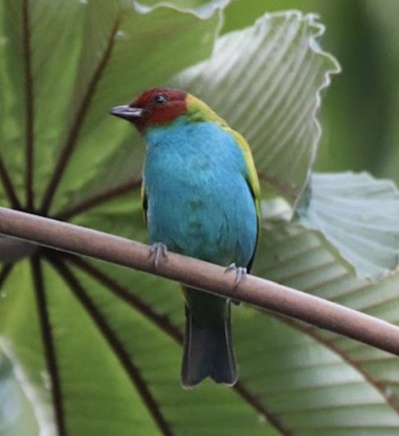
Bay-headed Tanager
Scarlet-thighed Dacnis-male.

Where We Bird: Cerro Paraguas

In ‘Where We Bird’ we have tried to show you some diverse and exciting birding sites…locations and ecosystems that are no more than one hour’s drive from downtown San Vito. We’ve taken you to the steamy rice fields of Las Pangas…the explosion of color on the Poro Road…the tunnel-like walk through the forests of Rio Negro…the world famous diversity of the Wilson Botanical Garden…and the never-ending surprises of the Magic Road. This, our last entry in the series, is quite different; Cerro Paraguas.

A genuine cloud forest habitat, Cerro Paraguas is closer to San Vito than you might think. See that long, high ridge to the west of Linda Vista? The one with the tall tower. The one almost always blanketed in clouds? That is the Cerro Paraguas. The entrance for us (see below) is the gravel road to the right just past Wilson Garden (as you’re heading down the hill).

Follow that road…up, up, up. Four-wheel drive recommended but it can be done without. Keep your eyes open and your windows down as you traverse the hilly route. Eventually, (less than a half hour) you’ll find yourself in a new habitat; a tropical cloud forest. FYI: A cloud forest gets much of its moisture from daily cloud and fog condensation. You’ll find some beautiful primary forest near the top and in that forest are some bird species we rarely, if ever, see down in San Vito. One species of note is the Black-faced Solitaire (or Jilguero). This lovely gray and black bird delivers the iconic sound of the cloud forest; a sound like an other-worldly flute being played by some other-worldly flautist. Click on the link below and then click the ‘LISTEN’ button to hear it. There is a photo below as well.

https://ebird.org/species/blfsol1

Here then are some of the inhabitants of…Cerro Paraguas.

Black-faced Solitaire; photo courtesy of Pepe Castiblanco.
Golden-browed Chlorophonia; photo courtesy of Marilin Saldana.
Red-headed Barbet; photo courtesy of Yeimiri Badilla.
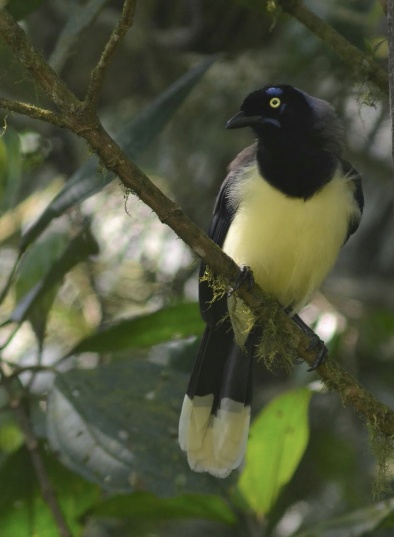
Black-throated Jay; photo courtesy of Yeimiri Badilla.
Northern Emerald Toucanet; photo courtesy of Yeimiri Badilla.

There are of course many more bird species to be seen and photographed. And for you wild-eyed botanists, Cerro Paraguas will keep you busy as a bee for several trips to come.

Contest Winners! February 2021

Congratulations to our San Vito Bird Club contest winners for 2021. As you may recall, this year we changed the contest from a Bird Feeder Contest (since Costa Rica frowns on feeding wildlife) to a three-pronged contest:

  1. Bird Feeder Contest for members who DO NOT live in Costa Rica during the month of February.
  2. Photos taken in February, in three categories; a. Birds having a meal b. Birds in action c. Still life
  3. Original Bird Act created during the month of February.

Here we go! First, second and third place in the Not-in-Costa Rica Bird Feeder Contest

First place with 17 species: Charles and Sara Beeson-Jones from Fen Ditton, United Kingdom.

  1. Blackbird (male and female) – Turdus merula
  2. Greenfinch – Carduelis chloris
  3. Goldfinch – Carduelis carduelis
  4. Long Tailed Tit – Aegithalos caudatus
  5. Blue Tit – Parus caeruleus
  6. Great Tit – Parus major
  7. Woodpigeon – Columba palumbus
  8. Collared Dove – Streptopelia decaocto
  9. Robin – Erithacus rubecula
  10. Pheasant (male and female) – Phasianus colchicus
  11. Hedge Accentor (also called Dunnock) – Prunella modularis
  12. Carrion Crow – Corvus corone
  13. Blackcap – Sylvia atricapilla
  14. Magpie – Pica pica
  15. Great Spotted Woodpecker – Dendrocopos major
  16. Chaffinch (male) – Fringilla coelebs
  17. Jay – Garrulus glandarius

Second place with 16 species, Judy Richardson from Connecticut, U.S.A.

1.  Northern Cardinal
2.  American Goldfinch
3.  White throated Sparrow
4.  Dark eyed Junco
5.  Song Sparrow
6.  Mourning Dove
7.  Black capped Chickadee
8.  Carolina wren
9.  House Finch
10. Eastern Tufted Titmouse
11.  Blue Jay
12. Red bellied Woodpecker
13. White roasted Nuthatch
14. House Sparrow
15. Chipping Sparrow
16. European Starling

Third place with 11 species, Peter and Petra Heck from the Netherlands,.

  1. House Sparrow
  2. Hedge Sparrow / Dunnock
  3. Blue Tit
  4. Great Tit
  5. Robin
  6. Jackdaw
  7. Blackbird
  8. Chaffinch
  9. Greenfinch
  10. Turkish turtle dove
  11. Wood Pigeon

Next, our Photo Contest Winners.

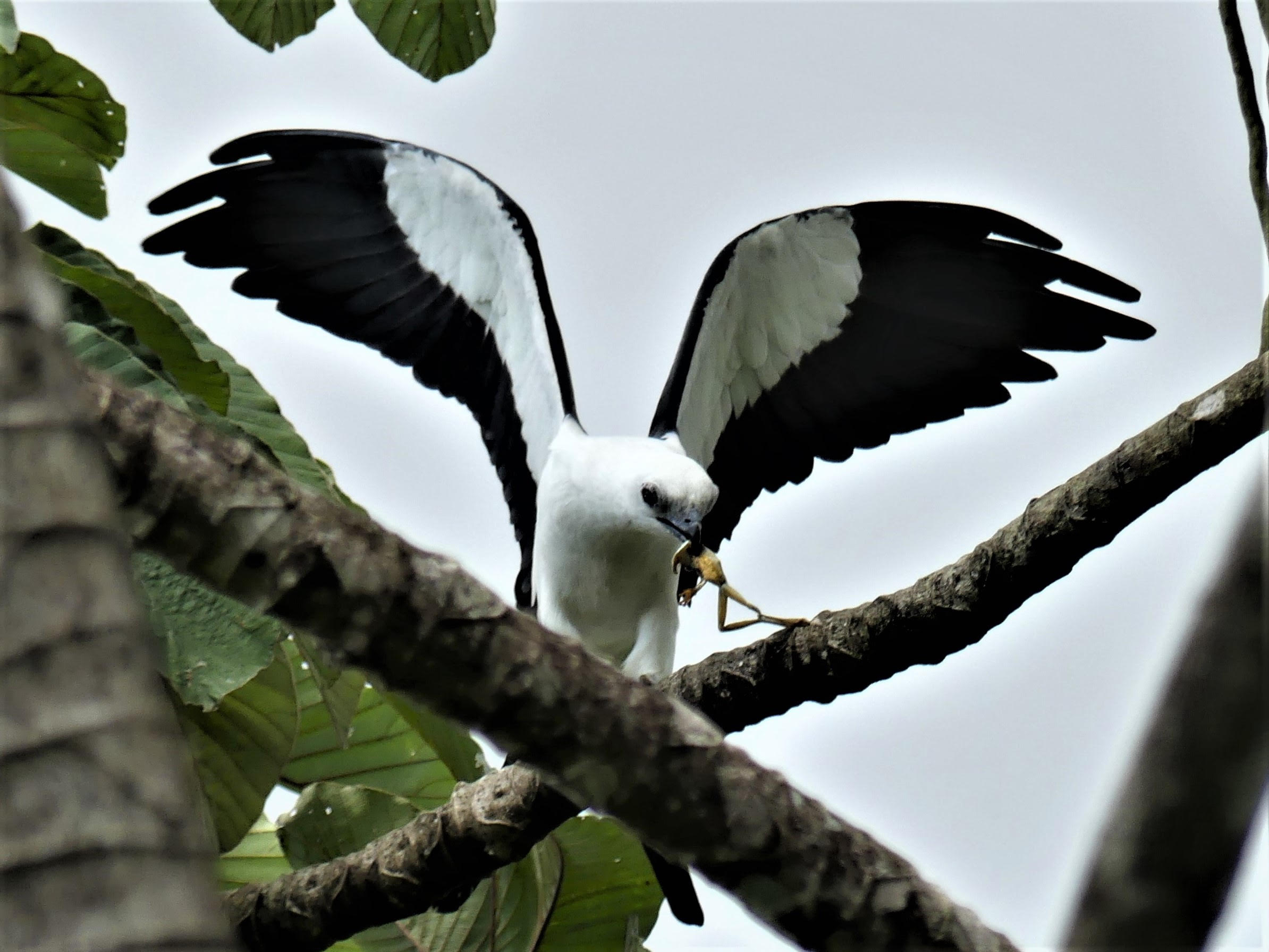
Winner of the Birds Having a Meal photo Jo Davidson.

(Swallow-tailed Kite dining)

Winner of the Birds in Action photo; Peter/Petra Heck.

(Little Red Robin in snow)

Winner of Still Life photo; Jo Davidson.

(Yard plants resembling a Post-Impressionist painting)

Lastly, our Bird Art Winners.

Four bird paintings created during the month of February were entered. All four are equally deserving of First Place! Here they are, in no particular order.

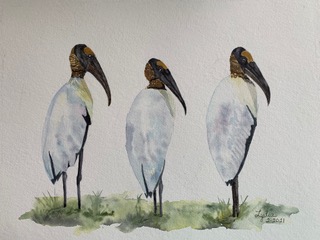
Lydia Vogt’s Three Wood Storks

Helen LeVasseur’s Gray-cowled Wood-rail.

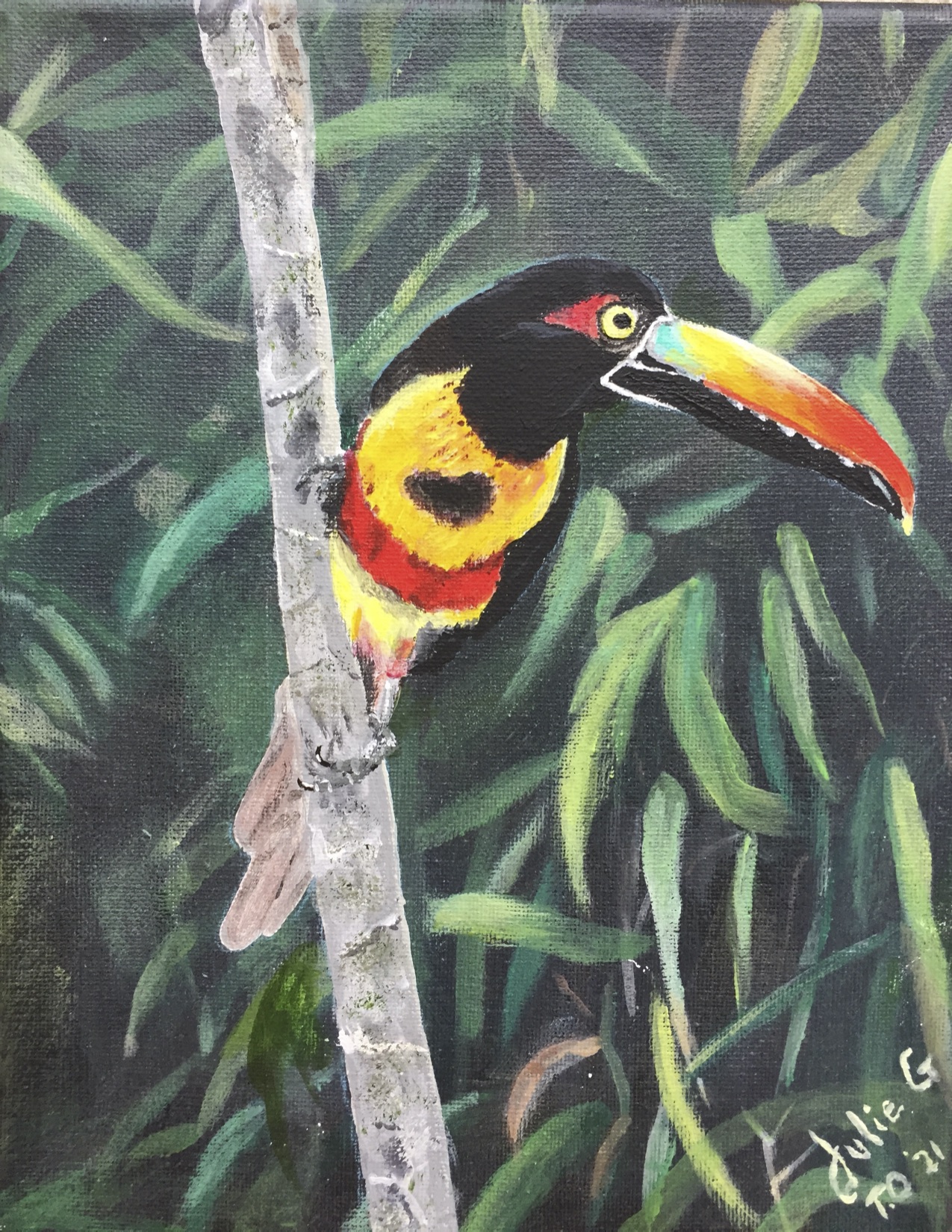
Julie Gerard’s Fiery-billed Aracari.

Lydia Vogt’s Golden-browed Chlorophonia.

We hope you enjoyed this posting. And thank you for your continued support of the San Vito Bird Club.

Where We Bird: Las Pangas

Rice is nice. Rice fields are also an AB-SO-LUTE-LY fantastic habitat in which to observe and study birds.

When I’m not here in San Vito I also live near California’s Sacramento Valley, which is also a wonderful rice field/bird observing destination; home to hundreds of thousands of migrating wildfowl as they move from Canada and the Arctic down the Pacific Flyway.

Sandhill Cranes: photo courtesy of Chico Enterprise-Record

We are fortunate to have the rice fields of Las Pangas very near to us in San Vito (see directions below). A tour of Las Pangas has become a vital destination for birders who live in or visit the southern zone. As with the northern rice field habitat, Las Pangas hosts thousands upon thousands of migrating ducks and other shorebirds that are seldom otherwise seen. Just this year (2021) several birders were able to view and to photograph the White-cheeked Pintail duck; normally exclusive to South America. Our profound wet season this year inundated Las Pangas with much higher than normal water levels, providing greater resting and feeding space for these often weary migrants. Several birders have told me that Las Pangas rivals the wetlands of Palo Verde up in Guanacaste.

Las Pangas is also home to several bird species seen almost no where else in Costa Rica; Scrub Greenlet, Rusty-margined Flycatcher and Brown-throated Parakeet to name but a few.

But I know why you’re here and it’s not to read…it’s to see bird photos from our wonderful local naturalists. I get it…I get it…and I’m fine with it.

Roseate Spoonbill, Wood stork and Snowy Egrets: photo courtesy of Helen LeVasseur
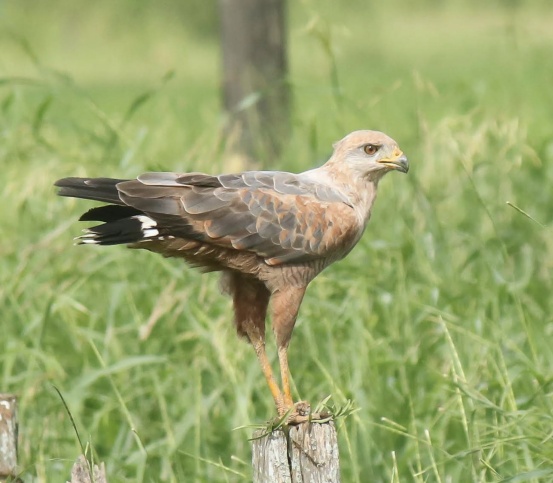
Savannah Hawk: photo courtesy of Randall Jimenez (how about those long legs!)
Paint-billed Crake: photo courtesy of David Rodriguez Arias (one of the most secretive birds in the world)
Lesser Yellow-headed Vulture: photo courtesy of Yeimiri Badilla
Red-breasted Meadowlark: photo courtesy of Helen LeVasseur
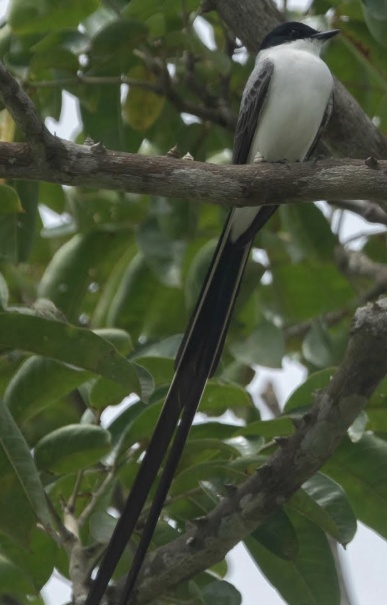
Fork-tailed Flycatcher: photo courtesy of Randall Jimenez

How to get to Las Pangas? When you get to Ciudad Neily crossroad, don’t turn right, don’t turn left…go straight. Follow the signs to Coto 47. Take the rural road on the right, just before you cross the first big bridge. This road is an ‘up-and-back’ road, not a loop. Four-wheel drive recommended but not necessary in the dry season.

Oh…and probably a good idea to wear shoes.

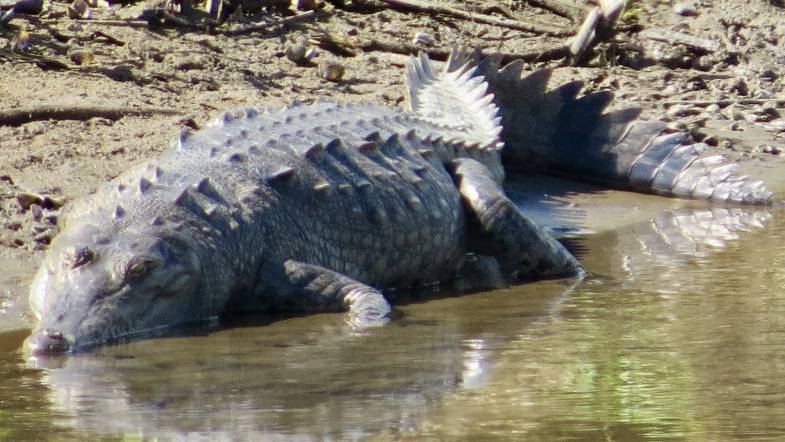
Photo courtesy of Helen LeVasseur (she wanted me to go stand by it to give it scale but I wouldn’t do it.)

It’s February: Contest Rules and Reminder

February is here. Just reminding you of our modified contest for 2021 and the rules.

  1. If you are a San Vito Bird Club member living in a country other than Costa Rica (and we know there are many of you), send us a list of the birds you see on your feeder during the month of February, 2021.
  2. If you are a San Vito Bird Club member living in Costa Rica, send me a few (no more than five) of your best bird photographs TAKEN DURING THE MONTH OF FEBRUARY, 2021. Photo categories are: a. Rarities b. Birds in action c. Birds having a meal d. Baby birds e. Still life Send to: eltangaral@gmail.com
  3. If you are a San Vito Bird Club member living anywhere in the known (or even the unknown) universe, send a photo of any bird-related artwork you CREATED DURING THE MONTH OF FEBRUARY, 2021. Again, send to: eltangaral@gmail.com

Feb. 2021: A Modified Contest!

February is the traditional month for our long-standing ‘Bird Feeder Contest’. This year, 2021, we must break with tradition. Why? The country of Costa Rica has a nationwide policy against the feeding of wildlife. And while the focus of this policy seems to be on eliminating people feeding terrestrial and marine mammals and reptiles, the policy does not exclude the feeding of Costa Rican birdlife.

***We cannot in good conscience promote a contest that flies (if you will) in the face of this policy.***

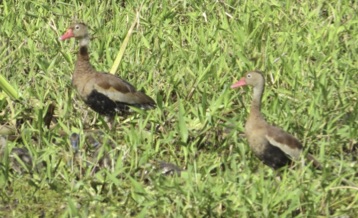
Life is full of paradoxes, as you all know. Just look at the photo below. Actually this is more of a ‘pair of ducks’ than a ‘paradox’; but the intent of our Bird Feeder Contest has always been to promote an appreciation of birds…to get folks to spend more time observing and identifying our avifauna; not to in any way do them harm.

I truly believe we were extremely successful in that intent of promoting bird appreciation. And so…this year we must go in a different direction to achieve that goal.

Here is how YOU can participate!

  1. If you are a San Vito Bird Club member living in a country other than Costa Rica (and we know there are many of you), send us a list of the birds you see on your feeder during the month of February, 2021.
  2. If you are a San Vito Bird Club member living in Costa Rica, send me a few (no more than five) of your best bird photographs TAKEN DURING THE MONTH OF FEBRUARY, 2021. Photo categories are: a. Rarities b. Birds in action c. Birds having a meal d. Baby birds e. Still life Send to: eltangaral@gmail.com
  3. If you are a San Vito Bird Club member living anywhere in the known (or even the unknown) universe, send a photo of any bird-related artwork you CREATED DURING THE MONTH OF FEBRUARY, 2021. Again, send to: eltangaral@gmail.com

Some time during early March, 2021 we will post your efforts from the three categories above on this website and on Facebook.

Thanks for your understanding and participation and please continue to support the San Vito Bird Club with your generous donations.