Get up…go outside…breathe deep…sweat…enjoy nature. As you probably are aware that is our mantra here at the San Vito Bird Club, So really…please do that.
But there may be times when, oh…you have the sniffles…a blister on your foot…a bad case of lethargy. If these or similar symptoms hit you, we now offer you a reasonable alternative to the *see above*.
Here are three options that allow you to go birding, from the couch, in your pajamas.
#1: Watch birds in South Africa
Follow this link to see a live streaming bird feeder in Pretoria, South Africa. The sheer number of birds and the diversity of birds is quite astounding. You’ll see Weavers, Hoopoes, Starlings, Lovebirds, old world Barbets, the Mousebird, the Go-Away Bird and much, much more. As a bonus the blogger displays the species names for you on the screen. The live stream continues at night when you might see bats and South African nocturnal mammals.
#2: Hummingbirds of Ecuador
This is place I’ve actually been to; Satchatamia Lodge in Mindo, Ecuador. The hummingbird feeders are kept spotlessly clean. Expect to see close to 20 different hummingbird species including our very own speedy and powerful, Rufous-tailed Hummingbird.
#3: Panama Birds at a Feeder, courtesy of Cornell Lab of Ornithology
You’ll recognize most the birds on these Panama feeders…but not all!
Enjoy these live streams but get off the couch, put on your hiking clothes and GET OUT THERE!
Please join Alison Olivieri, Greg Homer and the San Vito Bird Club for an escorted Bird Walk at the Wilson Botanical Gardens (Las Cruces) on Saturday, Oct. 2nd beginning at 7:00am.
Good quality loaner binoculars and field guides are available.
All attendees must first check-in at the main gate for a quick temperature check. As a participant in this San Vito Bird Club walk, admission is free. More to come on this later. Meet up in front of Recepcion, as usual.
Following the Bird Walk, about 9:00am, Wilson Garden offers coffee, tea and cold water at no charge; however a tip to the kitchen staff is greatly appreciated. For this walk, Wilson is also offering two breakfast options*. Delicious and typical.
Option #1. Complete tico Breakfast: Gallo pinto, egg (scrambled or omelet), fried plantain and local fresh cheese with hot drink (Coffee, tea or aguadulce) and season fruit for USD $8.00/C5,000.
Option #2. Small breakfast: Egg sandwich (local cheese, bacon or ham, and egg) on whole wheat bread with hot drink (Coffee, tea or aguadulce) and season fruit for USD $5.00/C3,000.
All activities, including the post-walk dining and socializing, are out of doors. But masking up is fine.
Hope to see you there. Again…Saturday, Oct. 2nd from 7:00-9:00am.
Let me know if you can join us and if the breakfast (delicious and typical) will be part of your morning. Fill out the short form attached below:
(with acknowledgement, respect and thanks to the speedy and powerful Rudyard Kipling, author of ‘Just So Stories’)
photo courtesy of public domain
*This story took place not so very long ago. Not so long ago that is, if you think about how very old our world is.
Back in the days when this story took place human beings were quite different than they are now. Back then, human beings were not so brave, not so wise and not so clever as we all are now. Back then, human beings were a-scared of almost everything. Back when this story took place human beings were fearful…always and ever fearful. Human beings reacted with high pitched emotions (like the 5th string of a banjo) to pretty much every new person, place or thing they encountered; and many of the old things too. Not like us today…no, not like us. But then…this story has absolutely nothing to do with human beings. So let us begin.*
The birds of the world held a big meeting to decide who was to be named King of the Birds. Having a King, the birds thought, would be a very good thing. A King, they believed…well, he or she would just take charge of things all right, all right, all right…a King would make the tough decisions that the rest of the birds didn’t want to make for themselves. Better to have a King around to make all those tough decisions. So they held a big meeting to pick a King..
All of the birds gathered (perhaps flocked is a better word) together. This must have been a very big and grand place because there were–and still are–so many many birds. When all of the chatter finally died down (no doubt this took some time, you know how birds can be…especially the geese, chickens and turkeys), the Bellbird…by virtue of having the loudest voice of all the birds…flew up to the podium and addressed the throng.
‘Thank you all for coming to this meeting,’ rang the Bellbird. ‘Especially you flightless birds; I know what a long walk it must have been to get here. We have come here to pick out…please note I DID NOT say “peck out”…our King!’
My, what a sound came out from the crowd of birds at that point! Imagine, if you can, the sound of all the birds of the world giving out with their best vocalization all at the same time; but of course you can’t really imagine that. Take my word for it, that sound was singular and spectacular.
When quiet returned, the Bellbird continued; ‘I now open the meeting to any bird who wishes to be King of the Birds.’
First up to the podium came the Harpy Eagle.
‘I am the most powerful of all the birds. I should be King.’
Next up came the Ostrich.
‘I am the largest of all the birds. I should be King.’
Next, came the Raven.
‘I am the smartest of all the birds. I even use tools! I should be King.’
Next, the Peregrine Falcon zipped up to the podium.
‘IAMTHEFASTESTBIRD…ISHOULDBEKING.’ And off he zipped.
Next, the Arctic Tern approached the podium.
‘I regularly travel from the North Pole to the South Pole. I have seen the entire world. I should be King.’
The Emperor Penguin also had a notion to go to the podium but struggled and stumbled trying to ascend the eight steps that led up to it. After about a half hour of trying the Emperor Penguin croaked, ‘Ah hell, I didn’t want to be King of the Birds anyway.’ And waddled back to his seat, hearing quite a few partially covered snickers and whispers from the crowd.
‘OK,’ said the Bellbird. ‘I guess that’s all the nominees. Now it’s up to all of you to decide…who is to become King of the Birds.’
If you thought that previous cacophony of bird song was singular and spectacular, let me say it was but a whisper-in-church compared to what came next. Oh my!
Each individual bird, it seemed, had his or her own favorite choice and each individual bird expressed his or her opinion in the most enthusiastic manner possible. These opinions were then countered by increasingly strident, even operatic, expressions of opinion; then those were countered and so on…and so on.
Some birds, it seemed, clearly believed the Harpy Eagle should be King. Others robustly supported the Raven, the Ostrich, the Peregrine Falcon and the Arctic Tern. There was even a small, but dedicated, contingent for the Emperor Penguin.
In effect, each bird at the meeting was saying, ‘You’re wrong. Why won’t you believe what I believe!!!’
Louder and louder became the debate…more and more entrenched, less and less tolerant became each supporter of their beloved and favorite candidate. The rhetoric turned purple. Short-lived skirmishes even broke out, as emotions fairly flooded the venue. The Bellbird just threw up his wings and sat down.
Finally (most likely due to sheer hunger and thirst), after 7 hours and 43 minutes, a brief quiet broke out in the meeting.
As quick as a flash, the Kingbird flew up to the podium and spoke to the multitude.
‘I humbly and gratefully accept your nomination to be King of the Birds. As my first and only Royal Proclamation, I give you these words: Live your best lives. Now, back to work…all of you.’
The birds somehow instantly recognized the wisdom spoken by their new King. They recognized that the King who rules best, rules least. The Kingbird truly was a great King. The Kingbird continues to rule wisely to this very day.
And that is how the Kingbird became King of the Birds.
It’s true; even we grizzled, hard-nosed, wing-bar counting, crawling through the weeds birders enjoy watching pretty birds more than we enjoy watching plain birds. It’s just human nature isn’t it, to like bright shiny things. Tanagers are bright…Tanagers are shiny. Some folks even call Tanagers ‘the butterflies of the bird world’. But don’t get me wrong…we grizzled birders also absolutely get off on counting wing bars on the drabbest of our feathered friends.
Think back. How many of us, during that first trip to Costa Rica, can remember our first encounter with a Scarlet-rumped (Cherrie’s/Passerini’s) Tanager? Remember the thrill? My first spot came in 1979 in a sleepy little two-hostel town called Manuel Antonio. I still have a dusty 35 millimeter slide of that Scarlet-rump somewhere.
And now, when your family, your friends come down to visit. Do these phrases sound familiar?
‘Oooohhh, what’s that black and red bird?’
‘Oh, I just love those sky blue birds!’
‘Oh my god! That bird on your feeder…it must have seven different colors! What is it?’
Those comments are directed at Tanagers my friend. Charismatic, those Tanagers are.
I even named my entire property after Tanagers, using the made up name ‘EL TANGARAL’; which means, (because I say so), the place of Tanagers; or more specifically a menagerie of Tanagers.
FYI: If you’re interested in some truly fantastic musings and art on Tanagers, I recommend you find a copy of ‘The Life of the Tanager’ by the speedy and powerful Alexander Skutch (also known as the Audubon of Central America). https://www.amazon.com/Life-Tanager-Comstock-Alexander-Skutch/dp/0801422264
Here then are my thoughts on a few of our southern zone Tanager species.
#1: Shark’s Eyes
One of our less brightly-colored Tanagers is the Palm Tanager. The Palm Tanager looks quite similar to our Blue-Gray Tanager but is colored a soft, dusty olive green with a dark patch on the primary wing. Appropriately named, the Palm Tanager seems to prefer hanging out in palm trees, usually up rather high. I start off with Palmy for this reason; I consider the Palm Tanager to be ‘King of the Tanagers’ and I’ll tell you why. Back when we all had bird feeders and bird feeder contests I noticed there was a distinct bird feeder hierarchy. Species-A chases off Species-B and is then chased off by yet another, Species-C. Usually this hierarchy is simply based upon size. Bigger birds intimidate and chase off smaller birds. I’ll bet you’ve noticed this. But I noticed that Palmy…Palmy with those black shark-like eyes, would invariably stand up to bigger birds…like the Clay-colored Thrushes, the Saltators, and even the Woodpeckers; Palmy would just stare down those bigger birds and continue dining on banana. We all knew a kid in school like this; not the biggest or strongest or smartest kid; but there was something…something deep-down in that kid’s eyes (boy or girl) that made us turn and slowly back away. That’s who the Palm Tanager is.
Public domain photo
#2. The Opportunist
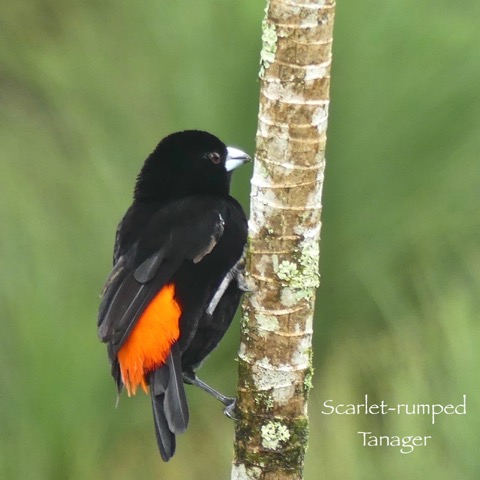
Here’s some good advice. If you want to succeed in life…learn how to do a variety of things well; things other people can’t or won’t do, be willing to try new things, don’t get stuck in a rut. Do this and you’ll succeed. This philosophy describes our previously mentioned Scarlet-rumped Tanager (the black and red one)…(but the female is brown and orange). You’ll observe that Scarlet-rumped Tanagers have discovered a variety of ways to make ends meet, to bring home the bacon…eating seeds, fruits and insects right off the ground, eating seeds, fruits and insects up in the trees (at all levels), and they are also quite adept at getting a good meal by fly-catching. In many areas of Costa Rica the Scarlet-rumped Tanager is the most commonly seen and numerous Tanager…maybe even bird. Very strong family values these birds have. Early hatchling birds have no problem helping out their parents with the feeding and care of late season hatchlings. Here’s another good skill they’ve developed; they don’t seem to mind living with and around people and if you haven’t noticed we people are damn near everywhere.
photo courtesy of Jo Davidson
#3. Ooh-Aah
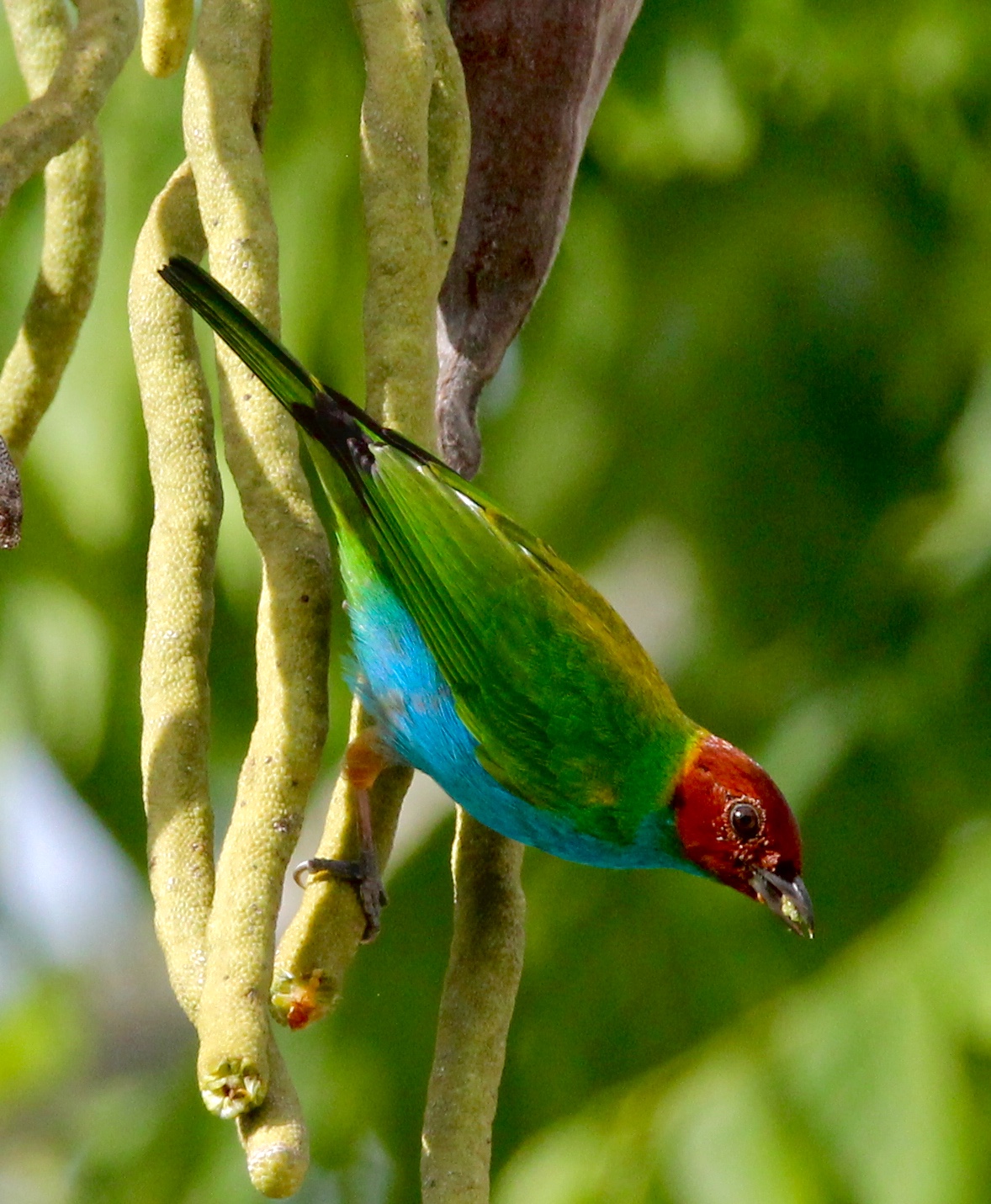
Private and somewhat of a feeding specialist, the Bay-Headed Tanager never fails to elicit a deep-throated ‘Ooohh, aaahh’ from birders and non-birders alike when spotted. Bright green, bright blue with a brownish/red (bay) head the Bay-headed Tanager just seems to LOVE eating melastome berries and minding its own business. Bay-heads also glean insects but berries are their dominant food. Ask any bird bander…if you’ve held many Bay-headed Tanagers in your bare hands, by the end of the day you’ll look like you’re wearing purple gloves.
Bay-headed Tanager (photo by Jeff Worman)
Of course we have many more Tanagers down here plus some that migrate down from North America. And let us not forget the closely related and spectacularly colored Honeycreepers, Dacnis and the Euphonias. Easy on the eyes; truly fun to watch.
*Please do me a favor and don’t mention to any Bird Taxonomists that I said Euphonias are closely related to the Tanagers. Apparently they’re not that closely related and even though most Bird Taxonomists are slight, frail and myopic…they can also be wretched and spiteful when angered. I’ll bet a lot of Bird Taxonomists have Palm Tanager eyes.*
Shining Honeycreeper: photo courtesy of Helen LeVasseurSpot-crowned Euphonia: photo courtesy of Jo Davidson
The San Vito Bird Club sends our congratulations and best wishes to a new neighbor and new player in eco-tourism and habitat restoration in the southern zone neighbor–Cielo Lodge.
Located about 300 meters ABOVE the town of Golfito, Cielo Lodge is the dream culmination of Nicole and Keith Goldstein. But dreams rarely culminate (if that is even a word) without many hours of planning and even more hours of hard, hard work. Nicole and Keith can attest to this fact and the results are most apparent.
But there is far too much about this remarkable business for me to describe here…so please have a look at their website (above). Be assured…Cielo Lodge, the management and staff, are dedicated to providing a rare variety of nature experiences to their guests and with a minimum of impact (footprint).
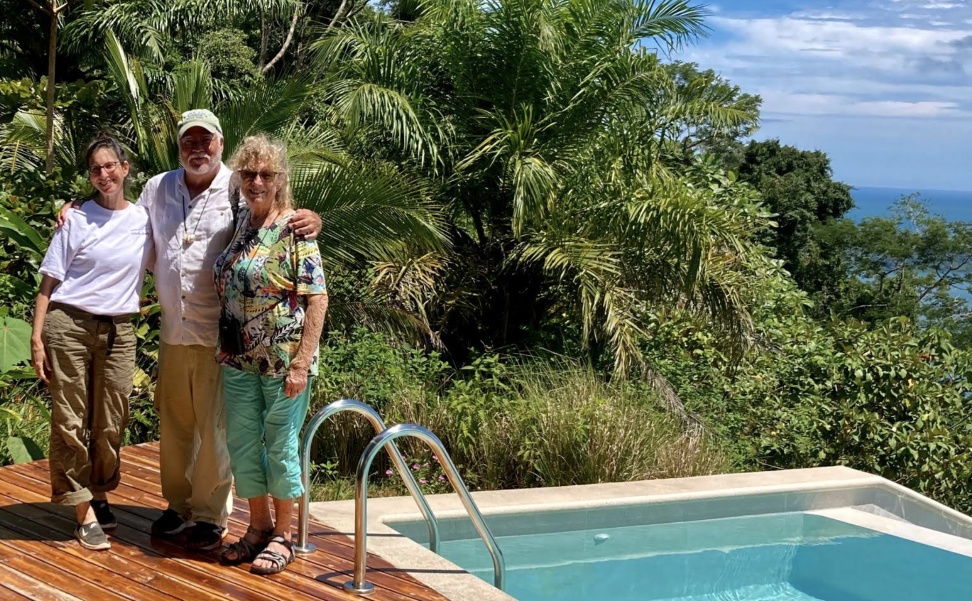
How do I know? See photo below (taken by Helen LeVasseur) of Lydia Vogt, Nicole Goldstein (owner/proprietor of Cielo Lodge) and me during a recent visit/chat/lunch.
We, the San Vito Bird Club, will also be pleased to assist Cielo Lodge with their reforestation plans.
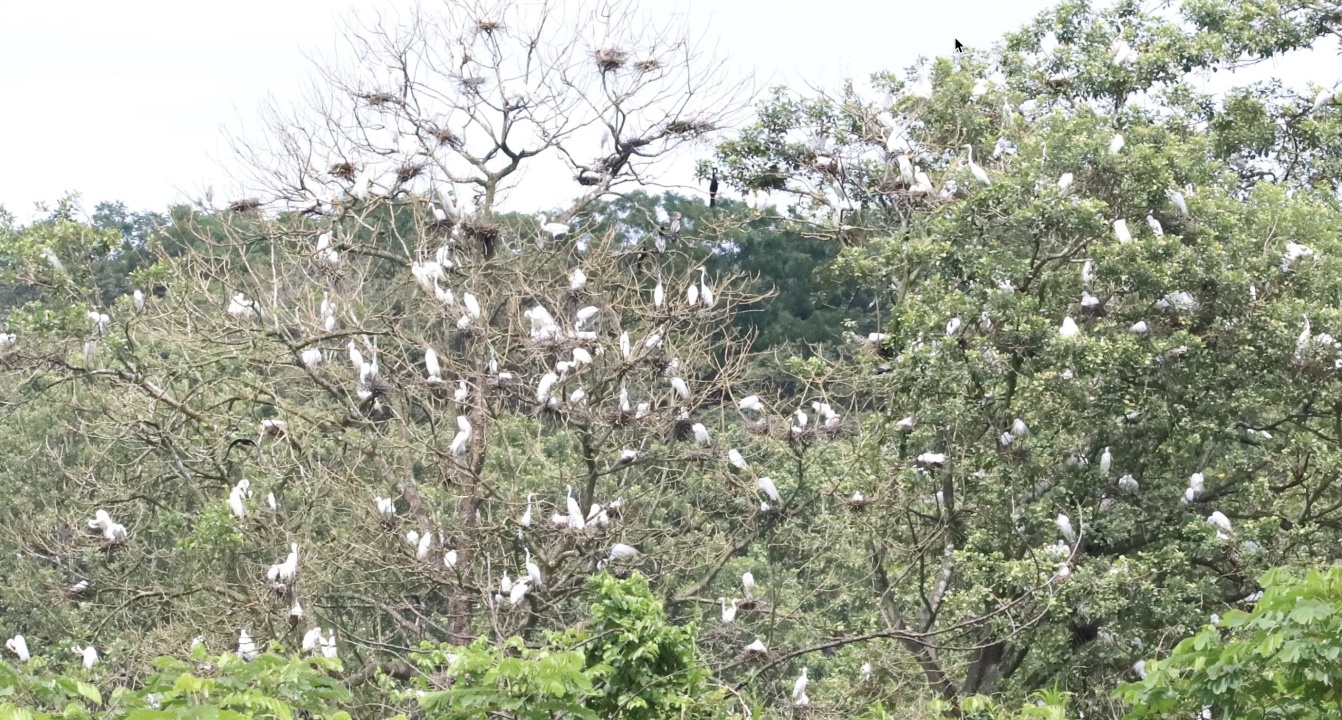
Past Ciudad Neily, out in the palm oil and rice country (around Coto 47), is a stand of tall trees. In this stand of trees is a quite amazing HERONRY (also known as a rookery).
Perhaps over 300 Great Egret nests are progressing quite nicely in these trees (this is a very low estimate on my part). Each nest when completed will contain from 3-5 eggs/chicks.
Any guesses as to what percentage of these baby egrets will survive to to adulthood and start their own families?
This percentage is quite low. Eggs break before hatching, ants, parasitic flies, snakes, squirrels and other birds take quite a few of the eggs/young. Many young birds fall or get pushed out of the nest before they are ready to fly. For predators, such as caiman, crocodiles, snakes and small mammals, living below a heronry such as the one shown below must be like an all-you-can-eat buffet.
Before you give out with an, ‘Ah, those poor baby egrets‘; just think (or do the math) as to where the rest of world would be if all those 3-5 baby egrets in those hundreds of nests survived…and then they all successfully raised 3-5 babies and then those…ad infinitum. In no time at all, things would get quite EGRET-Y on this world.
Nature pretty much always knows what it is doing. And as Alfred, Lord Tennyson popularized, ‘Nature is red, in tooth and claw.‘
For those of us with a passion for nature observation, this heronry is a sight to behold!
Heronry near Coto 47: photo courtesy of Jimmy New.
If you look closely you might see some dark-colored birds in there as well. These are nesting Anhingas (also known as Snake Birds, in the cormorant family). So I guess this makes the site a Heronry/Anhingary. Which is nice.
We’re often scornful of bird taxonomists. Most often this is due their use of nomenclature…the bird names they come up with. These bird names can frequently be counter-intuitive. We find bird names that do not appear to describe what our eyes tell us. We even see bird names that use obscure (even bizarre) terminology. For example:
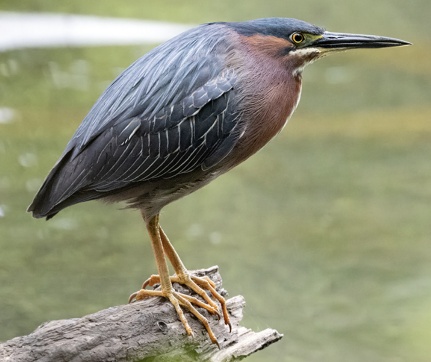
The Green Heron isn’t really green; at least no one would ever say, ‘Hey, look at that green heron over there.’
Green Heron: photo from public domain
The Mistletoe-Paltry-Mistletoe Tyrannulet; Taxonomists changed the perfectly named Mistletoe Tyrannulet (so named because this little bird is often found eating Mistletoe/Mata Palo berries) to the bizarrely named Paltry Tyrannulet. Paltry? Isn’t that a term most often associated with a weekly salary? ‘How am I supposed to live on this paltry sum?’ To their credit, the taxonomists changed it back a couple of years ago!
The Gartered Trogon? Gartered? Aren’t garters something from the era of Jane Austin and Arthur Conan Doyle? What was wrong with Violaceous Trogon?
Yes, taxonomist decisions often vex us. In return we give them a lot of heat. So maybe it’s time we turn down the heat…let’s now give these troubled (and possibly lonely) souls some love. Please join me and raise a glass of cheer to some of the wonderful bird names the taxonomists have come up with over the years. Here are a few bird names that fit that particular bird to a TEE!
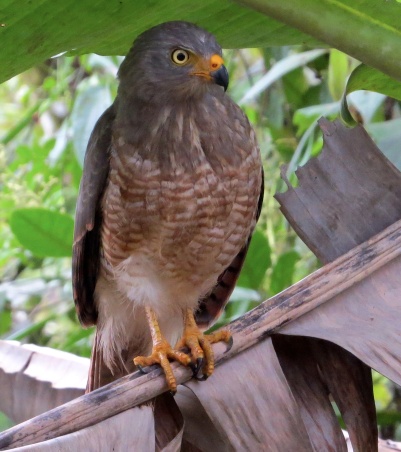
Roadside Hawk: My guess is the office-bound taxonomists were staring down at the skin of this bird but were stumped to come up with a name. The head taxonomist probably decided to ask a field biologist for some insight; ‘Hey,’ they asked. ‘Where do you find these hawks?’ and the simple answer from the field biologist came back, ‘We always find them alongside a road.’ Hence, the perfect name was born…a name based on the bird’s behavior. This same process likely occurred with our next bird.
Roadside Hawk: photo courtesy of Helen LeVasseur
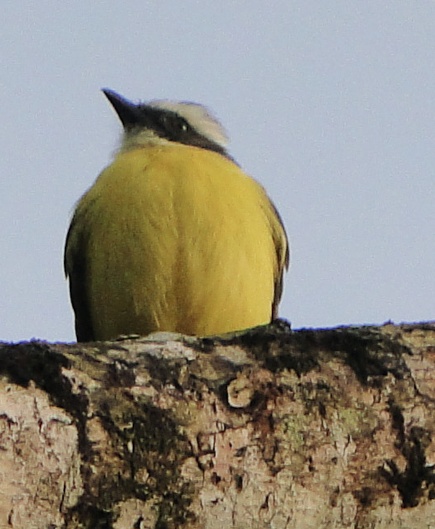
Social Flycatcher: ‘’These birds’ replied the field biologist when asked by the taxonomist, ‘like to hang out around people and with other members of their clan.’ And a great name was born.
Social Flycatcher: photo courtesy of Julie Girard
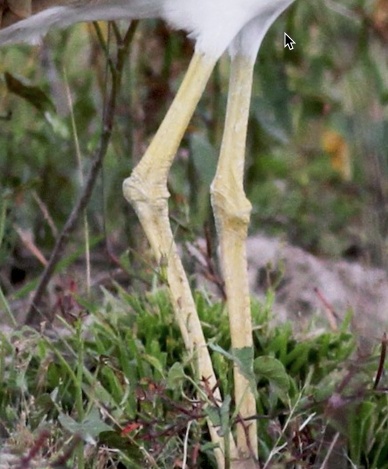
Double-striped Thick-knee: Looks like a giant Plover or shore bird with a couple of stripes but it has tremendously thick knees. Voila, a great name.
Double-striped Thickknee: photo from public domain
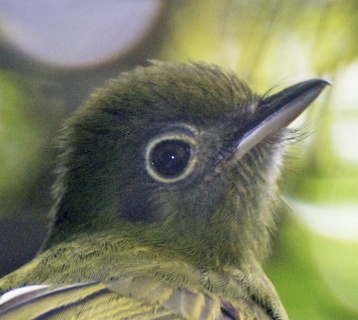
And my favorite of all taxonomist christened bird names: the Eye-ringed Flatbill. The entire name is a perfect descriptor of this otherwise bland appearing bird. Both the eye ring and the flat shaped bill are quite prominent. Here’s my theory as to how such a perfect name was able to get through the traditional taxonomist sticky nomenclature web……..It was about 10 minutes to 5pm on a Friday. The annual Bird Taxonomists’ Ball and Cotillion was scheduled to begin at 7pm. So, rather than come up with an obscure, counter-intuitive name for this bird the head taxonomist just threw up his hands and said, ‘Oh hell, just called it an Eye-ringed Flatbill and let’s go to the party.’
Eye-ringed Flatbill: photo from public domain
Bird Taxonomists…here’s to you! Who else could come up with over a dozen different names for the color RED.
(From San Vito Bird Club Taxonomy Tsar, Jo Davidson)
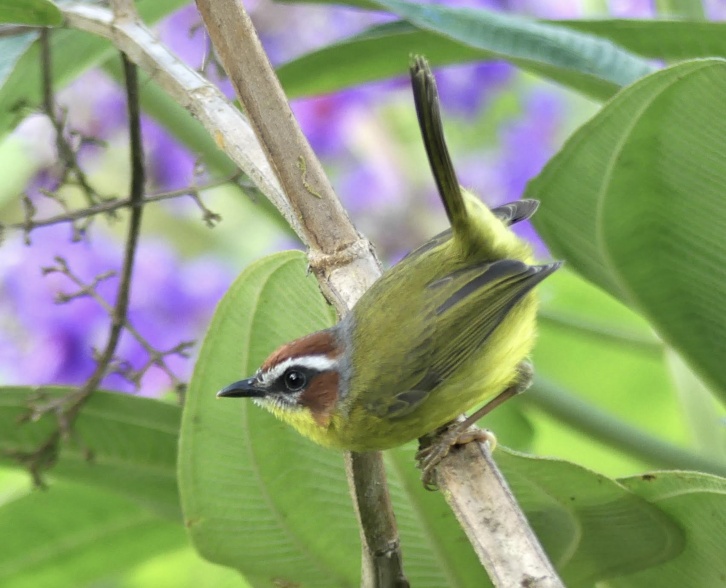
Not even a global pandemic can keep the Taxonomists of the American Ornithology Society from their appointed duties. Right on schedule, as always, they have announced the classification changes for this year. I’ll start with the three birds that have changes to both their English and scientific names. Let’s begin with one of my local favorites. The Rufous-capped Warbler has been split into two separate species:
The easiest way to differentiate the two is that the Chestnut-capped Warbler has an entirely yellow belly, and in the Rufous-capped, the lower portion of the belly is grey. There are other small differences, but they are very difficult to distinguish in the field. All the pictures I have taken in Coto Brus are of what is now called the Chestnut-capped, so I am guessing that one is more abundant in our usual birding spots.
Next on the list is the Tropical Gnatcatcher, which has also been split: White-browed Gnatcatcher (Polioptila bilineata) Tropical Gnatcatcher (Polioptila plumbea)
The Costa Rican species is now called White-browed Gnatcatcher. The species retaining the Tropical Gnatcatcher name resides in South America.
The Costa Rica resident species, which has an astonishingly small range in the Cartago area, is now called the Grass Wren. Note that the scientific name has not changed. The other species, which kept the English name but was assigned a new scientific name, is found in the U.S. and Canada.
Finally, here are the birds which have had changes to their scientific names only: Neotropic Cormorant (Phalacrocorax brasilianum) is now Nannopterum brasilianum Crested Caracara (Caracara cheriway) is now Caracara plancus Striped Owl (Pseudoscops clamator) is now Asio clamator Elegant Euphonia (Euphonia elegantissima) is now Chlorophonia elegantissima Magenta-throated Woodstar (Calliphlox bryantae) is now Philodice bryantae
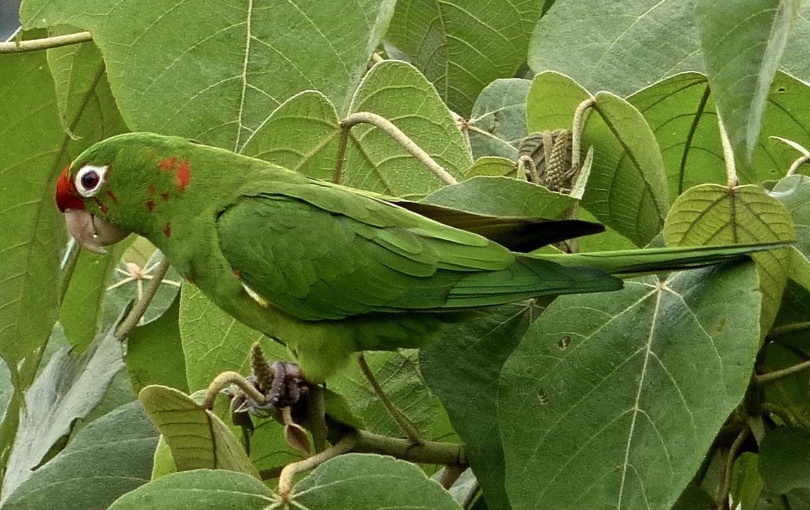
Crimson-fronted Parakeet (Crimsy): photo by Pepe Castiblanco
I think I know why we like parrots so much.
They are colorful and pretty birds.
They are good family birds, many mating for life with each parent providing for the young.
They just LOVE TO TALK!
And so for your approval, I present some photos of our southern zone parrots; all taken by our local SBVC photographers.
We have three true ‘parrots’ around San Vito and all three are quite common. Parrots have a short, squared tail, as opposed to parakeets who have a pointy tail. The first parrot is the Brown-hooded Parrot. Look for that bright-white eye-ring.
Brown-hooded Parrot: photo by Alison Olivieri
Next is my personal favorite, the Blue-headed Parrot.
Blue-headed Parrot: photo by Jo Davidson
The last of this triad is the White-crowned Parrot; quite similar to the Blue-head above.
White-crowned Parrot: photo by Jo Davidson
Next, we have two members of the Amazon Parrot group. Amazons are big, stocky parrots. Almost always green and always noisy. The Mealy Parrot (below) is the largest of all the Amazon parrots. It’s call is ‘YAK-YAK-YAK’.
Mealy Parrot: photo by Jo Davidson
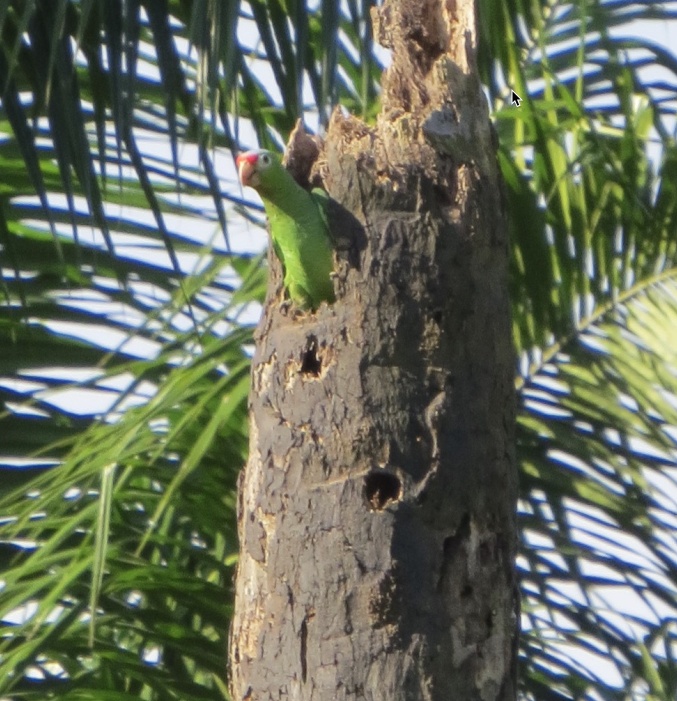
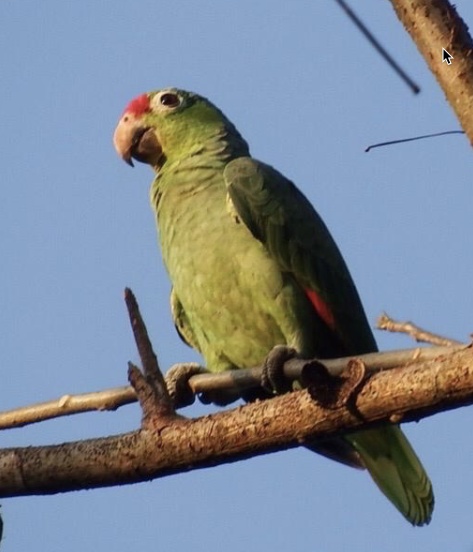
A little smaller and somewhat more common, the Red-lored Parrot is a frequent inhabitant of the palm plantations. It’s call is ‘SO-QUICK SO-QUICK’.
Red-lored Parrot: photo by Helen LeVasseurRed-lored Parrot: photo by Helen LeVasseur
Seemingly everyone’s first parrot family sighting in the southern zone, the Crimson-fronted Parakeet is almost always seen flying or roosting communally. There are few guarantees in bird watching but finding these guys in the Botanical Garden palm tree by the back gate comes pretty close.
Crimson-fronted Parakeet: photo by Jo Davidson
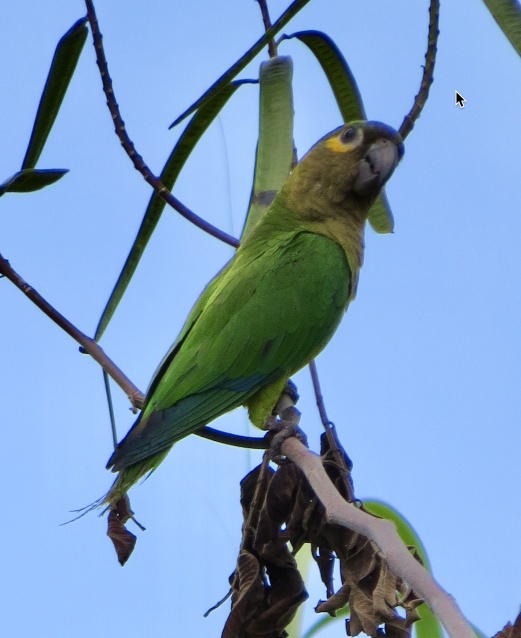
We have a couple of specialty parakeets found in the southern zone; one up high, one down low. Let’s start with lowland one; the Brown-throated Parakeet. Once again, big white eye-ring.
Brown-throated Parakeet: photo by Helen LeVasseur
Up in the highlands (Las Tablas for example) is the beautiful Sulpher-winged Parakeet.
Sulpher-winged Parakeets: photo by Pepe Castiblanco
A tiny little parakeet, gregarious in nature and sounding like a flock of Budgies, the Orange-chinned Parakeet can be found in downtown San Vito feeding on flowering trees. The orange chin can be hard to see…but it’s there.
Orange-chinned Parakeet: photo by Helen LeVasseur
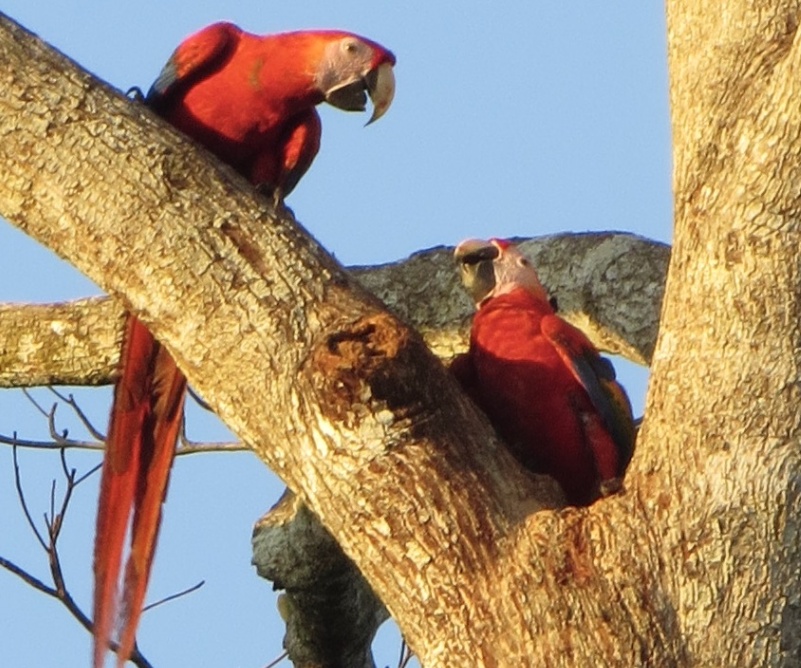
From the smallest to the biggest; Scarlet Macaw populations have thankfully made a profound comeback in the last 25 years. Unmistakable when seen but surprisingly, the Scarlet Macaw can almost disappear within the leaves of an Almendro (almond) tree. Their call? Think of a bronchitis clinic.
Scarlet Macaw: photo by Helen LeVasseur
There is one more member of the parrot family found in the southern zone; the Barred Parakeet. Living in the extreme highlands, the Barred Parakeet is a specialist feeder, dining on the seeds of our native bamboo. The next time our native bamboo flowers and then produces seeds, we should see them up on the Paraguas ridge. When that happens please take some pictures…I don’t have a single one!
The San Vito Bird Club does not condone keeping any parrot as a pet or cage bird.












 San Vito Bird Club
You must be logged in to post a comment.