A wild roller coaster ride. That phrase describes the fluctuating annual population numbers of many insects. Some years insect ‘X’ is just EVERYWHERE! Other years, insect ‘X’ just can’t be found.
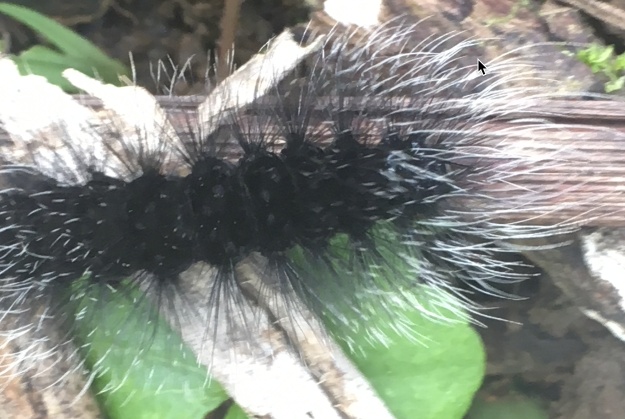
This year, that wild roller coaster is apparently nearing its apex for hairy black caterpillars! (see photo below) I’ll bet you’ve noticed them all over the place.
I’m sure Dr. Daniel Janzen* knows exactly what these caterpillars will transform into; hell, he probably first named the species. But I do not know the species or even the family. I’ll bet it’s a moth.
Most folks who have been down here for more than a day or two already know the Hairy Caterpillar Cardinal Rule–NEVER TOUCH A HAIRY CATERPILLAR. Those hairs are urticating** hairs and will cause pain, swelling, rash and possibly even a systemic reaction. So, do not touch…no tocar…ne pas toucher…non toccare…不要碰.
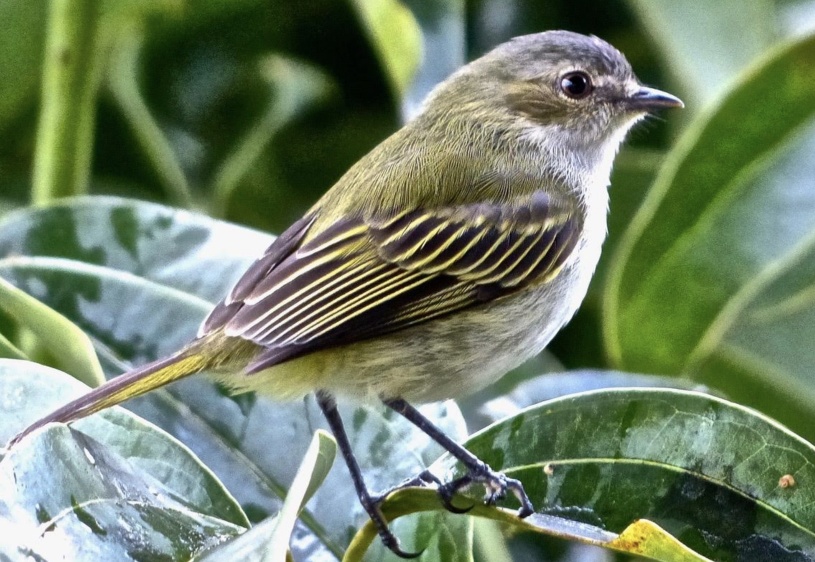
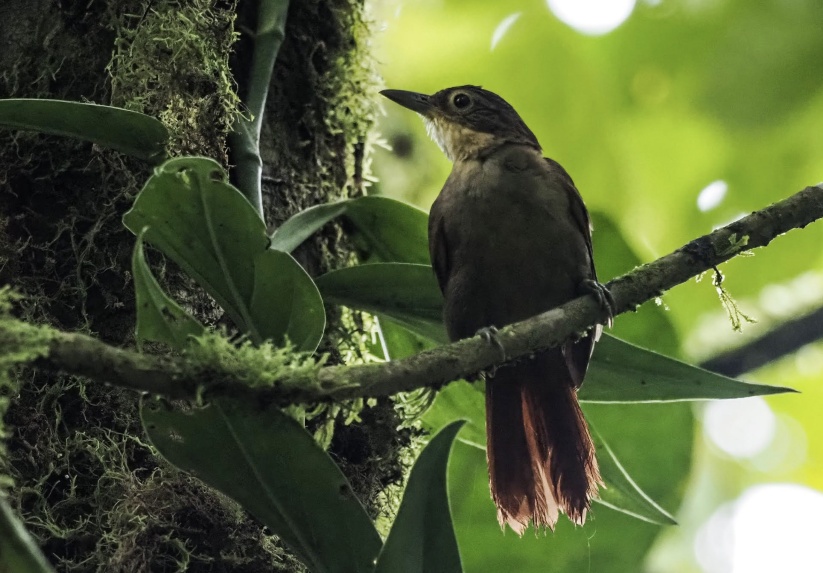
If you are looking for something to keep you amused during quarantine, this probably won’t fill that bill. However, even in these crazy times, the American Ornithology Society’s North American Classification Committee (NACC) continues its mission to update the taxonomy of North American birds, and it is my duty to report its decisions. There are two new English names for Costa Rican birds. These changes were made last year by the South American Classification Committee (SACC), and so are already included in eBird and Merlin. The NACC adopted these changes this year. 1) The Paltry Tyrannulet is now officially called Mistletoe Tyrannulet. It’s scientific name has been changed from Zimmerius vilissimus (which is now Guatemalan Tyrannulet) to Zimmerius parvus. 2) The Checker-throated Antwren (Epinecrophylla fulviventris) is now Checker-throated Stipplethroat. Scientific name changes (In order as presented in Garrigues and Dean’s 2nd edition): Canivet’s Emerald – Cynanthus canivetii Coppery-headed Emerald – Microchera cupreiceps White-tailed Emerald – Microchera chionura Blue-tailed Hummingbird – Saucerottia cyanura Snowy-bellied Hummingbird – Saucerottia edward Sapphire-throated Hummingbird -Chrysuronia coeruleogularis Blue-chested Hummingbird – Polyerata amabilis Charming Hummingbird – Polyerata decora Blue-throated Goldentail – Chlorestes eliciae Chestnut-backed Antbird – Poliocrania exsul Dull-mantled Antbird Sipia laemosticta Buff-fronted Foliage-gleaner – Dendroma rufa White-crowned Manakin – Pseudopipra pipra White-shouldered Tanager – Loriotus luctuosus Comb Duck (listed as a rarity in the back of the guide) – Sarkidiornis sylvicola For the further edification of anyone who has not fallen asleep by now, the remaining changes made by the NACC have to do with changing the linear sequences within groups. For example, in Garrigues and Dean’s second edition, Selasphorus scintilla, Scintillant Hummingbird, comes before Selasphorus flammula, Volcano Hummingbird. In future editions, that will change. To see the complete report of the NACC, you may visit https://academic.oup.com/auk/article/doi/10.1093/auk/ukaa030/5865308
(Article content and photo below from SBVC ‘Taxonomy Tsar’, Jo Davidson).
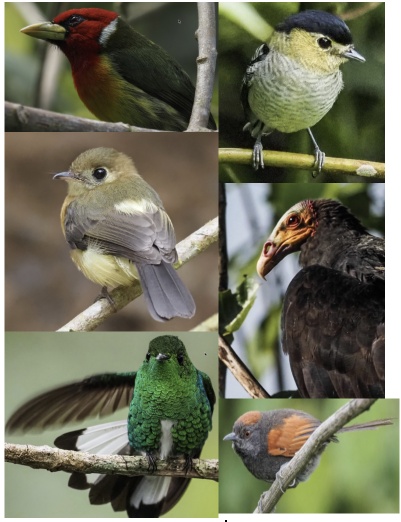
Part III of bird photos from notre bon ami (our good friend/nuestra buen amigo) Jean-Philippe Theilliez. Jean-Philippe has returned to France. We wish him a speedy return.
All photos taken in Costa Rica except the Great Jacamar, which was taken very near…in Panama.
FYI: Note the detail in the Turkey Vulture’s beak. That big hollow space houses the most sophisticated and efficient olfactory (smell detecting) organ in the entire animal kingdom. Turkey Vultures can smell death from several miles away. Their close cousin, the Black Vulture, relies more on their eyesight.
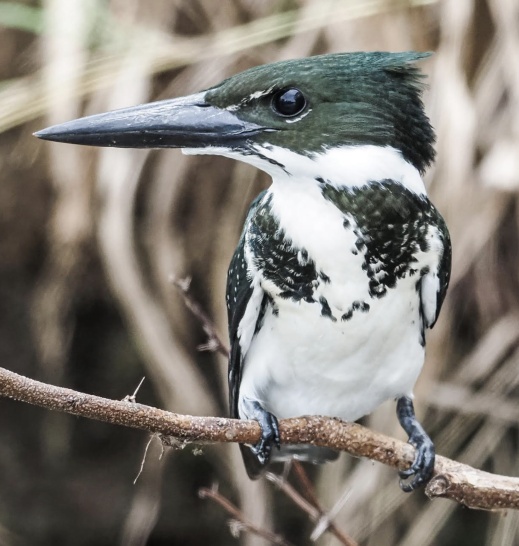
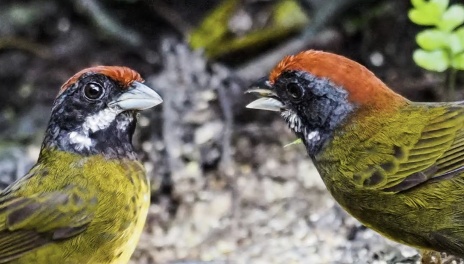
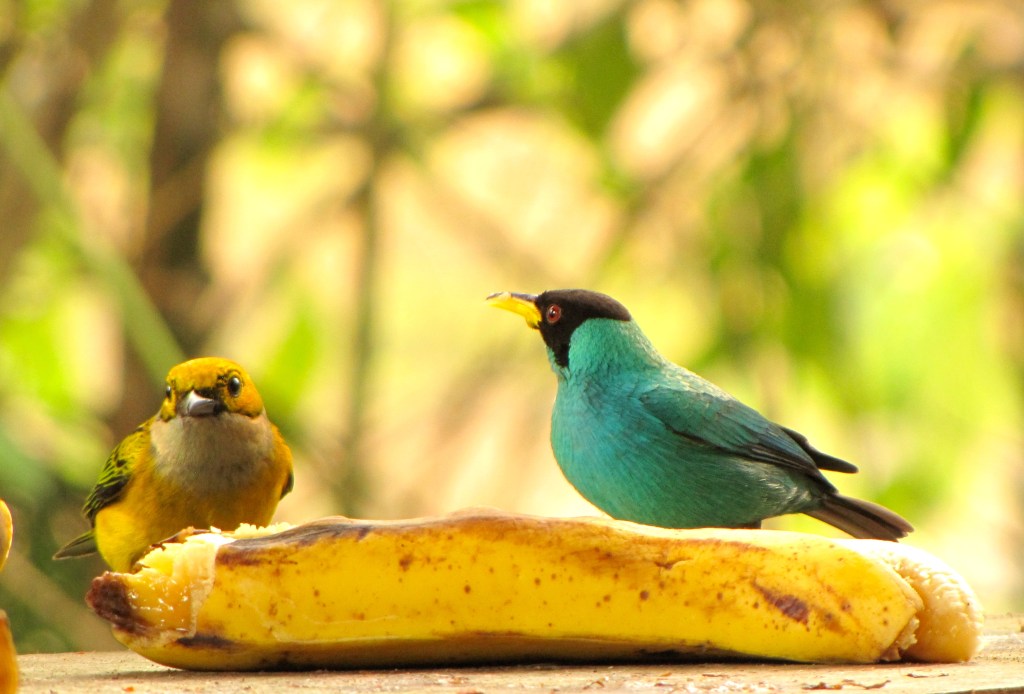
Spectacular photographer and good friend of the San Vito Bird Club, Jean-Phiilippe Thelliez has submitted some more of his bird photos from our area. Name them, if you can.
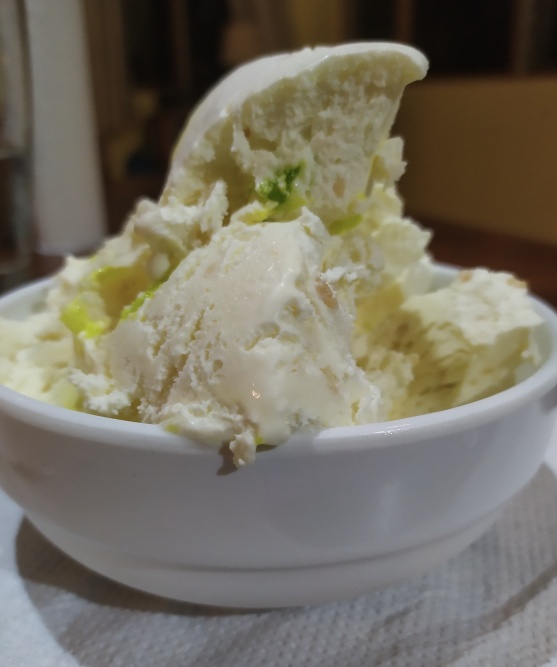
Plus, a bonus photo of Jean-Philippe’s favorite thing to eat.
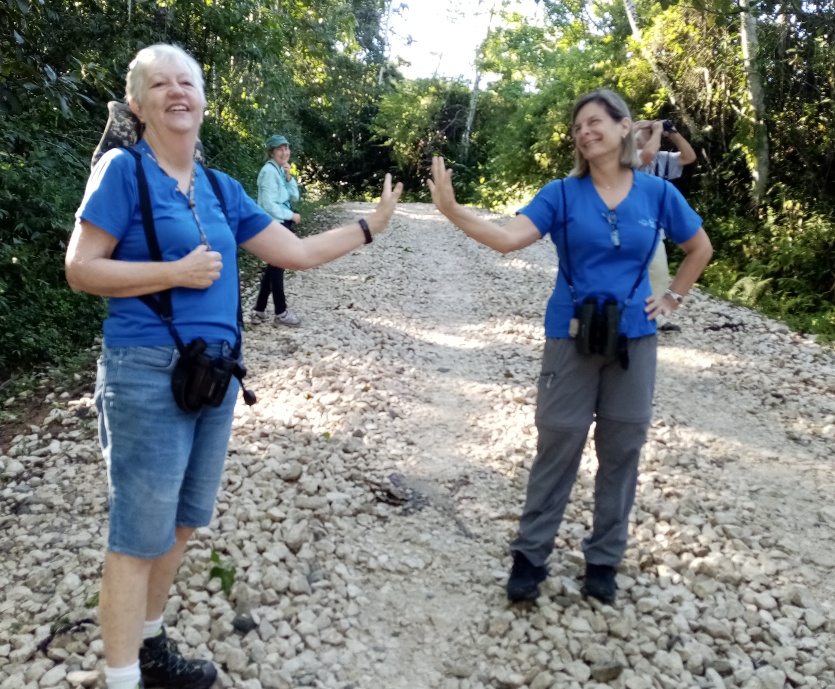
Notice the four people in the photo below. Two of them are birding and two of them are whimsically making a statement on the importance of social distancing. Which two are the closest together? CORRECT! The two that are making a point of staying a meter of two apart. The other two that are just birding? They’re already several meters apart…without even trying.
The point is…If you’re worried about social distancing, get outside and GO BIRDING! If you’re not worried about social distancing, get outside and go birding! (Feel free to replace ‘birding’ with ‘nature exploring’)
This coming dry season, we will very likely see a tsunami of foreign tourists coming to Costa Rica. Many of them have been stuck inside their homes, staring at the walls. When the travel barriers are lifted, these folks will look around and say, ‘Hmmm, I need a vacation. Where should I go on vacation? Where is a safe, healthy place to visit that doesn’t look anything like the four walls of my house? COSTA RICA!’
Tourism will return my friends…oh yes, it will return. If you are one of those wall-starers or know of any, the San Vito Bird Club and Coto Brus tourism welcome you.
First of all, what is a hypothesis? The traditional definition of a hypothesis is–an educated guess; or a guess made upon observations. A theory, on the other hand is also known as a ‘hypothesis that has grown up’. A theory is much more than a guess. A theory has behind it not only observation but much testing and statistical data. For a theory to become fact the data must go through significant and extensive review. The data must be tested by other experts in the same field. The numbers must be crunched in an unbiased manner. In the scientific world, even after a theory has become fact it is always subject to further testing and review as new data is discovered. Contrary to what you may have heard about a certain global climate theory, the science and scrutiny is NEVER done. Fine; so back to What’s…My…Hypothesis.
Here’s how we play. Send me (see address below) your birding/natural history hypothesis. Based upon your observations and deductive reasoning, share your hypothesis or hypotheses (plural). Feel free to copy the template below and paste it into an email. Your hypothesis can be very brief and based solely upon something you have observed or even just wondered about.
Here are a couple of examples:
Hypothesis #1:
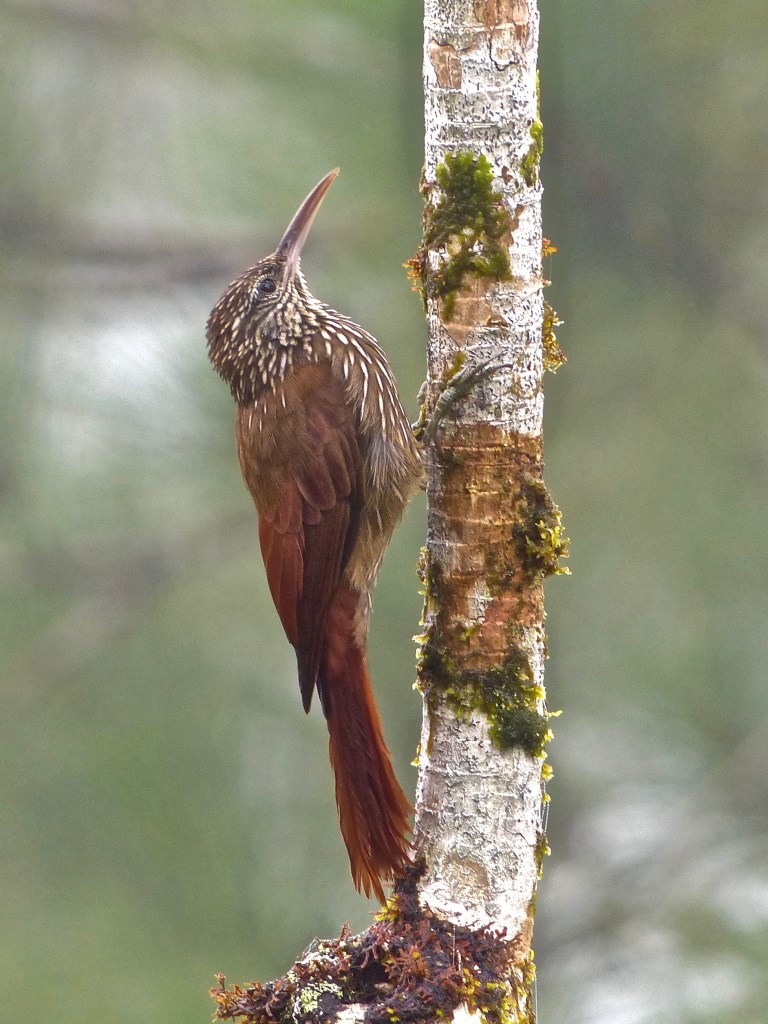
This what I have observed: Whenever I find a mixed flock of birds, there always seems to be a woodcreeper moving about and calling somewhere in the middle of that mixed flock.
This my hypothesis: Different species of birds often flock together in a loose affiliation. I believe they flock, both above and below a woodcreeper, because woodcreepers are both active and noisy and make for an obvious target around which to flock.
Hypothesis #2:
This is what I have observed: Leaf-cutter ants will travel relatively great distances to harvest leaves from citrus trees.
This is my hypothesis: Chemicals or odors found in citrus leaves could serve as a deterrent to unwanted pests down in the Leaf-cutter Ant nest. Or maybe they just make the place smell better, like one of the things you hang on the rearview mirror of your car.
Have fun with this. I will post some of the more interesting hypotheses on this website in the coming days. Who knows? Maybe your hypothesis will some day grow up to become an actual THEORY!
Please keep your observations to natural history topics, birding if possible. Here is the template:
This is what I have observed:
This is my hypothesis:
Send to:
eltangaral@gmail.com
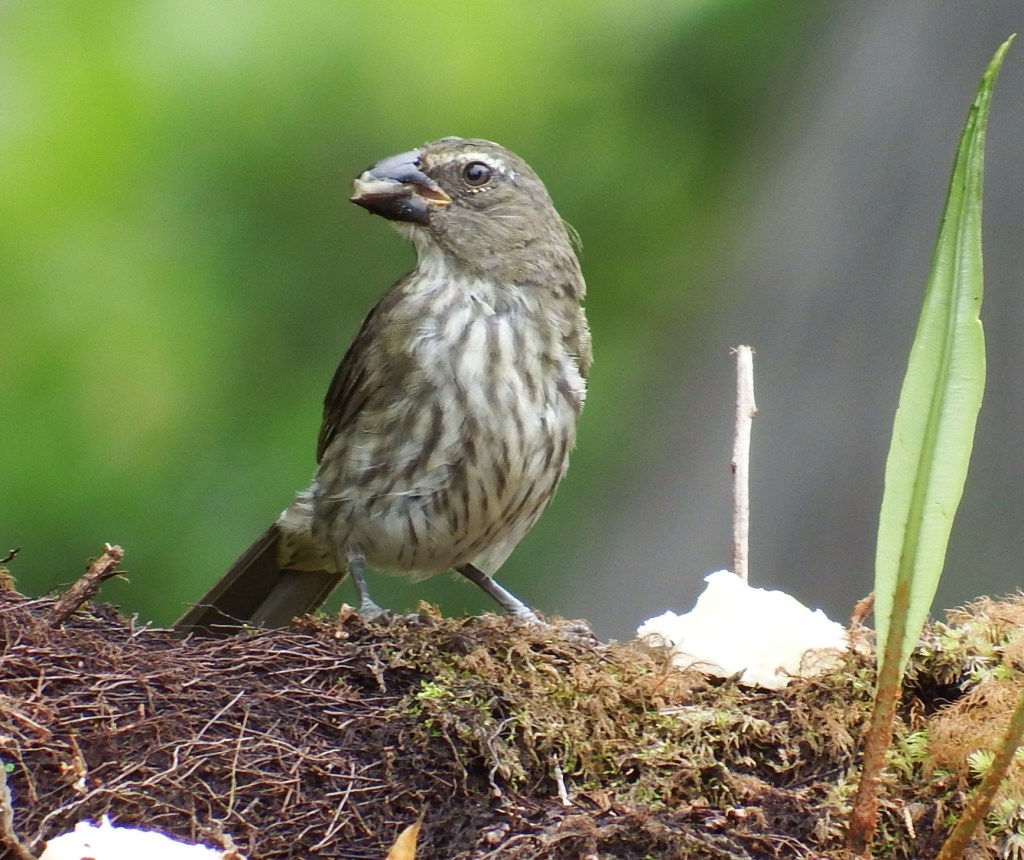
Streak-headed Woodcreeper, courtesy of Jo Davidson
You’re all getting plenty of exercise, right? Walking and birding and gardening and home projects. Good! Keep it up, San Vito Bird Club members.
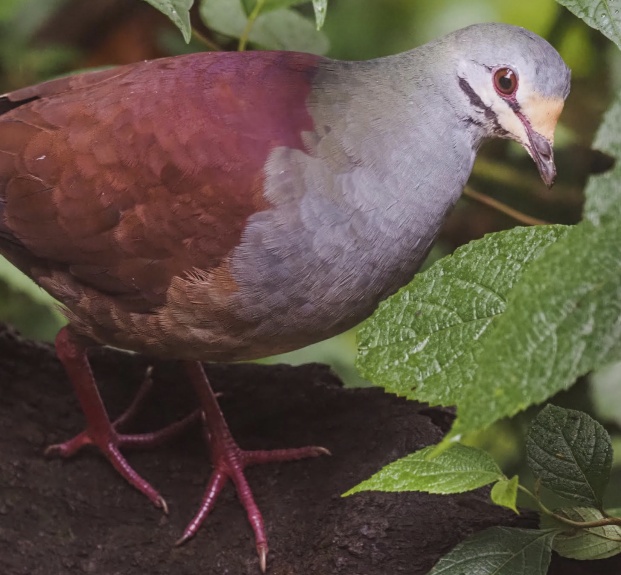
About 3 years ago following one of our Bird Walks (when you all were pretty much a captive, coffee-drinking audience) I delivered a brief tutorial on the calls of our local Pigeons and Doves. Following the tutorial, I promised deliver it again ‘…some day.’ That day has come.
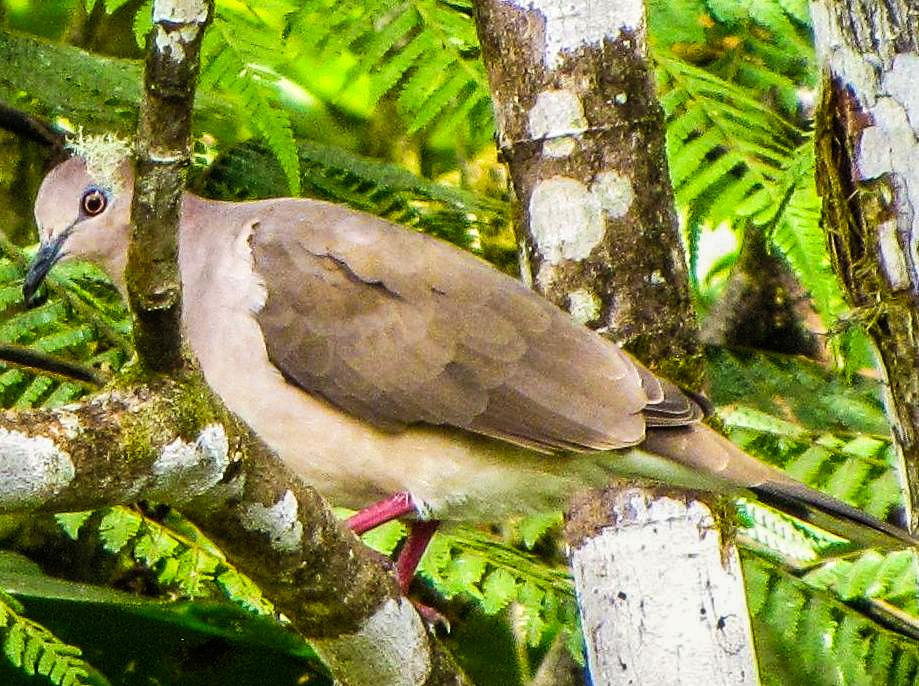
All seven of these birds are easier to hear than to see. And they each have a distinctive call or song. See how many you can identify by song when you’re out and about.
White-tipped Dove, photo courtesy of Helen LeVasseur






 San Vito Bird Club
You must be logged in to post a comment.